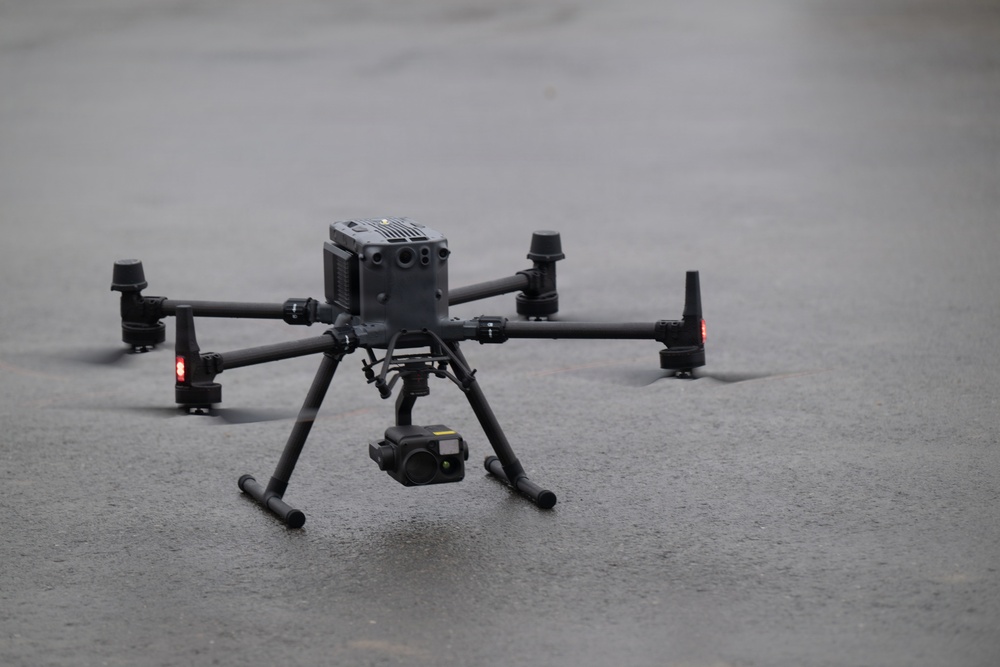
US Special Operations Command Europe brought special operations drone teams from five nations to Grafenwoehr Training Area in Bavaria in early November. The first-place trophy went to the British. Royal Marines took first place at the inaugural International Drone Crucible, finishing ahead of US Army, Navy and Air Force special operators and teams from Germany, Latvia and Ukraine.
The result is clear. The record of how it happened is not. SOCEUR's account on DVIDS and the British coverage published through Forces News disagree on which Royal Marines units won, how long the competition ran and who hosted it. Neither publishes a scoreboard, per-lane results or the drones the teams flew. For an event SOCEUR says will produce performance data to standardize tactics, very little of that data has been made public.
What SOCEUR Says Happened
According to a DVIDS release by Sgt. Logan Trotter, SOCEUR hosted the event in partnership with the US National Drone Association, and it ran Nov. 2-5, 2026, at Grafenwoehr. The release calls it a weeklong competition.
SOCEUR lists the field as:
- The Bundeswehr's 270th Airborne Engineer Company
- A joint team of US Army operators and Latvia's 315th Operational Detachment Alpha
- Ukrainian special operations forces
- US Navy Naval Special Warfare
- 1st Battalion, 10th Special Forces Group (Airborne), US Army
- The US Air Force 321st Special Tactics Squadron, 352d Special Operations Wing
- UK Royal Marines, credited as teams from 40th and 45th Commando, which took first place
Master Sgt. Raymond Rivera, senior enlisted leader of SOCEUR's Theater Edge Innovation Lab, said the intent was to "accelerate innovation, strengthen partnerships, and ensure warfighters have the skills, technology, and operational advantage needed to succeed in future conflicts." According to the release, the lanes covered close-quarters battle inside confined, fortified structures and contact drills in dense forest and open terrain. Teams also faced signal degradation, limited visibility and obstacles.
What the British Coverage Says
Forces News gives a narrower and more specific account. It says the winners were a five-strong team from 40 Commando, the Taunton-based unit, and that they won after three days and more than 400 sorties against teams from the US, Germany, Latvia and Ukraine.
The British coverage also describes the three challenges in more detail than SOCEUR does:
- Challenge 1: find, fix, strike, assess. Locate a target more than two kilometres away, confirm it with a surveillance drone, strike it and assess the damage.
- Challenge 2: interior flight. Clear buildings by flying drones into and through two-storey buildings and narrow spaces.
- Challenge 3: massed effect. Put three drones on a single target in order and in quick succession.
Each challenge had a different winner, according to Forces News. The Royal Marines were crowned champions for their strong overall display rather than by sweeping the events. Forces News says the National Drone Association hosted the competition and quotes it praising the Marines' "outstanding performance, professionalism and dedication." Maj. William Docherty, who leads 40 Commando's Information Warfare Company, said the team learned at pace with "minimal preparation time as a team."
Where the Accounts Diverge
DroneXL compared the two official narratives. It says the Royal Navy announced the result six days before SOCEUR published its account on Nov. 23, and it notes that the two differ on the team, the duration and the host:
| Question | SOCEUR / DVIDS | British account |
|---|---|---|
| Winning team | Royal Marines 40th and 45th Commando teams | Five Marines from 40 Commando's Information Warfare Company |
| Duration | Nov. 2-5, described as weeklong | Three days |
| Host | SOCEUR, in partnership with the National Drone Association | National Drone Association |
Some of this could be resolved without anyone being wrong. A four-day window called "weeklong" could include arrival and setup around three days of competition. "SOCEUR-hosted in partnership with the NDA" and "NDA-hosted" could describe the same arrangement from two sides. The team question is harder to explain. One five-person team from a single commando unit is a different entry from teams drawn from both 40 and 45 Commando, and neither publication explains why they differ.
What Neither Account Publishes
DroneXL notes that neither account publishes scores, says who won which challenge or names the drones the teams flew. The British coverage confirms that each of the three challenges had a different winner but does not say who those winners were. So the public record shows a Royal Marines overall win without saying where they placed in any single lane.
The missing hardware details matter for a UAS readership. A strike on a target more than two kilometres away, flight through buildings and three-drone timing on one target are very different tasks, and because neither account says what each team flew, the results cannot show whether the win came from equipment, tactics or crew skill. Docherty's comment about minimal preparation time points to team skill, but that is the Marines' own explanation, not a published measurement.
Signal degradation is the other gap. SOCEUR says teams tested their systems against signal degradation. Neither account describes what interference was used, how strong it was, or what kinds of drones the teams flew to get through it.
Why It Matters
SOCEUR has said what it wants from the event. According to the DVIDS release, performance data from the competition will be used to update and standardize joint special operations small-drone tactical employment. That makes the crucible more than a morale event. It is meant to feed tactics across allied special operations units that increasingly have to work together with small drones.
That raises the cost of keeping the results private. If the data will shape joint tactics, the units outside the winning team, and the wider defense community, would benefit from knowing which approaches held up under degraded signals, which ones failed indoors and what ran the long-range strike chain fastest. None of that is public yet. The data may simply be going through internal channels. But the published accounts disagree on basic facts such as which Royal Marines units won and how long the event lasted. That weakens confidence in them as a record of what happened.
The competitive picture is also notable. The US side fielded Army, Navy and Air Force special operators, from 10th Group to Naval Special Warfare to Air Force Special Tactics, and Ukrainian special operations forces were also in the field. Forces News reports that each challenge had a different winner but does not name them, so it is not clear how the American teams fared in any single lane. What it does say is that a five-strong team from 40 Commando's Information Warfare Company, with minimal preparation time as a team, finished first overall against experienced pilots from the special operations community. Without scores, it is impossible to say how close the result was.
The crucible is also part of a pattern at Grafenwoehr. DroneXL notes that it follows US Army Europe and Africa's first Best Drone Warfighter Competition at the same training area in December 2025. Whether these events produce shared lessons or only press releases will depend on what SOCEUR does with the lane data next.