
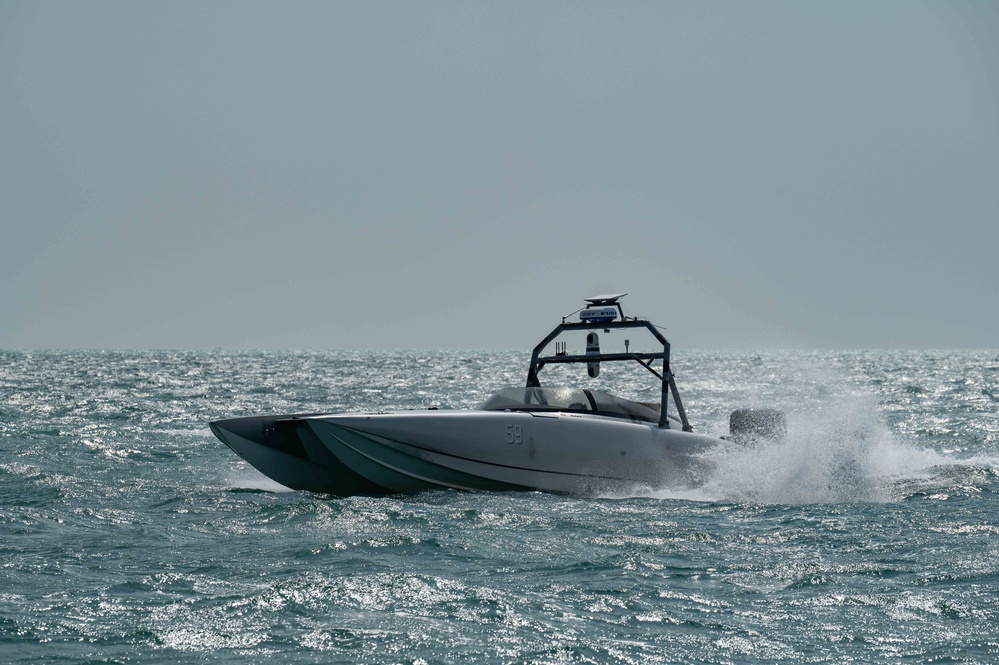
Ukraine's naval drone campaign has crossed into the Mediterranean. On Nov. 23, President Volodymyr Zelensky confirmed that Ukrainian forces were behind the Nov. 22 attack on the Russian corvette Merkury in the eastern Libyan port of Benghazi. He said seven Ukrainian-made naval drones were used, and that the strike also destroyed the ship's Ka-27 helicopter and hit a dry-cargo vessel moored nearby.
Satellite imagery published since the attack backs up the central claim. Images from Vantor and Planet Labs, obtained by The War Zone (TWZ), show the Project 20380 Steregushchiy-class corvette capsized with only its bow above the water. Planet imagery reviewed by Defense News showed the ship on fire. Russian authorities had not commented when the Kyiv Independent reported the confirmation.
What Ukraine Says Happened
According to Defense News, the Security Service of Ukraine (SBU) says it carried out the operation jointly with Ukraine's Defense Forces. A source in the SBU told the Kyiv Independent it was a "unique special operation" and that the Russian fleet and its logistics "have no safe routes, even far beyond the Black Sea."
The SBU said Merkury had been escorting the dry-cargo ship MV Angara, which it described as a sanctioned vessel used to move weapons and military equipment on Russian routes to Syria and Libya. Ukraine says the drones targeted the Angara as well.
Accounts of casualties differ. Defense News reported that Reuters, citing local medical sources, counted ten injured, including Russians and Libyans, and that Al Jazeera reported one person killed. TWZ quoted Al Jazeera as saying an unknown number of Libyan and Russian nationals were killed. The Kyiv Independent said it could not assess the full extent of the damage, and none of these figures has been independently confirmed.
The Ships Involved
The Russian navy acquired Merkury in 2023, according to Defense News. TWZ describes the Steregushchiy class as having a standard displacement of 1,800 tons, and cites Ukraine's United24 for a crew of roughly 90. Per United24, as quoted by TWZ, the ship is assigned to the Black Sea Fleet but had been operating from Northern Fleet bases in the Arctic during the war.
The identity of the second ship is disputed. Zelensky and the SBU call it the Angara. TWZ first reported it as the cargo ship Ascalon, citing Ukrainian outlet UNN, which said that ship was used to transport weapons and belongs to M Leasing LLC, a company under U.S. sanctions. TWZ noted that Zelensky's post named the Angara instead. Whatever the hull's name, Ukrainian and TWZ accounts both describe the second vessel as a cargo ship tied to Russian military shipping.
How Were the Drones Launched?
Accounts of the launch differ. The Associated Press, citing an initial investigation, reported that several Ukrainian sea drones were launched from a base run by Ukrainian forces in western Libya, and that at least four were intercepted and destroyed while two hit the warship. TWZ, which relayed the AP report, said at the time it could not confirm whether the drones came from land or from a vessel.
TWZ's later update quotes the SBU saying that the seven uncrewed surface vessels were transported to a designated location and launched from a so-called "mothership." That statement conflicts with the AP's description of a land base. The Kyiv Independent separately noted that Kyiv and Tripoli reportedly signed a covert deal in 2025 allowing a Ukrainian military presence in western Libya, with access to drone launch sites.
The interception count is also unclear. If the Libyan figures are accurate, only two drones reached the corvette, which suggests the defenders saw at least part of the attack coming. Even so, TWZ's imagery shows the ship capsized in harbor.
A Divided Host Country
The strike landed in a country with two rival governments. According to Defense News, eastern Libya, including Benghazi, is controlled by the Government of National Stability, which is backed by Russia, while the west is held by the internationally recognized Government of National Unity in Tripoli. The Kyiv Independent reported that the administration of Khalifa Haftar said initial investigations indicated an explosion on a Russian ship docked in the port, and that the Tripoli government condemned the use of Libyan territorial waters as a site for proxy warfare. The Kyiv Independent also said Russian-controlled African Corps troops reportedly operate in eastern and southern Libya, in cooperation with Haftar's regime.
The United Nations said Libya "can not afford, and must not become a battleground for foreign conflicts," Defense News reported. Ukraine has now shown it can reach Russian assets in Libya, which puts a fragile country in the middle of a conflict it has no part in.
Part of a Wider Campaign at Sea
Benghazi is the most dramatic example so far of a broader pattern. TWZ notes that maritime security firm Ambrey has catalogued earlier incidents involving Russian-linked vessels in the Mediterranean, including Ursa Major, Seajewel, Vilamoura and Arctic Metagaz.
The Baltic has been active as well. TWZ lists a hit on the corvette Boikiy on June 3 and one on the corvette Naro-Fominsk on Nov. 11. According to DroneXL, the SBU said its drones hit the Naro-Fominsk near Gogland island.
Then, the day before Benghazi, the ro-ro cargo ship Sparta II was hit by drones in the Gulf of Finland on Nov. 21 while sailing from St. Petersburg to Kaliningrad. DroneXL reports that the 7,260-gross-ton vessel has been under U.S. sanctions since 2022 and is linked to Oboronlogistika, a company that says it was set up inside Russia's Defense Ministry. After the strike the ship drifted into Finnish waters, and its 16 crew were moved to another Russian vessel. Officials gave conflicting accounts of where the attack happened: Finland's Border Guard said Russian territorial waters, Russia's Leningrad governor said neutral waters, and Estonian police said Estonia's economic zone.
Ukraine has not claimed the Sparta II attack. Aki-Mauri Huhtinen, communications director for the Finnish Defence Forces, said Ukraine was likely behind it. Taken together, the two strikes hit Russian military-linked shipping in the Baltic and the Mediterranean within roughly 24 hours.
Why It Matters
For most of the war, Russia could treat its fleet's problem as a Black Sea problem. TWZ notes that Ukrainian sea drone attacks forced the general evacuation of Russian naval assets from occupied Crimea to bases in Russia proper. Benghazi undercuts that approach. A Steregushchiy-class corvette sank in a foreign port in territory controlled by a Russian-backed government. If Ukraine's account holds, no port is a safe harbor for Russian ships simply because it is far from Ukraine.
The operational questions matter as much as the outcome. A launch site in western Libya, as the AP report describes, would mean Ukraine is running uncrewed surface vessels from forward bases abroad. A launch from a mothership, as the SBU describes, would point to a seagoing capability with similar reach. Either way, the cost comparison is stark: seven domestically built drones, by Libyan accounts only two of which hit, against a commissioned warship and its embarked helicopter.
Several things remain unknown or disputed. The launch method and location are contested between the AP's account and the SBU's. The second ship is identified as Angara by Kyiv and as Ascalon in TWZ's earlier reporting. The casualty figures conflict, and Moscow had not commented when the Kyiv Independent published. What is clear is that the drone war at sea now reaches the Baltic and the Mediterranean as well as the Black Sea, and that the political fallout, for Libya above all, has only begun.
Sources
- Ukraine confirms it sank Russian corvette in Libyan port (C4ISRNet / Defense News)
- Ukraine's Campaign Against Russian Naval Assets Far Beyond The Black Sea Enters A New Phase (The War Zone)
- 'No safe routes' - Russian corvette off Libyan coast sinks after 'exemplary' Ukrainian naval drone attack (Kyiv Independent)
- US-Sanctioned Russian Military-Linked Ship Burns After Drone Strike (DroneXL)