
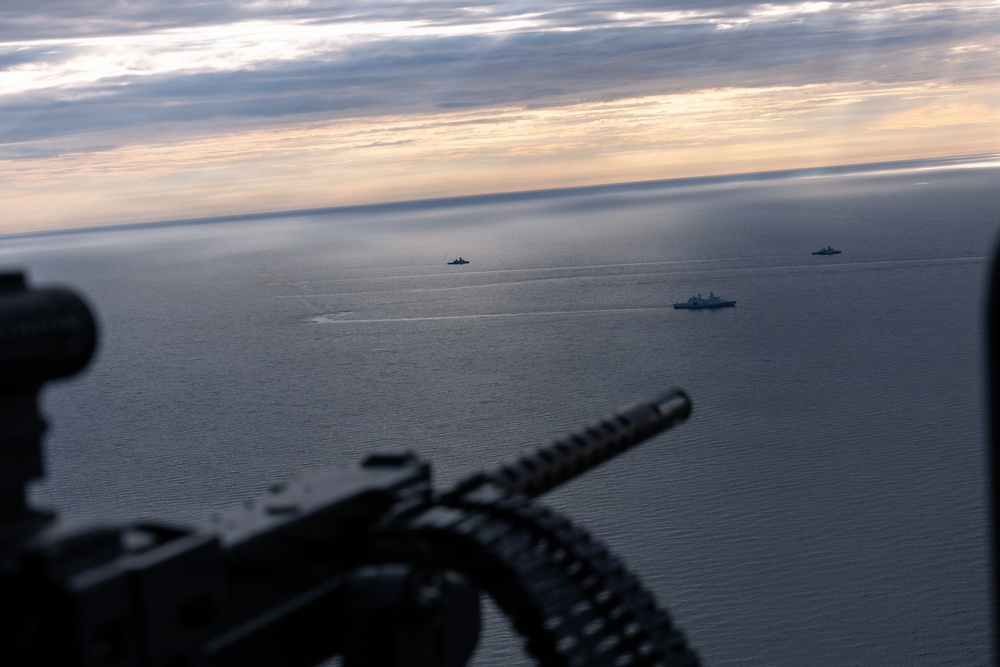
On the morning of Saturday, Nov. 21, the Russian roll-on/roll-off cargo ship Sparta II was sailing west through the Gulf of Finland from St. Petersburg to Kaliningrad. Then it was hit. By the end of the day the ship had burned, lost steering and drifted into Finnish waters. Its crew had been taken off by another Russian vessel, and Finland's military was saying something Kyiv has not said: Ukraine was probably responsible.
The Sparta II is not an ordinary merchant ship. The US Treasury's Office of Foreign Assets Control lists it under its Russia sanctions program, linked to OBORONLOGISTIKA OOO. According to the BBC, the company says it was established within the structure of Russia's defence ministry in 2011. The strike happened in an international shipping lane in the Gulf of Finland, between three countries, and the accounts of where it took place do not agree.
What happened on Saturday
The early timeline comes from Finnish and Estonian authorities. The BBC reported that Finland's coast guard was alerted at about 08:50 local time. At that point the ship was roughly 50 km west of Suursaari, the island known in Russia as Gogland. Estonia's Police and Border Guard Board (PPA) told ERR News that its rescue center got word at 9:35 a.m.
According to the Estonian account, the explosions happened about 11 nautical miles north of Vaindloo island. That spot is in an international shipping lane, inside the St. Petersburg search-and-rescue zone and inside Estonia's exclusive economic zone (EEZ). ERR reported that the burning ship drifted out of the Estonian EEZ around 10 a.m. It ended up in Finnish waters, where the Finnish Border Guard led the response.
All 16 crew members were moved to another Russian vessel, DroneXL reported. The BBC said one crew member suffered minor injuries. Finland put temporary restrictions on sea and air traffic in the area. By Sunday the Finnish Border Guard said fire was no longer visible, but some containers were still warm and the ship was listing slightly. It reported no fuel leaks and no hazardous material leaks, and ERR noted that no pollution had been reported. DroneXL reported the ship at anchor off Loviisa. The BBC later reported that it was being towed away, with the Russian vessel Murman leading the tow.
Who says what
The clearest attribution came from Helsinki. Aki-Mauri Huhtinen, communications director for the Finnish Defence Forces, said Ukraine was likely behind the strike, according to DroneXL and the BBC. He also said the reason the ship was targeted was unknown. The BBC reported that Kyiv had not commented.
Russian regional officials described the strike, though not who carried it out. Kaliningrad governor Besprozvannykh said two drones appeared to have been used, the BBC reported. Leningrad governor Drozdenko also said two drones struck the ship, according to ERR. He placed the attack in neutral waters three nautical miles from Russia's border.
Ukraine has not commented, but there is a possible hint of motive. ERR reported that Ukrainian military intelligence classes the Sparta II as a ship that has carried weapons. The BBC noted that the US sanctioned the vessel in 2022 and Ukraine sanctioned it this year.
Finnish Prime Minister Petteri Orpo summed up the political problem in one line: "War is spilling over into our immediate vicinity."
The vessel
The OFAC entry for the ship is short. It lists:
- Vessel name: SPARTA II
- IMO: 9160994
- Flag: Russia
- Type: Roll-on Roll-off
- Gross registered tonnage: 7,260
- Program: RUSSIA-EO14024
- Remarks: Linked to OBORONLOGISTIKA OOO
The entry also flags secondary sanctions risk under Section 11 of Executive Order 14024. DroneXL notes the ship was headed for Kaliningrad, and Ukrainian military intelligence classes it as a ship that has carried weapons and military equipment, per ERR. Finnish officials told Yle they do not know what it was carrying.
Three accounts of where it happened
There are at least three versions of where the ship was hit, and they do not fit together.
- Estonia: The PPA, via ERR, places the explosions in Estonia's EEZ, about 11 nautical miles north of Vaindloo, in an international shipping lane.
- Finland: DroneXL reported that Finnish Border Guard commander Iljin said the ship was hit in Russian territorial waters.
- Russia: Governor Drozdenko says the drones struck in neutral waters, three nautical miles from Russia's border.
The difference matters for more than maps. An EEZ gives a coastal state economic rights, not full sovereignty, so a strike in Estonia's EEZ would not be a strike on Estonian territory. Still, it would mean a combat action inside a NATO member's maritime zone, in a lane used by commercial traffic. A strike in Russian waters is something Moscow can more easily frame as an attack on its own territory. These accounts are preliminary and conflict with one another.
The unanswered drone questions
For a UAS-focused reader, the biggest gap is basic. As DroneXL noted, nobody has said what type of drone was used or where it was launched from. Two Russian governors say there were two drones, and Kaliningrad's governor described that as based on preliminary information. Beyond that, nothing is confirmed: not whether they were aerial or surface craft, not their range class, not whether they flew from Ukrainian territory or were launched from somewhere closer.
Distance is what makes the question hard. DroneXL put Gogland more than 885 km, or about 550 miles, in a straight line from Ukraine's northern border. Whether the drones flew that far or were launched from somewhere closer is not known, and neither can be confirmed.
This may not be the first such strike in the area. DroneXL reported that Ukraine's SBU claimed a drone hit on the Russian corvette Naro-Fominsk near Gogland on Nov. 11, ten days before the Sparta II was struck. If both claims are accurate, the eastern Gulf of Finland has seen more than one strike in under two weeks. The SBU claim is Ukraine's own and not independently confirmed in these sources.
There was also a separate incident the same weekend. The BBC reported that Finland's defence ministry suspected a Russian helicopter of violating Finnish airspace. The ministry said the helicopter may have been linked to rescue or tracking operations, and the BBC and DroneXL report nothing tying it to the strike beyond that.
Why It Matters
The BBC describes the Baltic as a flashpoint in the war and notes Ukraine has ramped up long-range attacks beyond the front lines. The Sparta II strike, if Finland is right about who did it, would put a Russian ship bound for Kaliningrad, more than 550 miles from Ukraine's northern border per DroneXL, in the crosshairs. It happened where Finnish, Estonian and Russian waters and rescue zones overlap.
That creates practical problems for the Baltic states. A burning, US-sanctioned Russian cargo ship drifted into Finnish waters. Finland had to run the rescue, restrict air and sea traffic, and manage the risk of fuel or cargo leaks, none of which it started. Estonia's rescue center was pulled in as well. Each time this happens, NATO coastal states face the same choice: how to respond professionally to a war that is coming into their waters without taking on responsibility for it.
It also changes the threat picture for Russia's sanctioned shipping. A ro-ro ship linked to a defence-ministry-affiliated operator was hit in the Gulf of Finland. Until officials say what flew, from where, and how it reached the ship, the most important technical questions about this strike will stay open.
Sources
- OFAC Sanctions List Search: SPARTA II vessel entry (US Treasury)
- Russia-bound ship towed away after it was attacked in Gulf of Finland (BBC)
- Russian cargo ship on fire in Gulf of Finland after reported drone strike (ERR News)
- US-Sanctioned Russian Military-Linked Ship Burns After Drone Strike (DroneXL)
