
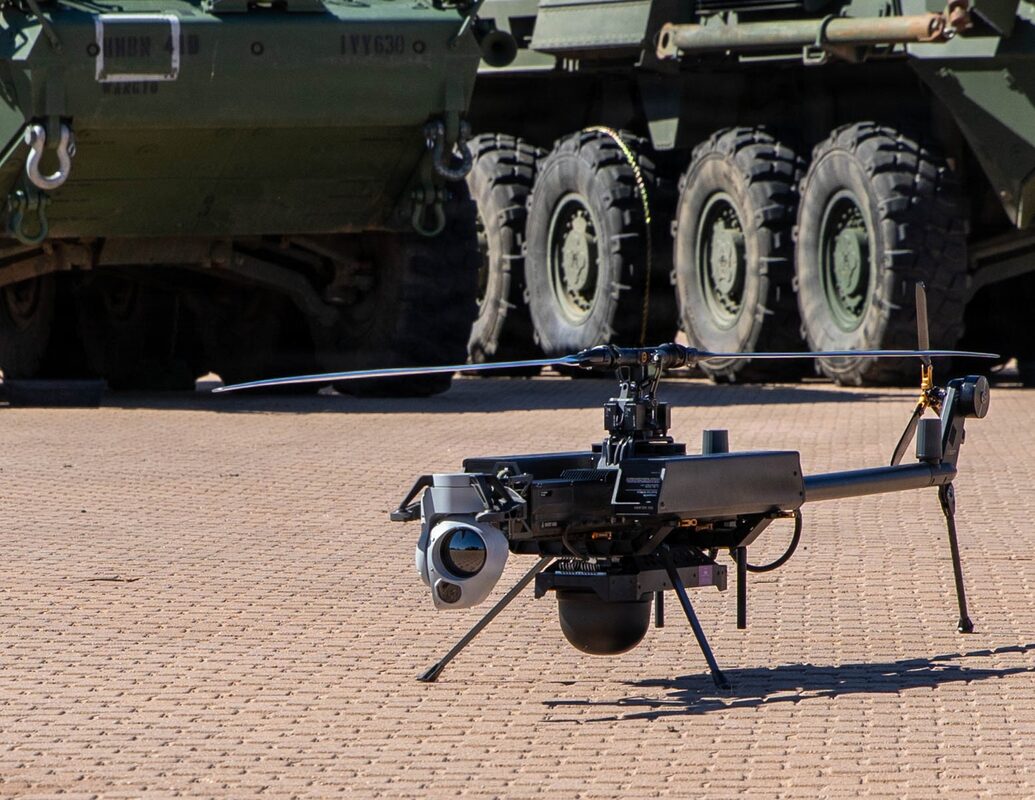
Nineteen companies are converging on Fort Carson, Colorado this month, each required to produce and deliver 120 lethality-payload-equipped one-way attack drones into a live operational-testing gauntlet that will decide who gets a slice of 60,000 Pentagon production orders — and, eventually, a shot at building part of a planned 200,000-drone fleet by 2027.
The event, known as Gauntlet II, is the latest and most consequential checkpoint in the Department of War's Drone Dominance Program (DDP), a $1.1 billion, two-year effort launched to execute Executive Order 14307. According to the department's official release announcing the program's first production order, the goal is to rapidly arm combat units with a massive, scalable fleet of low-cost, expendable one-way attack drones.
Gauntlet II is not the field's first cut — a qualifying round already thinned the field before any finalist reached Fort Carson.
From 49 Companies to 19
That qualifying round — referred to by both the Defense Post and UAS Vision as "the Qualifier" — ran June 8 through June 19 at Camp Grayling, Michigan. Per that reporting, the event drew 49 companies fielding 79 different UAS designs, tested in day and night missions across two mission areas: Long Range Strike and Tactical Assault in Confined Environments. In early July, the Drone Dominance Program narrowed the field to 19 finalists; the Defense Post reported the roster on July 3, and UAS Vision published its own account on July 7.
Those 19 include a mix of established U.S. small-UAS players and at least one notable non-domestic entrant. The Defense Post's reporting names Ascent Aerosystems, Auterion Government Solutions, Griffon Aerospace, Neros, Teal Drones, XTEND Reality, and Ukrainian Defense Drones Tech Corp. among the companies advancing — a roster that spans commercial quadcopter makers, software-defined autonomy vendors, and a firm whose product line has been shaped directly by the front lines in Ukraine.
The inclusion of Ukrainian Defense Drones is notable on its own terms. Few nations have iterated one-way attack drone designs under sustained combat conditions as intensively as Ukraine has since 2022, and its presence in a U.S. production competition signals the Pentagon's interest in combat-tested designs rather than purely domestic-pedigree systems — though the program's ultimate production orders will presumably still have to satisfy U.S. sourcing and security requirements.
What Happens at Fort Carson
The mechanics of Gauntlet II are demanding by small-UAS industry standards. Each of the 19 finalists must deliver 120 lethality-payload-equipped drones to Fort Carson within roughly five weeks, per both the Defense Post's and UAS Vision's accounts of the competition's requirements. That is a meaningful production and logistics test in its own right — companies aren't just showing up with a handful of prototypes for a fly-off; the Defense Post describes the exercise as demonstrating that finalists "can manufacture for wartime scenarios," which is arguably as much the point of the exercise as flight performance itself.
According to the Department of War's release, Gauntlet II expands on the Qualifier's test conditions by adding night operations alongside "more complex urban and confined environments." That's a step up from the Qualifier's day-and-night missions across the Long Range Strike and Tactical Assault in Confined Environments mission sets. The added night-operations requirement points to a test design meant to stress systems' guidance and target-identification performance in degraded-visibility conditions, on top of the maneuverability demands of tighter urban terrain.
The stakes for the 19 finalists are direct. Companies that perform well at Gauntlet II are competing for a share of production orders covering 60,000 additional small-class one-way attack drones, according to both the Defense Post and UAS Vision. Those figures nest inside the Drone Dominance Program's stated ambition — per the Department of War's own release — to field more than 200,000 drones by 2027.
The Department of War's own release frames the run-up to Gauntlet II as the moment the program moved from planning to execution: it notes that the program's first production orders — 30,000 drones already under delivery, with 60,000 more to be ordered in September — were placed as the Gauntlet II qualifying process got underway, tying the live-fire evaluation directly to money already committed rather than treating it as a purely developmental exercise.
Why It Matters
The scale being described here is a departure from how the Pentagon has historically bought small UAS. A single evaluation event asking 19 vendors to each produce 120 combat-payload drones in five weeks is a supply-chain and manufacturing-readiness test as much as a performance bake-off — it filters out companies that can design a good drone but can't yet build hundreds of them on a defense-relevant timeline. That matters because the program's ultimate target, a 200,000-drone fleet by 2027, is not achievable through boutique production runs; it requires vendors who can scale like consumer electronics manufacturers while meeting military payload, resilience, and security requirements.
The added night-operations requirement is also a signal of what the Pentagon considers a growing part of the bottleneck in one-way attack drone employment: reliable guidance and control when visibility is degraded, not just under daytime conditions. Pairing that with testing in "more complex urban and confined environments" suggests the department wants vendors who can handle close-in strike work in cluttered terrain under low-light conditions — a tougher guidance and endurance problem than open-range daytime testing alone.
The 60,000 drones on the table for Gauntlet II survivors are a fraction of the program's stated 200,000-drone target for 2027, and the $1.1 billion program budget covers far more than this single competition. That suggests Gauntlet II functions as a qualification gate for a much larger multi-year buy rather than the main event itself — the companies that win production orders here are likely positioning for follow-on contracts as the 2027 fleet target approaches, not just capturing a one-time award.
Finally, the presence of Ukrainian Defense Drones among the 19 finalists is worth watching as a bellwether. If a firm built on Ukrainian battlefield iteration cycles performs well against the Pentagon's own test scenarios, it could accelerate a broader shift toward buying designs proven in active combat rather than developed primarily through domestic test-range evaluation — a meaningful change in how the U.S. defense industrial base sources next-generation attritable systems.
Sources
- Drone Dominance Program Receives First Order, Gauntlet II Gets Underway — U.S. Department of War
- Pentagon Moves 19 Firms to Next Round of $1.1B Kamikaze Drone Sprint — The Defense Post
- DDP Announces 19 Companies Advancing to Gauntlet II — UAS Vision
