
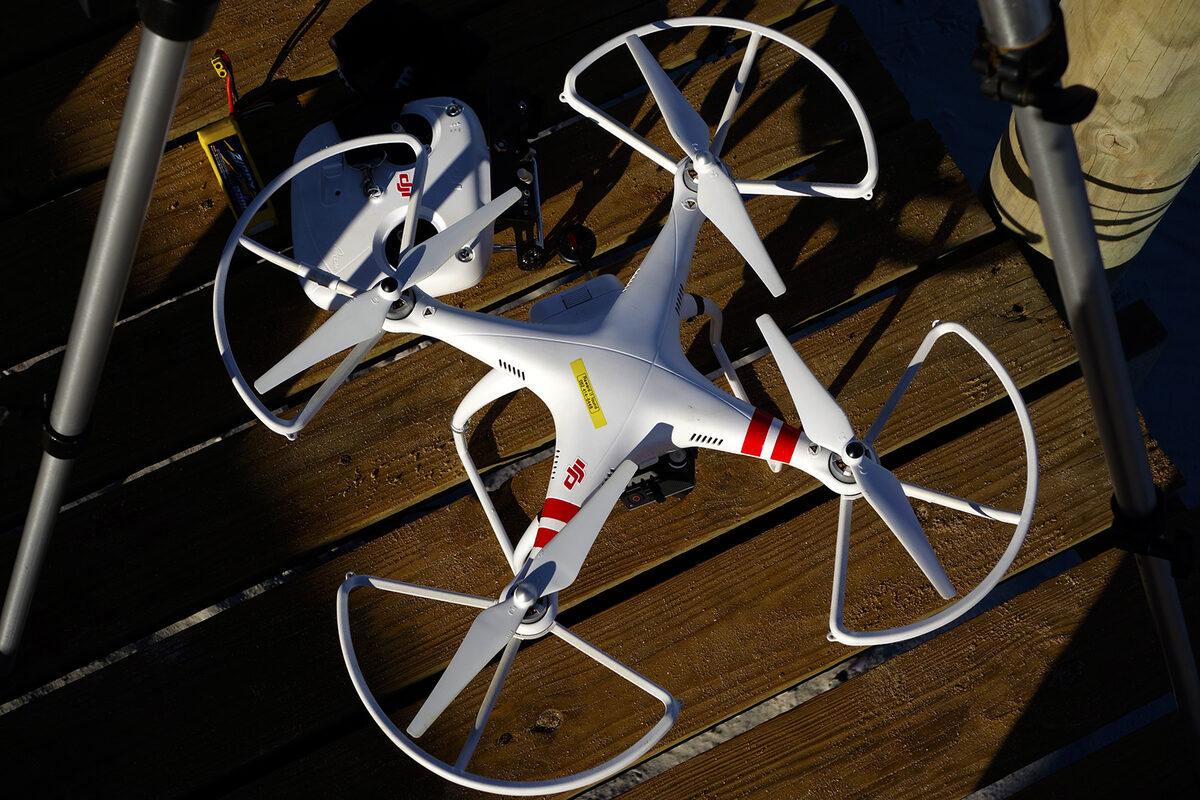
Starting today, June 11, the airspace above eleven American cities became significantly more complicated. The FAA has activated a cascading series of Temporary Flight Restrictions for the 2026 FIFA World Cup, which runs through July 19 — 38 days of staggered match schedules, fan festivals, team training camps, and base operations spread across the New York, Los Angeles, Dallas, Miami, Seattle, and San Francisco Bay Area metros, among other host cities. By scale and simultaneity, it is an airspace lockdown without obvious precedent in US drone regulation, and it arrives backed by a new enforcement architecture that operators would be unwise to treat as routine.
The Geometry of Exclusion
The restriction geometry divides into two tiers based on venue type. Stadium match-day TFRs push out 3 nautical miles laterally and extend to 3,000 feet AGL — a volume large enough to envelop not just the stadium but much of the surrounding urban core. Fan festivals, team base camps, training facilities, and designated team hotels draw a tighter perimeter: 1 nautical mile radius, 1,000 feet AGL. The distinction matters practically because the fan-event and base-camp restrictions can activate on days with no match, meaning a commercial operator working a routine job blocks away from a venue can find themselves inside restricted airspace without any game on the schedule.
Los Angeles illustrates the density of activations a single market will absorb: repeated match-day TFR windows through group play and the knockout rounds, layered on top of a fan festival carrying its own 1 nm / 1,000 ft envelope. Operators based in greater LA face the better part of five weeks with large sections of their normal operating environment periodically off-limits.
The legal basis for the restrictions sits on 49 U.S.C. § 40103, which grants the FAA broad authority to manage national airspace, and 49 U.S.C. § 46307, which criminalizes knowing TFR violations. The penalty schedule reflects that dual civil-criminal structure: civil fines can reach $75,000 per violation, criminal fines up to $100,000, and the statute provides for imprisonment of up to one year. Drone confiscation and potential federal charges round out the exposure. The enforcement coalition includes the FAA, FBI, DHS, and DOJ, with local law enforcement integrated as a forward detection layer. DHS has explicit authorization to deploy counter-drone technology — which is not a theoretical capability in 2026.
"Drone operators should expect swift action if they violate restricted airspace." — Bryan Bedford, FAA Administrator
DETER: New Enforcement Infrastructure, First Real Test
The World Cup activations are not just the largest UAS airspace exclusion the FAA has managed — they also put DETER — the Drone Expedited and Targeted Enforcement Response program that launched April 16, 2026 — through its first weeks-long, multi-city deployment. Understanding what DETER actually does requires separating two distinct functions it serves.
The first is a real-time reporting pipeline. Under DETER, law enforcement personnel who observe a UAS violation can notify the FAA immediately, replacing what had been a slow, often-incomplete after-the-fact reporting chain. That change in information velocity has direct consequences for enforcement: a violation that might previously have resulted in a late-filed report and a long adjudication queue can now trigger a same-day FAA response. At a tournament spanning 38 days across 11 cities, with counter-drone assets in the field and multi-agency coordination already in place, the combination of detection capability and fast-reporting infrastructure creates a materially higher probability of a violation resulting in an enforcement action than operators may have experienced at prior major events.
The second function is an expedited resolution track for first-time minor violators. DETER offers reduced penalties or certificate suspensions in exchange for faster case closure — an apparent benefit that comes with a significant catch: participants must admit liability and waive their appeal rights. Egregious safety cases are excluded from DETER eligibility, and critically for World Cup context, so are TFR violations. That carve-out is not a footnote. Any violation of the World Cup airspace restrictions sits outside the DETER resolution pathway entirely. The operator who inadvertently drifts into a stadium TFR cannot use DETER to avoid the civil or criminal exposure; they face the full penalty structure through standard adjudication.
DETER was created under the Executive Order on Restoring American Airspace Sovereignty, which signals the political weight behind it. The World Cup is a proving ground for the program at national scale — 48 national teams, 11 cities, months of interagency coordination — and its performance here will likely shape how the FAA deploys it at future high-profile events.
What Operators in Host Cities Need to Do Now
TFR information is published via FDC NOTAMs in the days before each event activation. That window is tight for operators with commercial commitments requiring pre-mission planning, waivers, or airspace authorizations. The FAA has published comprehensive advisory information at faa.gov/fifaworldcup2026, and operators are required to check both that resource and current NOTAMs before any flight in or near host cities.
If you operate commercially in any of the 11 host markets, the practical action is to map the match schedule and fan-event calendar for your metro area against your planned flight operations now, before individual TFRs are published. A NOTAM published days before activation is not enough lead time to renegotiate a contract or reschedule a construction inspection. Operators who wait for NOTAM publication to identify conflicts will find themselves short on options.
The deeper operational reality is that the second-tier restrictions — fan festivals, base camps, training facilities — introduce unpredictability that stadium match-day TFRs do not. Match days are on the calendar. Fan festival hours and base camp activations may shift, and each shift redraws the restricted geometry in ways that are only visible through active NOTAM monitoring. Automated NOTAM alerting tied to your normal operating area, rather than manual checks, is the appropriate posture for the duration of the tournament.
Sources
- FAA Newsroom — FAA Establishes No Drone Zones for FIFA World Cup 2026
- FAA — FIFA World Cup 2026 Flight Advisories
- Greenberg Traurig LLP — FAA Declares No Drone Zones for 2026 FIFA World Cup
- DRONELIFE — FAA Creates World Cup No Drone Zones Across US Host Cities
- The Drone Girl — DETER: FAA's New Drone Enforcement Program