For four years the direction of travel in the US–Ukraine defense relationship has been one-way: American money and American hardware moving east. The document reportedly signed on 21 July 2026 points the other way. According to reporting first published by RFE/RL correspondent Alex Raufoglu on 21 July and picked up the following day by Ukrainska Pravda, United24 Media and the Washington Times, Kyiv and Washington have signed a bilateral statement of intent that would let Ukrainian unmanned systems — aerial, ground and maritime — be temporarily exported to the United States so the Pentagon can test them.
It is worth being precise about what has and has not been confirmed. The reporting rests on anonymous officials. RFE/RL's account cites two informed sources: "The deal has been sealed," one said. "It's been signed by both sides," said another. No officials on either side are named in the reporting, and none of the outlets carrying the story quote an on-the-record confirmation from either government. What follows is therefore reported, not announced.
What the statement of intent actually does
A statement of intent is not a contract. That distinction is the entire story here, and the outlets covering it said so plainly — RFE/RL, quoted by the Washington Times, stresses that the statement of intent "is not itself a production contract."
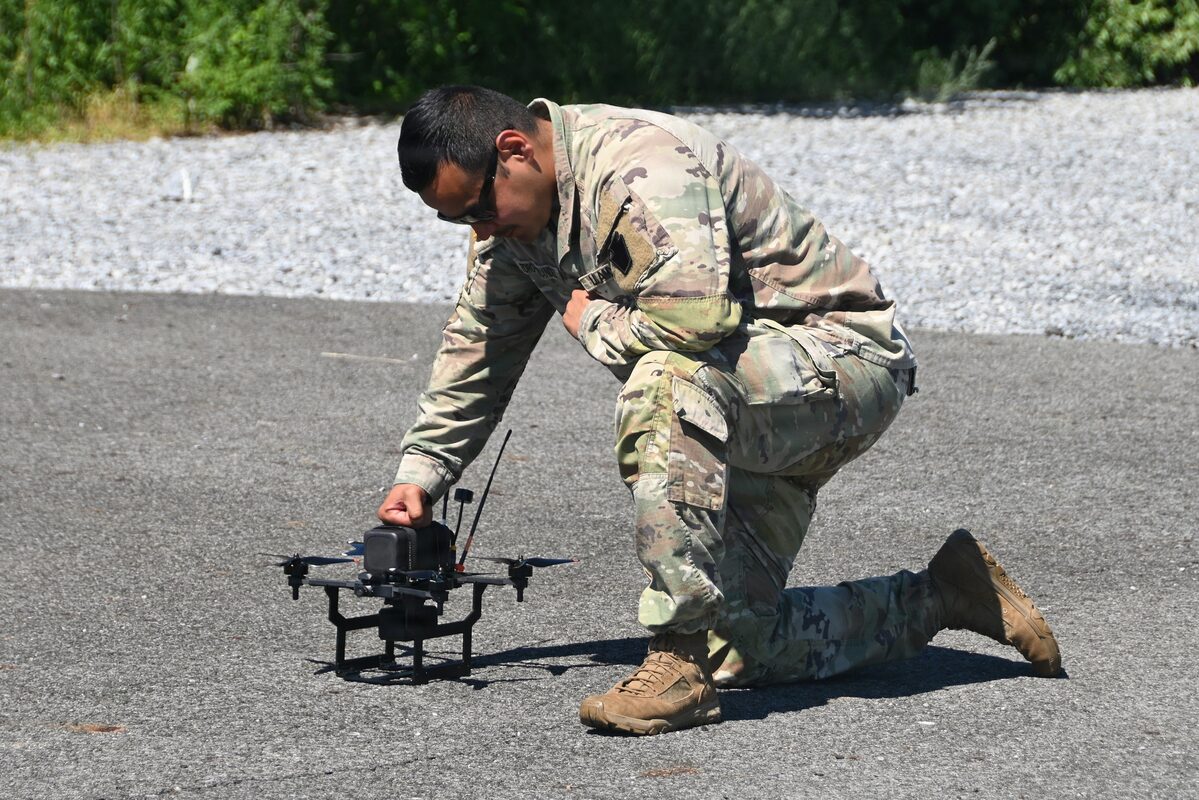
What the SOI reportedly creates is a legal pathway. Ukrainian unmanned systems can be shipped into the United States on a temporary basis, handed to US military units, and run through formal test and evaluation programs. The Pentagon can request specific Ukrainian platforms — not for operational use, but for evaluation. According to Ukrainska Pravda, the framework spans all three domains: ground, aerial and maritime.
What it does not do, per United24 Media's account, is automatically authorize procurement or technology transfer. No quantities are specified. No production timeline is attached. No money changes hands on the strength of this document alone.
The mechanism matters more than the money, though. Test results are expected to feed into future US military requirements and to underpin later joint programs or procurement decisions. In other words, the SOI is an on-ramp to the requirements process — and the requirements process is where the real dollars get shaped.
The pipeline these results would feed
That pipeline has a name and a public website. The Department of War's Drone Dominance program describes itself as a "$1 billion plan to purchase small, lethal drones over the next two years," with a target of more than 200,000 drones capable of producing lethal effects by 2027.
Drone Dominance does not run like a conventional program of record. It uses a challenge-based acquisition model organized into iterative phases the program calls Gauntlets. Gauntlet 1, held on 17 February 2026, concluded with 30,000 drones ordered. Gauntlet 2 runs in August 2026. Gauntlet 2.5, the Bomber Platform Mission, follows in an estimated October 2026, with Gauntlets 3 and 4 spaced roughly six months apart after that. The program's original Request for Solutions was published on 17 December 2025. The effort is sponsored by the Office of the Secretary of War and jointly administered by TRMC and DIU; NSWC Crane holds contracting authority, and industry engagement runs through the NSTXL consortium portal.
Critically, the program states that "this is not a down select process" — meaning vendors are not competing to be eliminated down to a single winner, and non-selected vendors may reapply in later phases. That architecture is unusually hospitable to exactly what the Ukraine SOI would produce: a stream of foreign-built, combat-proven platforms arriving mid-cycle with test data attached.
Ukrainian systems are not entirely new to this pipeline. Ukrainska Pravda reported on 3 July that F-Drones, whose F10 strike UAV placed sixth in the Gauntlet I evaluation, had received Ukraine's first export permit for fully assembled combat drones and had already shipped 2,000 F10s to the United States under the resulting order. What the SOI would change is that individual company-level deals become a government-to-government channel with a standing test mechanism behind it.
UFORCE and Reconcraft: the piece that is not hypothetical
Running alongside the SOI is a second, separate agreement that is considerably more concrete.
A memorandum of understanding was signed at Ukraine's Embassy in Washington between UFORCE, a Ukrainian manufacturer of autonomous systems, and RECONCRAFT, an Oregon-based firm specializing in high-performance military vessels. The Wall Street Journal first reported the MOU on 22 July; the Washington Times covered it the same day. Its stated purpose, per United24 Media's account of the WSJ report, is to stand up production of the MAGURA family of naval drones in the United States.
The MAGURA family is among the best-known of Ukraine's unmanned surface vessels, and United24 Media, citing the Journal, describes it as combat-proven. Beyond that, the public reporting on the SOI itself does not name specific Ukrainian platforms — it describes categories: aerial, ground and maritime.
Reconcraft is a boatbuilder, not a drone startup. Pairing a Ukrainian USV designer with an American military vessel yard is a specific bet: that the hull, the marinization and the production line are the hard parts to reproduce on US soil, and that the autonomy and mission systems travel more easily than the steel does.
The Ukrainian embassy described the goal as UFORCE working with RECONCRAFT "to bring its battlefield-tested autonomous defense technologies to the United States and expand cooperation on advanced unmanned aerial, maritime, and ground systems." No quantities. No production timeline. No named facility. As with the SOI, the announcement is a framework, not a delivery schedule.
How this got here
The SOI did not appear from nowhere. Ukrainska Pravda reports it followed months of negotiations on defense-industrial cooperation, with a draft memorandum on drone defense terms prepared as early as May 2026. At the NATO summit in Ankara on 7 July, President Trump said the United States would purchase Ukrainian drones — a statement that, until now, had no legal machinery underneath it.
The 21 July document is that machinery in its earliest form. Ukrainska Pravda characterizes it as the "first concrete step towards broader cooperation," potentially including joint US production of combat drones. Both Ukrainska Pravda and United24 Media describe it as the first agreement of its kind between the two countries focused specifically on unmanned systems.
Why It Matters
The obvious framing — the one the Washington Times leads with — is Ukraine's transition from aid recipient to defense technology producer. That is true and it is politically potent, but it undersells the operational logic.
The United States has spent the past two years trying to buy small lethal drones at a scale and price point its traditional industrial base was never built to deliver. Drone Dominance is an explicit admission of that problem: a $1 billion, 200,000-unit target executed through rolling challenge phases rather than a decade-long program of record, precisely because the conventional path is too slow.
Ukraine has the one input the US procurement system cannot manufacture domestically — sustained, iterative combat feedback against a peer adversary running active electronic warfare. A Ukrainian FPV airframe or USV arriving at a US test range does not just bring a bill of materials; it brings the accumulated design decisions of an attrition war, including the ones made in response to jamming environments American ranges cannot fully replicate.
The SOI's value, then, is informational before it is industrial. Getting those platforms onto US ranges under formal test programs means their performance data enters the requirements documents that govern what the Pentagon buys next — Gauntlet 2 in August, Gauntlet 2.5 in the autumn, and whatever follows. Requirements written with Ukrainian test data behind them look different from requirements written without it.
The caveats are real. This is a statement of intent reported through anonymous officials with no on-the-record confirmation from either capital. It authorizes no purchases and transfers no technology by itself. Export control, ITAR treatment, intellectual property ownership and the security of Ukrainian design data on US ranges are all unresolved in the public reporting. The UFORCE–RECONCRAFT MOU is a stronger signal of industrial intent, but it too lacks quantities, dates and a named production site.
What to watch: whether either government confirms the SOI on the record, whether Ukrainian platforms show up in Gauntlet 2 or Gauntlet 2.5 documentation, and whether the Reconcraft partnership names a facility. Until at least one of those happens, this is a door that has been unlocked rather than walked through.
Sources
- Drone Dominance Program — U.S. Department of War (official program site)
- Ukraine and US sign key statement of intent on drone cooperation — Ukrainska Pravda, July 22, 2026
- Ukraine and Pentagon Reportedly Strike First-Ever Military Drone Cooperation Deal — United24 Media, July 22, 2026
- U.S.-Ukraine sign deal for Kyiv to export drones to America for military testing — Washington Times, July 22, 2026
- Ukraine's F-Drones receives permit to export drones and ships 2,000 UAVs to US — Ukrainska Pravda, July 3, 2026