
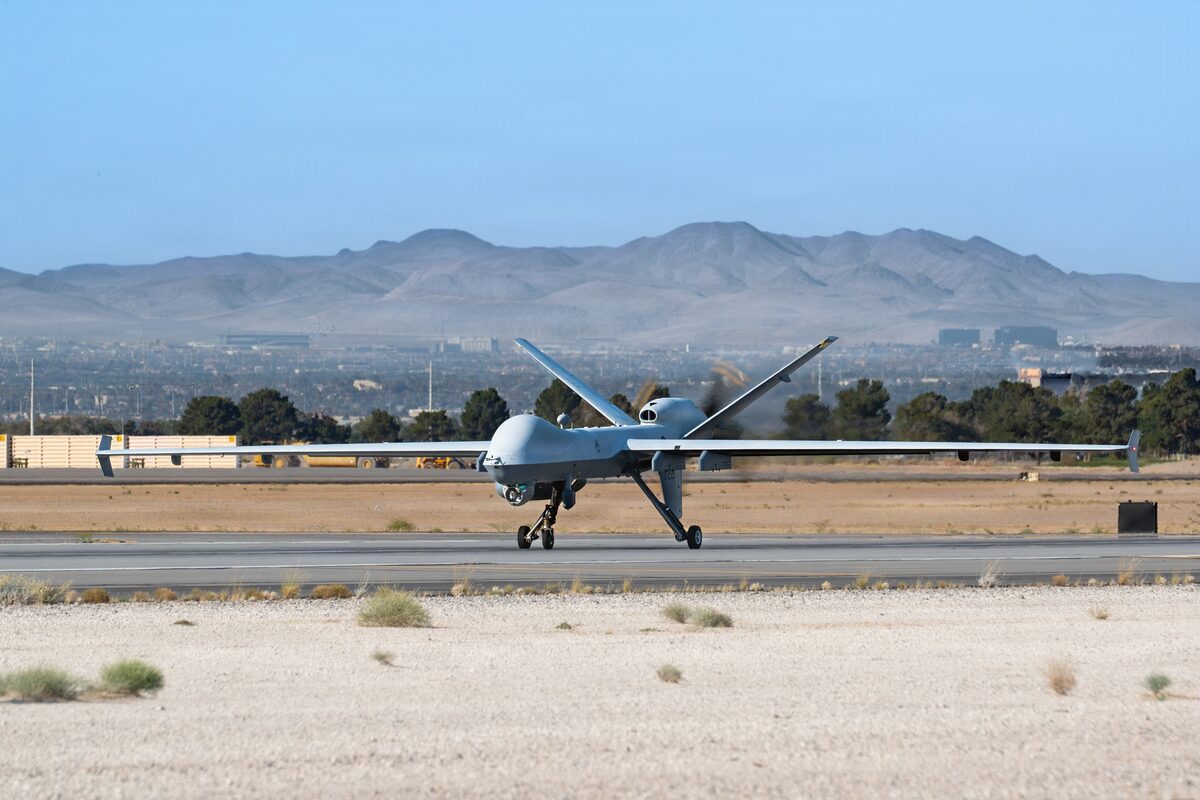
Australia's aviation regulator has done something that sounds, on first reading, like a safety rollback and on second reading like the most pragmatic thing any major regulator has done for heavy uncrewed aircraft in years. On 24 July 2026, the Civil Aviation Safety Authority announced that from 29 September, new rules will give it the ability to provide more airworthiness certification options for large remotely piloted aircraft — including, in defined circumstances, the option of operating a large RPA with no certificate of airworthiness at all.
The headline is deliberately provocative, so start with what it does not mean. It does not mean anyone can bolt together a heavy cargo airframe and start flying it over Brisbane. CASA approval is still required for any large RPA operation regardless of certificate status. Operators still need a remotely piloted aircraft operator's certificate (ReOC). Licensing, maintenance, continuing airworthiness and RPA registration rules all continue to apply. What changes is the specific document that has been acting as the choke point — and the recognition, finally written into rule, that a certificate of airworthiness designed around crewed aircraft is not always the right instrument for proving an uncrewed one is safe.
The problem CASA is actually solving
Under the current framework, a large RPA in Australia needs either a restricted or an experimental certificate of airworthiness. Both are dead ends for different reasons, and CASA says so plainly.
Experimental certificates, in CASA's words, "mainly support research, development and testing" and do not provide an ongoing pathway for most commercial operations. That is the trap a lot of Australian heavy-RPA programs have been sitting in: you can fly, you can gather data, you can demonstrate the aircraft to a customer — and then the pathway simply stops. There is no door from experimental into sustained revenue service.
Restricted certificates are the other option, and they are narrower than they look. They only cover certain operations, and they require the aircraft to hold restricted-category type certification. Type certification is the expensive part. For a crewed airframe amortised across hundreds of units and decades of service, the cost is survivable. For a long-endurance ISR platform or a heavy-lift agricultural aircraft that might see a fleet in the dozens, it is frequently the thing that kills the business case before the first commercial flight.
So the practical situation in Australia today is that the heavy end of the uncrewed market — the segment where the money and the mission value are — has been squeezed between a research pathway that goes nowhere and a commercial pathway priced for a different industry.
What actually changes on 29 September
Two things, and the second is the interesting one.
First, the new rules will allow any applicable kind of certificate of airworthiness to be issued to a large RPA, subject to the aircraft meeting the relevant airworthiness standards and to appropriate operating conditions. This is the unglamorous half: it unsticks operators who were being forced into "restricted" not because their operation was restricted in character, but because that was the only box on the form.
Second, the rules will allow relevant large RPA to operate without a certificate of airworthiness, subject to certain restrictions. This is where the framework stops being about paperwork categories and becomes genuinely outcome-based.
Operating without a CoA is not a free pass. The operator must carry out a risk assessment and hold the necessary CASA approvals. Per the October 2025 consultation that produced these rules, operating without a certificate would only be allowed where the operation has no adverse effect on safety, proven by a risk assessment conducted by an acceptable method, with CASA approving the operation through an existing operator approval arrangement such as a ReOC.
CASA's announcement fills in the shape of the demonstration operators will have to make: that the aircraft's design and construction suit the proposed operation, and that the operation will not adversely affect other airspace users or people on the ground or water. The stated intent, per trade coverage from Unmanned Airspace, is to provide more practical pathways for commercial operations using large RPA while maintaining an acceptable level of safety.
Read that carefully, because it is the philosophical core of the change. The question is no longer "does this airframe hold a certificate?" It is "is this specific aircraft, in this specific operation, over this specific ground, safe?" That is a harder question to answer well and an easier one to answer honestly for a bespoke uncrewed platform flying a repeatable mission profile over sparsely populated terrain.
The detail that isn't written yet
Here is the caveat that should temper anyone's enthusiasm: the rules commence on 29 September, but the conditions that make them usable do not exist yet.
CASA says it will amend the Part 101 Manual of Standards before commencement, to set both the conditions for operating a large RPA with a certificate of airworthiness and the requirements for operating one without. The MOS is where the actual thresholds live — what counts as an acceptable risk assessment method, what design and construction evidence is sufficient, which operations are in scope and which are not. Until that amendment lands, the announcement is a promise about a shape, not a rulebook an operator can build a program against.
The consultation language is a useful preview of the structure: under the MOS, a large RPA operating with a certificate of airworthiness must comply with that certificate's conditions and limitations, while the no-certificate route is explicitly described as "supported by risk and outcome-based provisions." Those two sentences describe two quite different compliance regimes sitting side by side, and which one an operator lands in will be determined by MOS text nobody has read yet.
CASA also notes it is "continuing to work through other operational requirements," which is regulator language for "more is coming, and some of it may constrain what you just got excited about." The consultation package included a second proposal — streamlining the approval pathway for maintenance permissions for large RPA — which matters just as much to anyone actually operating a fleet, and which has had considerably less attention.
The timing is worth noting for what it says about pace. The consultation opened on 21 October 2025 and closed on 21 November 2025. At the time, CASA said it was on track for the changes to be made in Q1 2026, subject to government support to make the regulation. They arrived in July 2026, with a September commencement — roughly two quarters later than that target. For regulatory work that is not scandalous. It is also a useful calibration for anyone treating "before 29 September" on the MOS amendment as a firm date. The consultation placed these changes within CASA's broader RPAS and AAM Strategic Regulatory Roadmap, which is to say they are one deliverable in a sequence, not a finish line.
Why It Matters
The bottleneck for large uncrewed aircraft has never really been the technology. Cargo drones, long-endurance ISR platforms and heavy-lift agricultural aircraft all exist and all fly. The bottleneck is that the certification instruments available to them were built around a crewed-aviation cost structure, and the economics do not survive contact with fleet sizes measured in dozens.
What CASA is doing is decoupling "proven safe" from "type certificated." That is a bigger conceptual move than the announcement's dry framing suggests. If a risk assessment plus an existing operator approval can substitute for a certificate of airworthiness on a defined operation, then the unit of regulation shifts from the airframe to the operation — which is how uncrewed aviation has always actually worked in practice, and how it has almost never been written down in rule.
The comparison that will get made is with the United States and its long-running effort to unblock routine beyond-visual-line-of-sight operations. The contrast worth drawing is not that one regulator is reckless and the other careful. It is structural: Australia has chosen an outcome-based, risk-assessed pathway whose substance lives in a Manual of Standards that can be amended, rather than one whose substance is locked inside a type certificate. One of those can be tuned as evidence accumulates. The other requires starting over.
For operators, the practical advice is narrow. The announcement does not change anything you can do today. Watch for the Part 101 MOS amendment, because that document — not the 24 July media release — determines whether your operation qualifies, and it is the thing to read line by line when it appears. For manufacturers selling into Australia, the calculus on whether to pursue restricted-category type certification has just changed, and it may be worth pausing that spend until the MOS conditions are visible.
And for every other regulator watching: Australia has created a live experiment in whether a risk assessment and an operator certificate can carry the safety load that a certificate of airworthiness used to. The results will be visible, and they will be cited — in both directions.
Sources
- More flexible airworthiness pathways for large RPA — Civil Aviation Safety Authority (24 July 2026)
- Australia to introduce new rules for remotely piloted aircraft airworthiness certification — Unmanned Airspace, Kylie Bielby (24 July 2026)
- Have your say: proposed changes for large RPA – airworthiness and maintenance — CASA consultation (21 October 2025)