
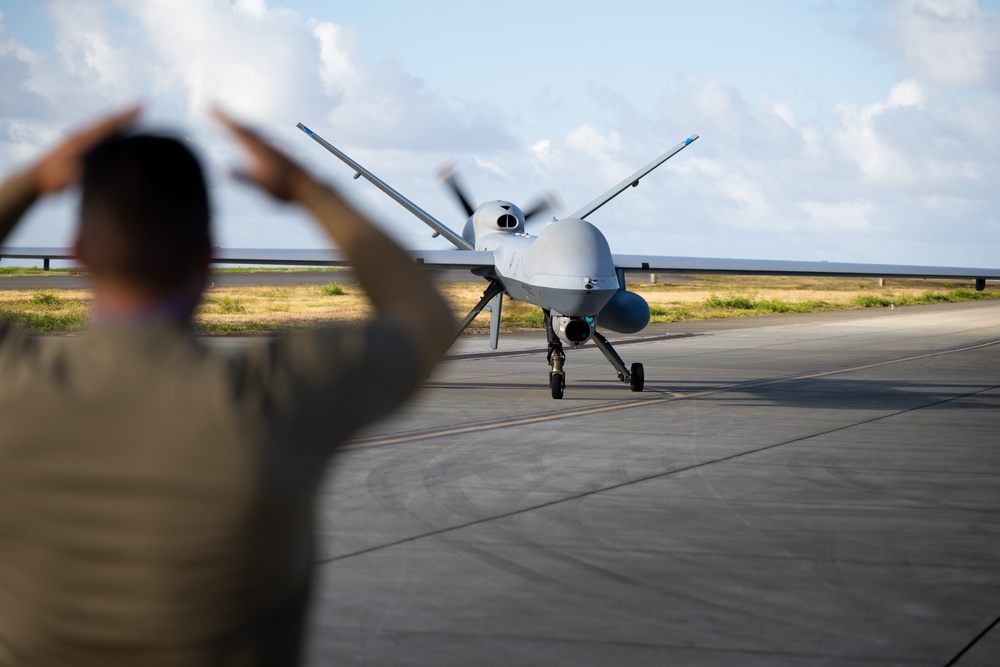
The Defense Innovation Unit (DIU) has opened a new competition aimed at fielding a low-cost, high-rate-production drone capable of stepping in for the venerable MQ-9A Reaper — and, unlike the Reaper, being cheap enough to lose in combat without derailing a mission. The solicitation, published July 9, 2026, launches the Massed Modular Aircraft (MMA) program, a Pentagon effort to build a disposable-by-design uncrewed aircraft that can be produced at scale and replaced quickly when losses occur.
DIU is the Pentagon's fast-track acquisition arm, created to pull commercial technology into military use faster than traditional procurement allows. The MMA solicitation continues that pattern: rather than a conventional program of record with years of development, DIU is running MMA as an Other Transaction (OT) agreement, a contracting mechanism specifically designed to draw in nontraditional defense contractors who might otherwise be deterred by standard federal acquisition rules.
What DIU Is Asking For
According to DIU's solicitation and reporting from Breaking Defense, the program has two tiers of requirements. The primary, non-negotiable specifications are:
- A minimum payload capacity of 2,800 pounds
- An unrefueled combat radius of at least 2,300 nautical miles while carrying that payload
- A one-way self-deployment range of 8,000 nautical miles
That self-deployment figure stands out. An 8,000-nautical-mile ferry range means the aircraft would be able to fly to a distant theater largely under its own power, without relying on airlift, ships, or extensive forward logistics to get into position — a significant departure from how the Reaper fleet is typically moved and based today.
Beyond those baseline numbers, DIU listed secondary attributes it wants bidders to pursue: resilient communications links designed to keep functioning under degraded or denied conditions, a tactical airspeed around 200 knots, and a control architecture that lets a single operator manage multiple aircraft simultaneously — a nod to the swarm-oriented, human-machine teaming concepts the Pentagon has been pushing across its uncrewed programs.
Mission Set: A Reaper Understudy
The Reaper has been the Air Force's signature medium-altitude, long-endurance drone for nearly two decades, used for strike, intelligence-gathering, and surveillance in permissive airspace. But the aircraft is expensive, not built for high-rate replacement, and increasingly vulnerable in contested environments where adversaries can shoot it down.
The MMA solicitation, as described by The Defense Post, explicitly asks for a system that can absorb a meaningful slice of the Reaper's mission portfolio: strike, scouting, communications relay, and electronic warfare. Payloads are expected to include full-motion video sensors, consistent with the intelligence, surveillance, and reconnaissance work Reapers currently perform.
The throughline connecting all of this is attrition tolerance. DIU's language emphasizes "high-rate production capacity" — the ability to build replacement airframes fast enough that losing aircraft in combat doesn't cripple a unit's capability. That is a fundamentally different design philosophy than the Reaper, which is a relatively exquisite, expensive platform that the Air Force cannot afford to lose in large numbers.
Timeline and Contracting Path
DIU set an aggressive schedule. Responses to the solicitation are due July 23, 2026 — roughly two weeks after the announcement. From there, the agency is targeting a full-scale flying prototype within 21 months of award, with an operational capability goal of fiscal year 2031.
Using an Other Transaction agreement rather than a standard Federal Acquisition Regulation contract is a deliberate choice. OT agreements let DIU skip much of the paperwork and pricing scrutiny that typically discourages commercial drone makers and startups from bidding on defense work, and they allow for faster award timelines. It's the same contracting tool DIU has used across its portfolio to court companies that don't normally sell to the Pentagon.
Why It Matters
The MMA program is a concrete signal of where the Pentagon believes uncrewed aviation needs to go: away from small numbers of expensive, hard-to-replace platforms and toward mass-producible aircraft that can be attrited and rebuilt at the pace of a real conflict. The Reaper has been reliable but was built for a different era of air operations, largely against adversaries without serious air defenses. In a higher-end fight, the calculus changes — losses are expected, and the side that can replace aircraft faster gains an advantage. The specific numbers matter too. A 2,300-nautical-mile combat radius with a 2,800-pound payload would put an MMA-derived drone in a similar performance class to the Reaper on range and payload, while the 8,000-nautical-mile self-deployment range points toward a design meant to reach the Pacific or other distant theaters without depending on scarce airlift or forward basing — a persistent vulnerability in any potential fight with a peer competitor. Combined with the multi-drone-per-operator control requirement, DIU is effectively asking industry to design toward mass: cheap enough to build in quantity, capable enough to matter, and networked enough that a shrinking pool of operators can still control a growing fleet. The compressed response window and 21-month prototype target also indicate the Pentagon wants to move well ahead of the FY2031 operational goal, not wait for it.
Sources
- Pentagon Opens Hunt for Disposable Drones to Complement MQ-9A Reaper — The Defense Post
- DIU seeks cheaper drones to carry out Reaper missions — Breaking Defense
- DIU Work With Us — Open Solicitations — Defense Innovation Unit