
In a roughly 72-hour span in early July, Ukrainian long-range strike drones hit at least 21 vessels operating in the Sea of Azov, the northern Black Sea, and the waters around Crimea's Kerch Strait, according to Ukrainian military figures reported by the Kyiv Independent — the large majority of them oil tankers belonging to Russia's "shadow fleet," the aging, opaquely owned tanker armada Moscow uses to move sanctioned crude around Western price caps. The campaign, run by the Ukrainian military's 414th Unmanned Strike Aviation Brigade under commander Robert "Magyar" Brovdi, marks one of the most concentrated maritime drone offensives of the war and is aimed squarely at severing the fuel arteries that keep occupied Crimea — and much of Russia's war machine — running.
The tally builds across two documented waves. On July 6-7, drones that Naval News identified as Fire Point FP-1 variants, launched by the Kairos Battalion under the 414th Brigade, struck 10 ships in the Sea of Azov and northern Black Sea: eight oil tankers plus a bulk cargo vessel and a ferry, according to Naval News. Among the tankers hit were the Sanar-1, Sanar-17, Klimena, Teti, Aleksey Savrasov, and Penelope. Naval News estimates that, including this raid, 14 to 15 Russian tankers have now been damaged or sunk since the drone campaign against shadow-fleet shipping began, following earlier strikes further afield on the tankers Qendil and MV Arctic Metagaz in the Mediterranean.
The pace did not let up. Ukrainian officials reported nine additional shadow-fleet tankers struck on July 8 alone, bringing the total to 21 vessels hit in a single 72-hour window — 19 tankers, one cargo ship, and one ferry, according to the Kyiv Independent. Brovdi framed the strikes as part of a broader onslaught: Ukrainian forces reported hitting 53 military targets overnight into July 8 across Crimea and other occupied territory, including the Dzhankoi air base, port infrastructure at Kerch, and a logistics hub feeding the front near Pokrovsk. "Ready to see the next shadow showdown? Moscow will fall," Brovdi said in comments carried by the outlet. Serhii Kuzan, head of the Ukrainian Security and Cooperation Center, said the strikes were deliberately targeting the logistics chains that keep Russian forces supplied. Russian-installed Crimea head Sergey Aksyonov claimed 27 drones were shot down in the barrage and reported no casualties — a claim that could not be independently verified.
Together, the two reporting windows describe an unusually dense run of successful long-range drone attacks against maritime targets: 21 vessels — 19 tankers, a cargo ship, and a ferry — hit over the 72 hours from roughly July 6 to July 8, per Ukrainian military figures reported by the Kyiv Independent, alongside Naval News' separate, longer-running tally of 14 to 15 tankers damaged or sunk since the shadow-fleet drone campaign began earlier in the year. The two counts track different scopes — one a rolling campaign total that reaches back to Mediterranean strikes months earlier, the other a tight 72-hour window around the Sea of Azov and Crimea — and should not be added together, but both point in the same direction: a domain where Ukraine has increasingly focused its unmanned strike capability after establishing dominance over much of the western Black Sea earlier in the war.
The Weapon: Fire Point's FP-1
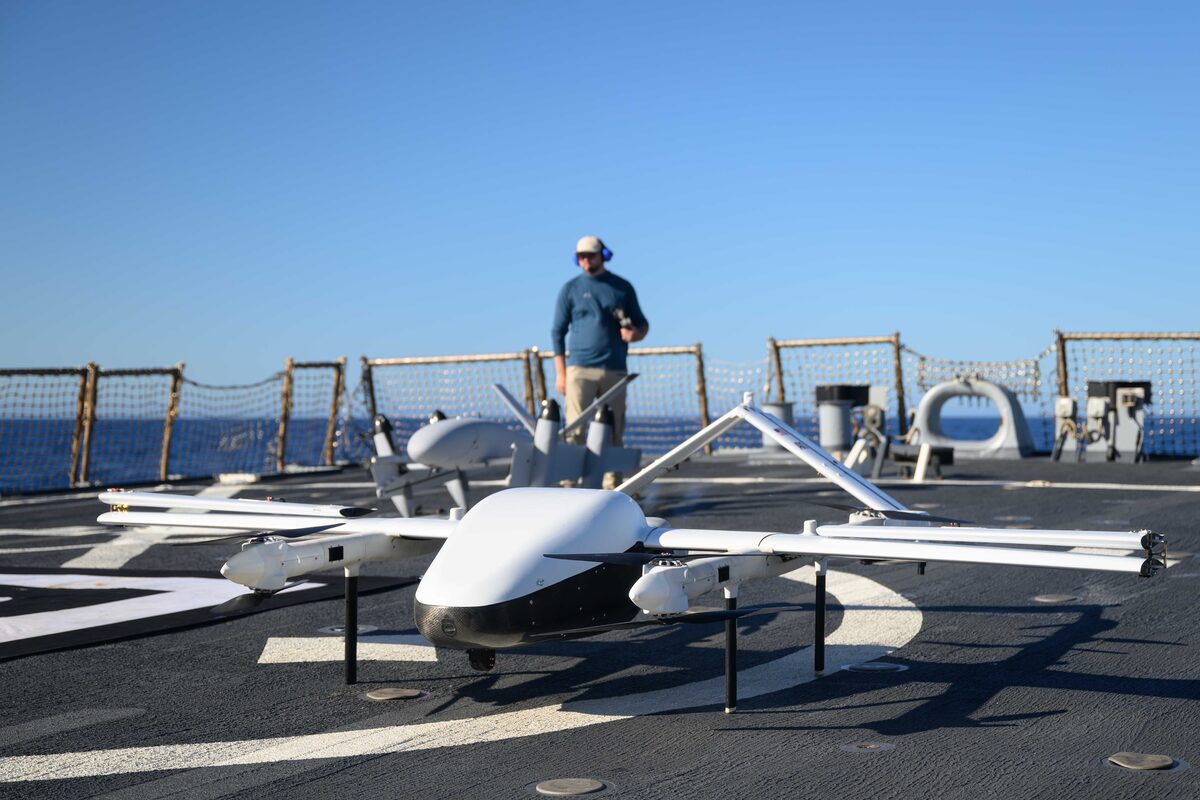
The July 6-7 raid was carried out with drones that Naval News assessed as Fire Point FP-1 variants, part of Ukraine's growing family of domestically produced long-range strike drones, fielded by units under the 414th Unmanned Strike Aviation Brigade. Ukraine has increasingly leaned on domestically produced long-range strike drones — rather than manned naval assets or missiles — to reach tankers and infrastructure well beyond the immediate front line, a shift that has let a relatively small, specialized unit like the Kairos Battalion generate outsized effects against Russian shipping and coastal targets around Crimea.
A Two-Front Fuel Squeeze
The tanker campaign is landing alongside — and compounding — a separate Ukrainian effort to strike Russian oil refineries deep inside the country. CNBC reported on July 9 that Ukraine's long-range drone offensive now reaches as far as Russia's largest refinery, at Omsk in Siberia, with President Volodymyr Zelensky stating that upgraded Fire Point drones have put Siberia "within reach" of Ukrainian strikes. Taken together, the refinery strikes and the shadow-fleet tanker raids form a pincer on Russian fuel supply: one arm hitting the refining capacity that turns crude into usable fuel, the other hitting the tankers that move crude and refined product to and around Crimea. CNBC's reporting also notes that this broader drone playbook is shaping how NATO members are now prioritizing their own drone investment — the alliance's "Drone Edge" initiative, announced by Secretary-General Mark Rutte, commits members to more than $40 billion in counter-drone capabilities over five years — as Ukraine's approach demonstrates a low-cost, long-range strike capability that Western militaries are studying closely.
Sanctions Backdrop
The military campaign is unfolding against a shifting U.S. sanctions posture. The Treasury Department's Office of Foreign Assets Control issued an amended Russia-related general license and associated FAQ on July 8, according to OFAC's recent-actions log — part of the broader, ongoing federal sanctions regime aimed at Russia's shadow fleet. Years of incremental Western sanctions pressure have not kept vessels like the Sanar-1, Sanar-17, Klimena, Teti, and others out of Russian-controlled waters near Crimea, where Ukraine's strikes found them still operating. Where financial sanctions have moved incrementally, Ukraine's drone units are now imposing costs at sea directly and immediately.
Why It Matters
Crimea's fuel supply runs largely through maritime routes and the Kerch Strait corridor, making tankers a chokepoint that is far harder for Russia to defend than it is for Ukraine to reach with long-range drones. A campaign that damages or sinks over a dozen tankers in under a week — while separately hitting refineries as far away as Omsk — threatens to compress both ends of Russia's fuel-distribution chain at once: less crude reaching refineries, and less refined fuel reaching occupied Crimea and forward military logistics. For NATO planners, the episode is also a live demonstration that a relatively small brigade-level drone unit, using domestically built long-range strike drones rather than manned ships or expensive missiles, can generate sustained pressure on an adversary's maritime shadow-fleet logistics — a capability gap Western militaries are now moving to close in their own force planning, per CNBC's reporting. And for the sanctions regime, the strikes underscore a structural weakness: years of incremental U.S. and allied sanctions against the shadow fleet have not kept vessels like the ones Ukraine is now hitting out of Russian-controlled waters, leaving an operational gap that Ukraine's drones are now filling by force.
Sources
- Ukrainian Drone Raid Hits 10 Russian Ships, Crippling Crimea Supply Lines — Naval News
- 'Moscow will fall' — Another 9 Russian shadow fleet tankers hit in Azov Sea, Ukraine's 'Madyar' says — Kyiv Independent
- Ukraine's drone playbook is wreaking havoc in Russia — and upending where NATO wants to invest — CNBC
- Recent Actions — Office of Foreign Assets Control, U.S. Treasury
