
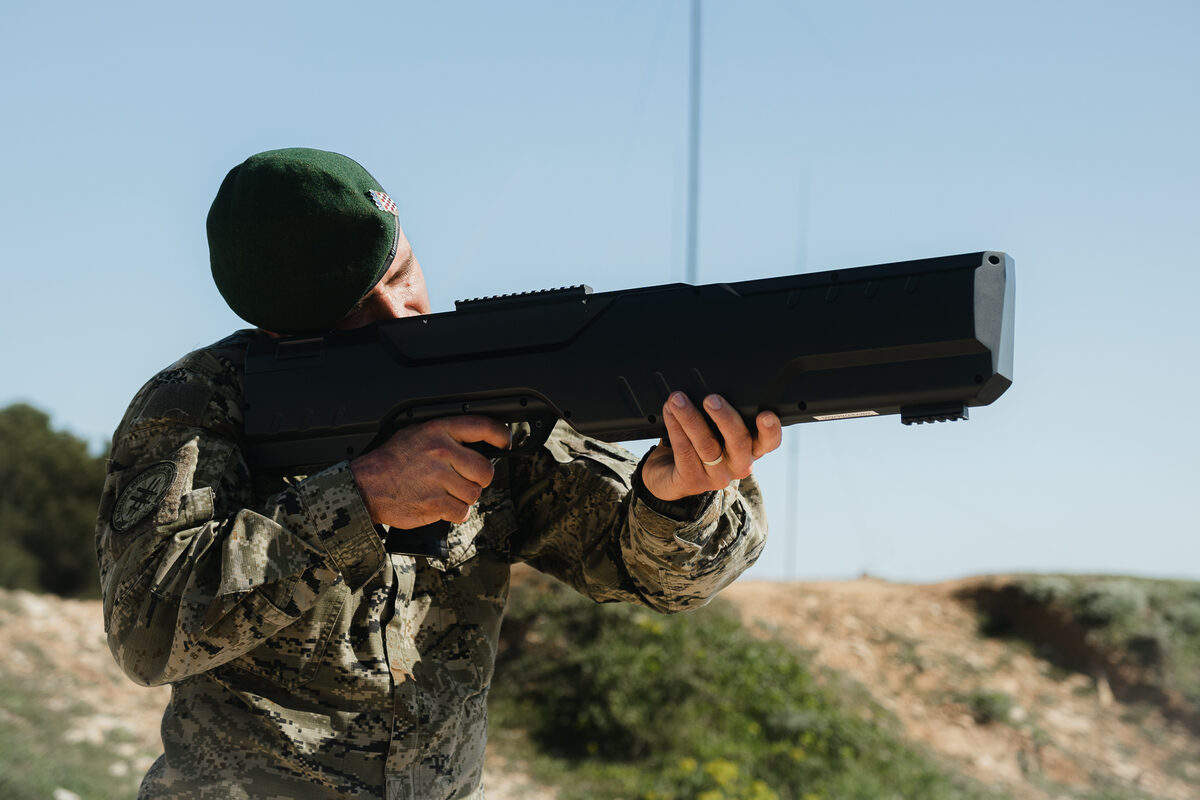
Homeland Security Secretary Markwayne Mullin has offered a frank public account of where U.S. counter-drone defenses fall short. In an interview on Fox News' The Sunday Briefing on Nov. 15, Mullin called countering unmanned aircraft systems his "number one issue." He said "there are holes in our counter-UAS ability to be kinetic and bring down real threats," and that DHS is meeting new drone technology on the southern border that it is "having a hard time defeating."
He also gave a new number. During the FIFA World Cup 2026, Mullin said, law enforcement encountered more than 2,000 drones, confiscated 700 and made multiple arrests. The confiscation count matches what DHS published in July. The encounter figure does not appear anywhere in that release.
The World Cup number that wasn't in the press release
On July 23, DHS put out a celebratory wrap-up of the tournament. It covered 38 days of competition and 78 matches on U.S. soil with no major security incidents at any stadium or Fan Festival. On drones, the release said one thing: "Combined, DHS and FBI seized more than 700 unauthorized drones." It also listed 50-plus air missions flown by CBP Air and Marine Operations and more than 19,000 inspections of vehicles headed into stadiums and fan festivals. It gave no count of how many drones federal teams detected or encountered.
Mullin's figure fills that gap, and it changes how the July number reads. If more than 2,000 drones were encountered and about 700 were taken, then roughly two out of three encountered drones were not seized. The interview did not say what happened to those aircraft. Some operators may have been warned off, some drones may have left on their own, and some may have been tracked but never reached. Mullin also did not say what counts as an "encounter," so the 2,000 may include repeat detections of the same aircraft. One more detail matters here. DHS credited the 700 seizures to DHS and the FBI together, while Mullin attributed both figures broadly to "law enforcement."
Encounters and seizures measure different things, and a stadium perimeter has no need to confiscate every hobbyist's quadcopter. But a published seizure count without the encounter count behind it says little about how much drone activity ended without the aircraft in government hands.
"Holes" and the FAA problem
DroneXL reported that the interview ran a little over ten minutes, with about three of them on drones. Mullin said he coordinates with Transportation Secretary Sean Duffy on the matter because of airspace clearance. Physically bringing down a drone creates airspace issues, he said, and the Federal Aviation Administration sits inside Duffy's Department of Transportation. That is the context for his remark about the "holes" in DHS's ability to be kinetic.
This is the long-running tension in domestic counter-UAS. Detecting a drone and identifying its operator are mostly sensor and policing problems. Jamming, spoofing or physically destroying an aircraft in national airspace runs into aviation safety rules that DHS does not control. Mullin's comments suggest that the boundary between the two departments still limits what DHS can do once it has found a drone.
The timing is notable. According to DroneXL, on Nov. 9, six days before the interview, DHS and four other departments gave the FAA a safety review of new counter-drone systems before they are used in U.S. airspace. Mullin did not describe the contents of that review on air. DroneXL framed his Duffy remark as fitting with that announcement.
The border is the bigger load
Mullin said the southern border is where DHS meets the most drones. "Our counter-UAS measures need help, and DHS is leading that, because we encounter more drones on our southern border because of the cartels," he told Fox, adding that "we're seeing new technologies that we're having a hard time defeating right now." He did not say which technologies.
Military data supports the scale he described. Fox News cited Brig. Gen. Brian Filler of Joint Task Force-Southern Border, who told reporters the military detected 378 drone incursions along the border over a 30-day period and said the trend was increasing. DroneXL dated that count to the month ending Sept. 22 and reported that the task force counted at least 378 drones in that window, with 15 engaged.
On those figures, only a small fraction of the drones detected on the border drew an engagement, about 4 percent. Neither source said how many of those 15 engagements ended with a drone defeated.
A new office, a new boss
Mullin also described a new counter-drone department led by a former Special Forces major whom he referred to as "Napolitano." Mullin did not give the person's full name or the office's name. DroneXL notes that DHS launched its Program Executive Office for UAS and Counter-UAS on Jan. 12, under then-Secretary Kristi Noem, with Steven Willoughby as executive director at launch. Mullin was sworn in on March 24. The interview did not make clear whether the organization Mullin described is that office under new leadership or a separate body.
Iran, the Olympics and Friday night lights
The interview closed with a question about an Israel Hayom report of an Iranian plot to use explosive drones against President Trump. Mullin did not confirm that report. He said presidential briefings bring "aspirational threats" from Iran every day and called Trump and his family "target number one." He also pointed to the wider set of events where drone security is needed: the 2028 Olympic Games in Los Angeles, and everyday gatherings such as high school football games, parades and professional sporting events.
Why It Matters
Mullin put numbers on the domestic counter-drone gap and named a cause. The World Cup figures, as Mullin gave them, show what a high-priority security operation encountered and removed: 2,000-plus drones encountered and about 700 seized. The border figures show a different picture: 378 incursions detected and 15 engagements in a month, per the Joint Task Force-Southern Border as reported by DroneXL.
Mullin tied the limits on kinetic action to airspace clearance and his coordination with the Transportation Department. That makes the FAA's handling of the Nov. 9 safety review of new counter-drone systems the next thing to watch. With the 2028 Olympics approaching and cartel drones using technology that DHS says it struggles to defeat, the gap between detecting a drone and stopping it is an operational problem that DHS's own secretary is now describing in public. How DHS defines an "encounter" will also decide how much weight the 2,000 figure can bear.
