
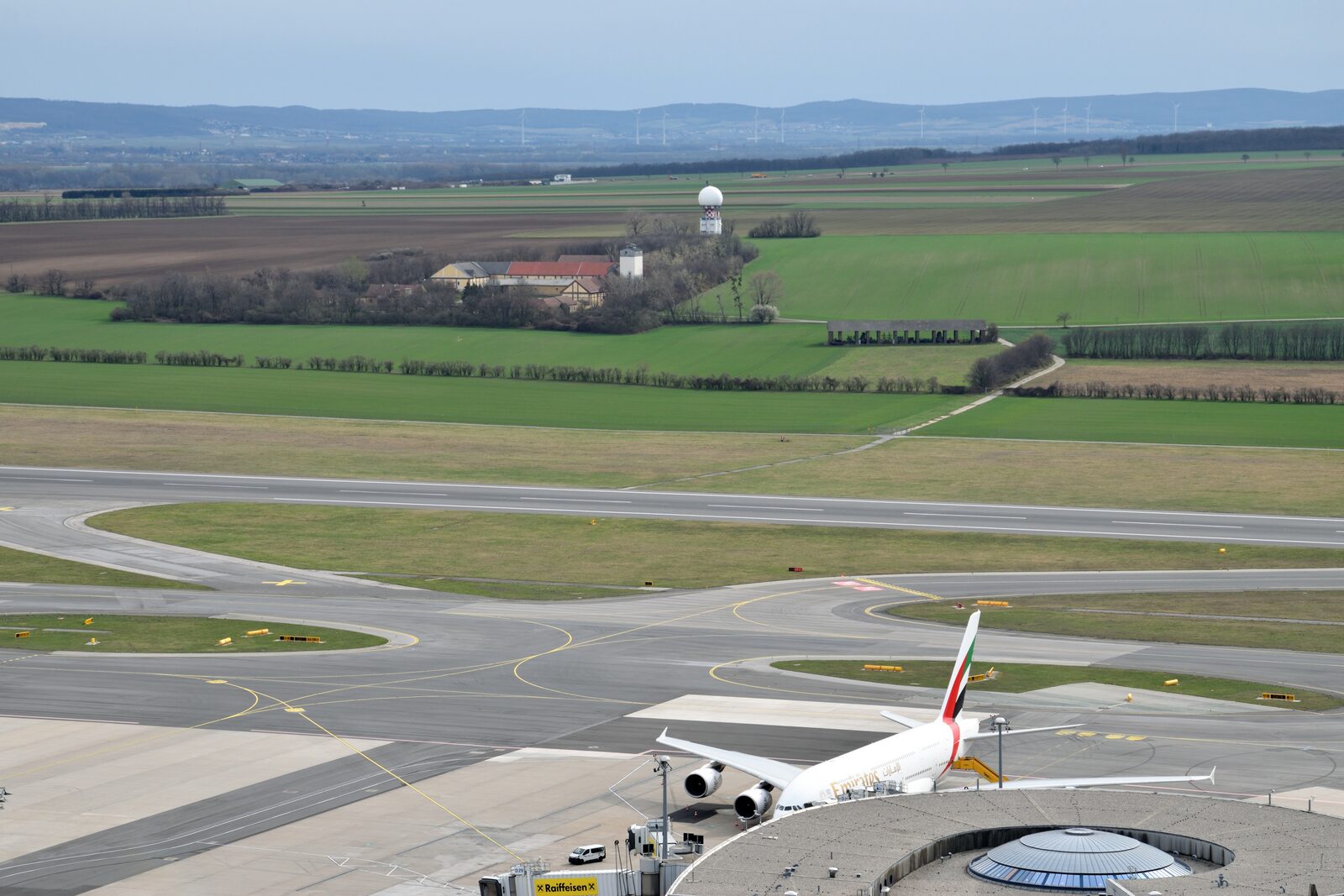
December 2018, Gatwick Airport, Sussex. A drone appeared near the runway on the evening of the 19th and refused to leave. For 33 hours, the UK's second-busiest airport sat paralyzed: more than 1,000 flights cancelled, 110,000 passengers stranded or rerouted, and easyJet alone reporting £15 million in losses. Airlines collectively bled roughly £50 million ($64.5 million). Sussex Police knocked on 1,200 doors, gathered 222 witness statements, identified 96 persons of interest, and spent over £800,000 on an 18-month investigation. The operator was never identified. No one was ever charged.
The Scope of the Threat
Gatwick wasn't anomalous. The FAA receives a significant and steady volume of drone sighting reports, and the agency's own records document a persistent pattern of UAS encounters near manned operations — including incidents where drones came uncomfortably close to crewed aircraft.
The U.S. has its own incident catalog. A 2019 drone sighting near Newark Liberty suspended air traffic for 90 minutes after two pilots independently reported the aircraft. Each incident ends the same way: partial disruption, delayed response, and no criminal accountability.
Why Airports Are Uniquely Hard to Protect
"Detecting a small, erratically flying piece of plastic and electronics amidst a modern airport's metallic clutter and radio cacophony is no mean feat."
The setting amplifies every sensing challenge. Hangars, ground vehicles, rotating radar arrays, and dense RF emissions from navigation aids and avionics create both radar clutter and electronic interference that degrades every common detection modality simultaneously. Stack on top the near-impossibility of distinguishing hostile intent from navigational error — the FAA's Section 383 Aviation Rulemaking Committee concluded that determining an unauthorized operator's intent remains nearly impossible, effectively making every incursion a presumptive threat by default.
Single-sensor approaches fail categorically. Long-range radar misses low-altitude or low-RCS drones. RF scanners cannot track autonomous or RF-silent platforms. Acoustic systems require broad microphone coverage and struggle in the ambient noise of active taxiways. Bird-drone discrimination is persistently difficult: a multirotor's propellers spin at thousands of RPM while birds flap at a few hertz, but a bird thermaling in an updraft and a fixed-wing drone can produce eerily similar radar returns.
A mature airport C-UAS stack layers four capabilities: outer detection via long-range radar and RF scanning; tracking and classification via higher-resolution radar, RF fingerprinting, and optical slew-to-cue with machine learning; identification and threat assessment via EO/IR cameras and AI profiling; and a unified command-and-control decision-support system to drive response. A self-prioritizing alert stream can significantly reduce false positives, enabling a small security team to manage a major facility's airspace without information overload. That architecture runs roughly $5 million upfront for a municipal-scale deployment, plus ongoing maintenance and subscriptions — significant, but trivial against airline operating costs of approximately $100 per minute and a Gatwick-scale economic event that compounds into millions within hours.
The Authority Patchwork
The harder problem is legal. Only four federal departments hold statutory authority to both detect and neutralize drones: DHS, DOJ, DoD, and DOE. The FAA — which operates the airspace, receives the sighting reports, and understands the threat environment — has no independent legal authority to disable or destroy an aircraft. It can flag threats, coordinate with partners, and gather sensor data. It cannot pull a drone out of the sky.
DHS and DOJ may deploy counter-drone technologies at airports, but only when drones pose a "credible threat to safety or security" and either the DHS Secretary or the Attorney General formally designates the airport for emergency response. Local law enforcement handles first contact; federal assistance follows tactical protocols and a federal interagency agreement. As one unnamed Washington policy source summarized: "Mitigation is very, very hard. And there are very few instances in the continental United States where mitigation has ever been employed."
To evaluate detection technology within these constraints, Congress mandated a pilot program through Section 383 of the 2018 FAA Reauthorization Act. The FAA deployed and evaluated detection technologies across multiple airports and established the Section 383 Aviation Rulemaking Committee, co-chaired by Echodyne and RTX Corporation. Its core finding: airports are the only operational spaces where crewed and uncrewed aircraft routinely interact, and they need location-specific solutions with federal funding support.
Why It Matters
The GAO concluded in October 2023 that the statutory framework was inadequate and recommended Congress amend pertinent authorities. That recommendation closed as implemented through provisions in the FY2026 NDAA (signed December 2025) — a meaningful expansion from a regime that previously confined mitigation to four cabinet departments.
The political path was not smooth. Counter-UAS authority expansion is, in the words of Brent Cotton, Director of the DHS C-UAS Program Management Office, "in no way a slam dunk…we are really battling the privacy, civil rights and civil liberties concerns on the Hill." The White House Domestic Counter-UAS National Action Plan framed the stakes plainly: "Malicious actors have increasingly used UAS domestically to commit crimes, conduct illegal surveillance and industrial espionage," and "simple sightings or minor incidents involving a UAS at one of these sites can have a domino effect on commerce, shipping and transportation."
One GAO recommendation remains open as of March 2026: the FAA should integrate counter-drone technology assessment into its overarching drone integration strategy. The Pentagon's Defense Innovation Unit has meanwhile issued requirements for its Counter UAS Sensing for Homeland and Mobile Defense project — minimum 2 km detection against Group 1 UAVs under 20 lbs, ground clutter and bird interference filtering, and rapid integration with government-designated fire control systems. Whether the FY2026 NDAA's authority expansion reaches U.S. airports before the next Gatwick-scale event is, for now, an open question.
Sources
- U.S. GAO — Counter-UAS at Airports (GAO-24-107195, April 2024)
- DOT Office of Inspector General — FAA Counter-UAS Final Report (March 2022)
- Unmanned Airspace — Insights into FAA ARC-383 on UAS Detection and Mitigation Systems (2024)
- Inside Unmanned Systems — More Agencies May Get Counter-UAS Authority, But It's No Slam Dunk
- MindFoundry — The Drone Blockade: Airports and C-UAS (2024)
- DeDrone — Gatwick Airport Drone Incident: Shut Down from Deliberate Drone Disruption
- C4ISRNET — Addressing the Threat of Hostile Drones to Critical Infrastructure (March 2023)
- C4ISRNET — Pentagon Wants Counter-Drone Sensors to Protect U.S. Infrastructure, and Fast (February 2026)