
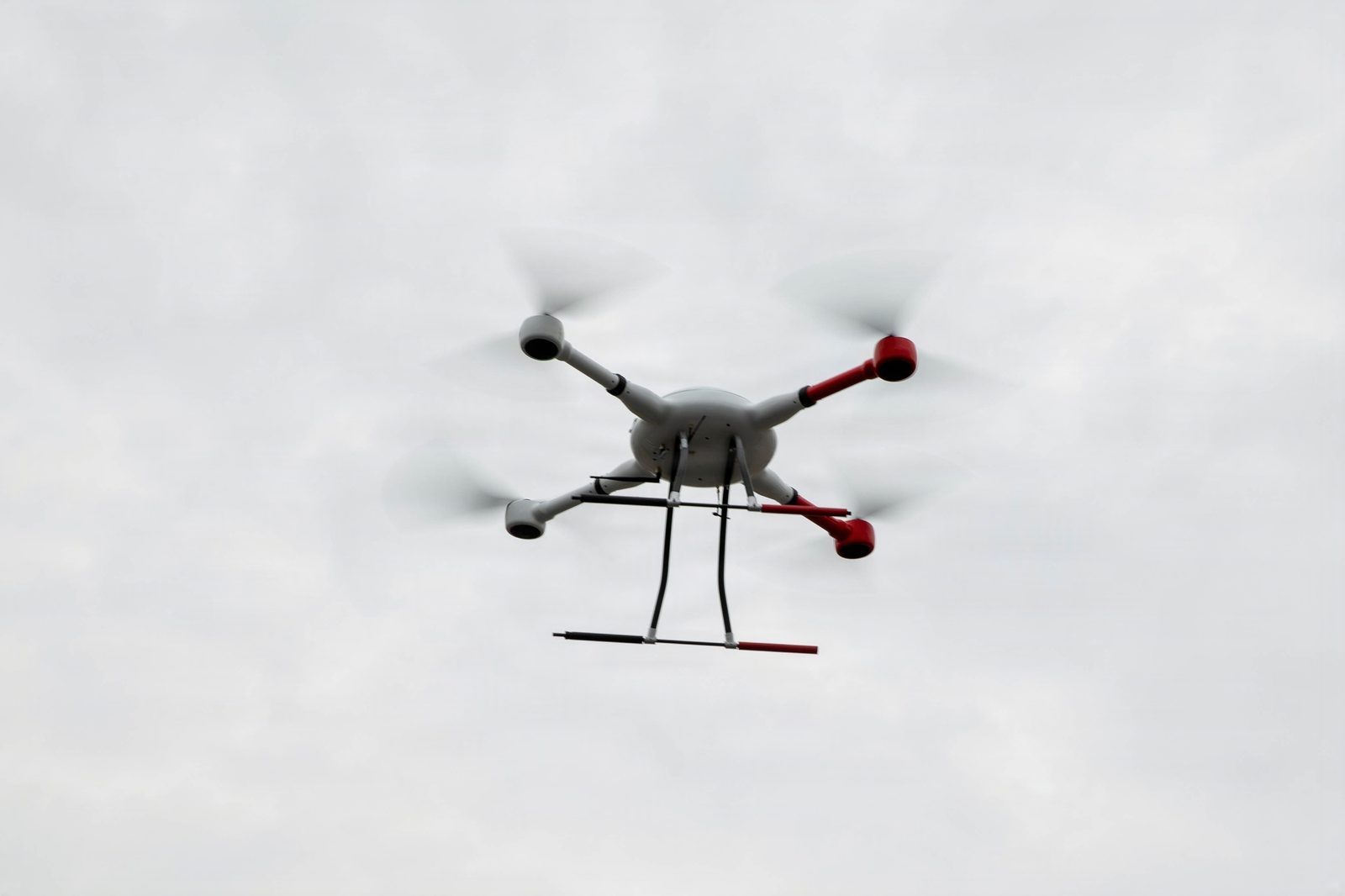
Every few months, a viral video reignites the same argument: a homeowner spots a drone hovering over the backyard, grabs a shotgun or a pistol, and brings it down. The comments fill with confident legal opinions about castle doctrine and property rights. Almost none of them are correct. UASFeed has already covered the dense federal statutory architecture that criminalizes shooting at drones — the Aircraft Sabotage Act, the Wiretap Act, and the narrow, agency-specific counter-UAS authorities Congress has carved out since 2016 (covered in depth here). What that framework doesn't fully answer is a narrower, more practical question: when someone actually pulls the trigger, what happens to them in court? The answer, drawn from the handful of cases that have actually been prosecuted or litigated, is more unsettled — and more punishing for the shooter — than the internet folklore suggests.
The Kentucky "Drone Slayer" and the Lawsuit That Went Nowhere
The case most often cited as precedent isn't precedent at all. In July 2015, William Merideth shot down a hexacopter belonging to his neighbor, John David Boggs, after it flew low over his Bullitt County, Kentucky property; Merideth said he believed its camera was pointed at his sunbathing daughter. Local police charged him with first-degree criminal mischief and wanton endangerment, but a Bullitt County district judge dismissed both charges, reportedly reasoning that Merideth had acted to protect his family's privacy. That dismissal has been repeated online ever since as proof that shooting down a drone is legal. It isn't proof of anything beyond one local judge's view of one misdemeanor case — a state district court ruling on a charging decision carries no precedential weight anywhere else, and it never addressed the federal Aircraft Sabotage Act exposure Merideth also faced.
The more consequential proceeding was the federal civil suit Boggs then filed: Boggs v. Merideth, No. 3:16-CV-00006 (W.D. Ky.). Boggs asked the U.S. District Court for the Western District of Kentucky for a declaratory judgment that his drone was an "aircraft" operating in "navigable airspace" under exclusive FAA jurisdiction, and that Merideth therefore had no state-law privilege to destroy it. It was, in effect, a direct request for a federal court to resolve whether FAA sovereignty over airspace preempts a property owner's self-help defense. The court never reached that question. On March 21, 2017, Senior Judge Thomas B. Russell dismissed the case for lack of subject-matter jurisdiction, holding — according to legal commentary on the ruling — that the dispute was, at its core, "a garden variety state tort case of trespass and invasion of privacy" and that federal aviation regulations were, at most, "ancillary issues" insufficient to support federal question jurisdiction. Coverage of the ruling from Wiley's appellate practice group and the law firm Benesch both describe the same outcome: the court declined to decide whether the drone was flying in navigable airspace or over Merideth's land, calling that boundary question "not significant to the federal system as a whole." No appeal to the Sixth Circuit is documented in the case's public docket history reviewed for this article — the matter simply ended on jurisdictional grounds, and the substantive airspace-versus-property question it raised has never been squarely answered by any federal appellate court.
2024: Real Prosecutions, Real Consequences
Nearly a decade later, prosecutors are no longer treating drone shootdowns as a curiosity. In February 2024, a federal court in the Middle District of Florida sentenced Wendell Goney to four years in prison and ordered him to pay more than $29,000 in restitution after he fired on a Lake County Sheriff's Office drone that was searching for a burglary suspect near his Mount Dora home in 2021. According to reporting on the sentencing, Goney was originally charged with destruction of law enforcement property in addition to a firearms offense, but the case that actually sent him to prison was possession of a firearm by a convicted felon — a reminder that prosecutors often reach for whatever charge sticks hardest, not necessarily the Aircraft Sabotage Act itself. Had Goney been legally eligible to own the rifle he used, the outcome — and the statute prosecutors leaned on — could have looked very different.
A second 2024 case shows how quickly an ordinary property dispute can escalate into criminal exposure even without a felony record in play. On June 26, 2024, 72-year-old Dennis Winn shot a Walmart-contracted DroneUp delivery drone with a 9mm handgun outside his Lake County, Florida home after it descended near his property during a test flight. Deputies arrested Winn and charged him with shooting at an aircraft, criminal mischief causing damage over $1,000, and discharging a firearm on residential property. He avoided trial through a pretrial intervention agreement requiring $5,000 in restitution and 25 hours of community service, with the criminal charges to be dropped if he stays out of trouble for six months. Winn was not a felon, was not shooting at a surveillance target, and still faced three separate criminal counts for a single trigger pull at a drone he mistook for a threat. Between them, the Goney and Winn cases are the clearest recent evidence that shooting a drone — delivery, law enforcement, or otherwise — routinely produces felony or misdemeanor charges, restitution obligations, and in at least one instance, years of actual federal prison time.
The Legal Principle Underneath All of It
What connects the Kentucky case, the Florida prosecutions, and the general legal consensus is the same statutory anchor: 49 U.S.C. § 40103, under which "the United States Government has exclusive sovereignty of airspace of the United States," paired with a public right of transit through navigable airspace for U.S. citizens. Because the FAA has classified drones as "aircraft" subject to that sovereignty, courts and federal agencies treat airspace above a person's land — even at low altitude — as fundamentally a matter of federal, not state, control. A 2020 Government Accountability Office review of unresolved UAS legal issues (GAO-20-698) found that this framework leaves genuinely open questions, including how far the old common-law property right recognized in United States v. Causby — that a landowner controls the "immediate reaches" of the airspace above their land — survives in the drone era, and how much authority states retain under their police powers to regulate UAS activity in that same airspace. But on the narrow question that matters to a homeowner reaching for a gun, the GAO's review and the case law point the same direction: no state trespass, defense-of-property, or castle-doctrine theory has ever been upheld by a federal court as a valid defense to disabling an aircraft, because federal sovereignty over the airspace itself preempts the state-law argument before it can even be reached on the merits.
States Have Tried to Change This — and Failed
The legislative landscape here is thin, and every recent attempt to change it has stalled. In Texas, Rep. Jeff Leach filed House Bill 2916 in the 89th Legislature, which would have made shooting down a drone an affirmative defense to property-damage charges if the shooter used a legally possessed firearm on their own land. The bill was referred to the Judiciary & Civil Jurisprudence Committee in March 2025 and never advanced; when the Texas Legislature adjourned sine die on June 2, 2025, HB 2916 was not among the bills that passed. In Florida, state Sen. Keith Truenow's SB 1422 would have let homeowners use "reasonable force" against drones conducting surveillance below 500 feet, and it cleared multiple Senate committees on unanimous votes — but it never reached a full Senate floor vote. During committee debate, state Sen. Jason Pizzo reportedly warned colleagues that "you can't just take your gun out and start firing at a drone. You're going to have to deal with the FAA." When Florida's broader drone law ultimately passed as House Bill 1121, effective October 1, 2025, the reasonable-force provision from the Senate companion bill was not included. As of this writing, no state has successfully enacted a statute authorizing private citizens to shoot down or otherwise physically disable a drone over their own property, and the FAA has been explicit in public comment on these proposals that doing so "poses a significant safety hazard" and remains a federal violation regardless of what state law says.
Readers looking for the other half of this picture — which federal, state, and local agencies do have narrow legal authority to detect or disable drones, and under what conditions — can find that fully mapped out in UASFeed's earlier coverage of the federal counter-UAS authority framework and the SAFER SKIES Act's rollout to state and local law enforcement. That authority remains tightly restricted to government actors operating under specific statutory triggers; it does not extend to private citizens under any current federal or state law.
Why It Matters
The gap between what property owners believe the law allows and what courts and prosecutors have actually done with these cases is wide, and it isn't closing. Frustration with rogue drones — over backyards, over livestock, over delivery routes people never consented to — is real and, in some cases, entirely reasonable. But the case law reviewed here shows a consistent pattern: every documented instance of a private citizen shooting down a drone has produced criminal charges, and several have produced real financial or custodial penalties, regardless of whether the shooter was defending privacy, mistook the aircraft for a threat, or was otherwise sympathetic. No federal appellate court has ever validated a property-rights or self-defense theory as a shield against the Aircraft Sabotage Act, and every recent state legislative attempt to create one has died before reaching a governor's desk. For a property owner staring up at an unwanted drone, the near-total absence of a legal self-help remedy is the actual state of the law in 2026 — not the misremembered folklore of a Kentucky case that never even reached that question. The lawful options remain what they have always been: document the aircraft, note its registration number if visible, and report it to local law enforcement or the FAA rather than reaching for a firearm.
Sources
- U.S. Government Accountability Office — Unmanned Aircraft Systems: Current Jurisdictional, Property, and Privacy Legal Issues (GAO-20-698, Sept. 2020)
- Cornell Law School Legal Information Institute — 49 U.S. Code § 40103, Sovereignty and Use of Airspace
- Wiley Rein — Boggs v. Merideth Crashes On Lack of Jurisdiction
- Benesch, Friedlander, Coplan & Aronoff LLP — Lawsuit Against "Drone Slayer" Dismissed
- Reason — Florida Man Sentenced to 4 Years in Federal Prison After Shooting Down a Drone
- DroneDJ — Retiree Shoots Down Drone, Faces Legal Fallout and $5,000 Fine
- The Texan — Texas Bill Would Allow Property Owners to Shoot Down Trespassing Drones (HB 2916)
- DroneXL — Florida's SB1422 Sparks Drone Regulation Debate
