When dozens of unidentified drones spent weeks prowling over New Jersey in late 2024, public frustration was immediate: why couldn't authorities just shoot them down? The answer is not tactical incompetence. It is federal law — a dense, interlocking framework of aviation statutes and criminal codes that makes destroying an unmanned aircraft one of the most legally fraught acts a government official, let alone a private citizen, can perform.
The framework did not develop this way by design. It grew out of rules built for commercial aviation, then retrofitted to cover a category of aircraft nobody in Congress anticipated when the original statutes were written. The result: the practical desire to neutralize a rogue drone collides routinely with the legal reality that doing so may constitute a federal felony.
The Aircraft Sabotage Problem
The root issue begins with a definitional choice. Under 49 U.S.C. § 40102, drones are classified as "aircraft" under federal aviation law, which places them in federal airspace and subjects them to federal jurisdiction. That classification imports enormous legal baggage, starting with 18 U.S.C. § 32, the Aircraft Sabotage Act.
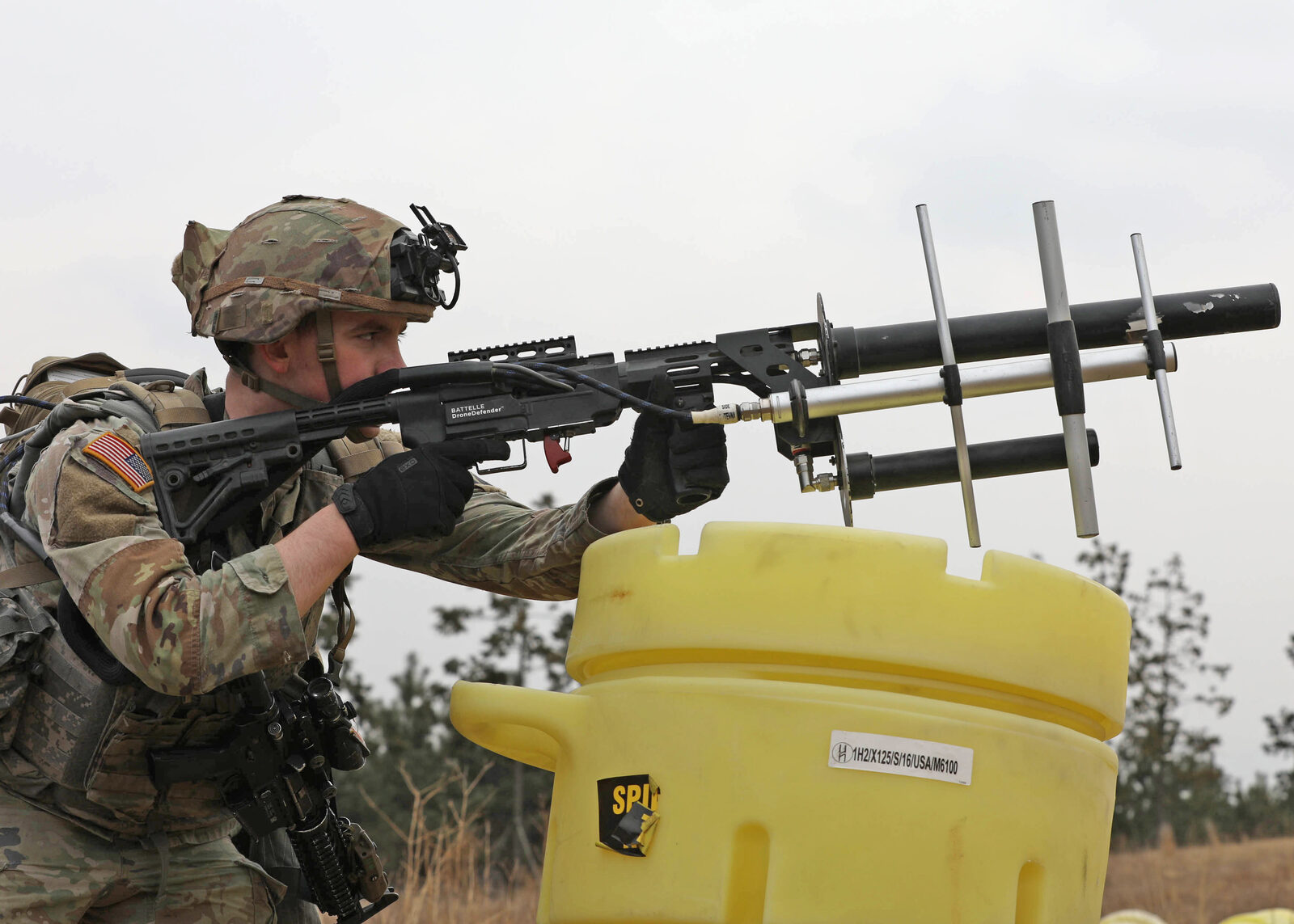
The statute is blunt: willfully damaging, destroying, disabling, or wrecking any aircraft in U.S. special aircraft jurisdiction or civil aircraft used in interstate or foreign commerce is a federal crime carrying up to 20 years imprisonment. The Act contains no specific reference to drones — UAS are addressed separately in §§ 39B and 40A — but the broad "aircraft" definition captures them anyway. Shooting a drone out of the sky, jamming its control link, or spoofing its GPS receiver all potentially fall within the Act's prohibition.
The reach of that prohibition was made explicit in a 1994 Office of Legal Counsel memorandum signed by Assistant Attorney General Walter Dellinger, which concluded that the Aircraft Sabotage Act applied to foreign police and military personnel shooting down civil aircraft suspected of drug trafficking — and that U.S. personnel providing tracking or assistance could face aiding-and-abetting exposure under the same statute.
The criminal exposure does not stop at physical destruction. The Wiretap Act (18 U.S.C. § 2511) and the Pen Register/Trap and Trace Statute (18 U.S.C. §§ 3121–3127) apply to interception of drone RF signals. Detecting, decoding, or decrypting drone control signals without a statutory waiver or court order constitutes illegal wiretapping. The Computer Fraud and Abuse Act (18 U.S.C. § 1030) is triggered by spoofing or hacking drone control systems. Additional statutes in play include 49 U.S.C. § 46502 (aircraft piracy) and 18 U.S.C. § 1367 (satellite interference).
"Certain counter-UAS actions — such as decoding or decrypting RF signals — would ordinarily violate existing federal criminal statutes." — Autonomy Global analysis of federal counter-UAS law
The cumulative effect: virtually every technical method of neutralizing a drone — physical destruction, jamming, RF detection, GPS spoofing, command-link takeover — implicates at least one federal criminal statute unless the actor has explicit statutory authorization. Congress has to carve out each agency individually.
The Three Existing Federal Authorities
DoD under 10 U.S.C. § 130i (2016) authorizes armed forces members, civilian DoD employees, and contractors with assigned security duties to detect through destroy unmanned aircraft threatening covered DoD facilities — a list encompassing nuclear deterrence, missile defense, national security space, presidential protection, special operations, munitions storage, and installations certified as vital to national defense. The authority explicitly does not extend into surrounding civilian communities and expires December 31, 2030.
DHS and DOJ under 6 U.S.C. § 124n (2018, amended 2025) created tailored legal waivers — exemptions that would otherwise be barred by the Aircraft Sabotage Act and Wiretap Act — for designated federal agencies to act against drones threatening covered federal facilities. Within DOJ, only the FBI holds this authority; within DHS, the Coast Guard possesses it but TSA does not. The FY2026 NDAA, signed December 18, 2025, amended the statute to broaden the triggering standard, meaningfully widening when counter-UAS action may be taken. The authority runs through September 30, 2031.
Department of Energy under 10 U.S.C. § 6227 (formerly 50 U.S.C. § 2661, repealed and relocated by FY2026 NDAA, Section 3111) granted DOE its own explicit authority to detect, identify, monitor, and intercept drones threatening nuclear facilities — closing a gap that had left the nation's most sensitive sites relying on ad hoc arrangements. The same NDAA established Joint Interagency Task Force 401 under new 10 U.S.C. § 199, reporting to the Deputy Secretary of Defense, as the principal federal coordinating body on counter-small-UAS.
SAFER SKIES and the State and Local Gap
Before December 2025, the picture for everyone outside DoD, FBI, and the Coast Guard was unambiguous. The Congressional Research Service stated it plainly in its February 2026 analysis:
"State and local law enforcement generally do not have statutory authority to operate counter-UAS technology." — CRS IN12661, February 2026
State police, city police, county sheriffs, transit authorities, corrections departments — none could legally deploy electronic detection equipment or take any mitigation action against a drone, regardless of what the drone was doing. A UAS hovering over a prison yard or a packed stadium was legally untouchable for the agencies most likely to be on scene. The FAA had no operational deployment authority either.
The SAFER SKIES Act, enacted as part of the FY2026 NDAA, changed that for the first time. It extended counter-UAS mitigation authority to state, local, tribal, and territorial (SLTT) law enforcement and correctional institutions through a tiered structure. Tier 1 (detection and identification) requires brief online training. Tier 2 (mitigation — disrupting, seizing, or destroying drones) requires a two-week resident course at the FBI's National Counter-UAS Training Center (NCUTC). SLTT agencies must use only technologies on a federal interagency-managed authorized technology list. Every mitigation event triggers a 48-hour mandatory report to DOJ and DHS. Civil penalties reach $100,000 per violation for unauthorized activities. First Amendment monitoring is explicitly prohibited. The authority sunsets December 31, 2031.
As of early 2026, full implementation remained incomplete. DOJ was required to develop training regulations by June 2026, and the authorized technology list was still under development. In the interim, the FBI offered SLTT agencies task force deputization as an operational pathway — leveraging the FBI's existing 6 U.S.C. § 124n authority while the new framework stands up. The FBI currently conducts counter-UAS operations at approximately 14 major annual events. FEMA allocated $250 million in FY2026 to 11 states and the National Capital Region for counter-UAS preparation, with an additional $250 million slated for nationwide distribution in FY2027.
Private citizens remain at the farthest end of the legal exposure spectrum. Individuals have no legal right to take counter-UAS action against drones, even over their own property. Property rights under U.S. law do not extend into navigable airspace in a way that authorizes destroying an aircraft. A homeowner who fires a shotgun at a drone hovering over their backyard faces the same 18 U.S.C. § 32 exposure as any official acting without statutory authorization.
The White House's Executive Order "Restoring American Airspace Sovereignty" (June 2025) directed the FAA to issue rulemaking restricting drone flights over critical facilities and established a Federal Task Force on drone threats chaired by the Assistant to the President for National Security Affairs — but the order did not itself modify the underlying criminal statutes. The legal architecture requires legislative action, and that action has arrived only incrementally. Until SAFER SKIES regulations are promulgated and the technology list finalized, most of the country's law enforcement remains legally constrained: able to observe rogue drones, unable to act against them without federal backing.
Sources
- U.S. House Office of the Law Revision Counsel — 10 U.S.C. § 130i (DoD Counter-UAS Authority)
- U.S. House Office of the Law Revision Counsel — 18 U.S.C. Chapter 2, Section 32 (Aircraft Sabotage Act)
- U.S. Department of Justice, Office of Legal Counsel — Dellinger Memorandum on Aircraft Sabotage Act, July 14, 1994
- The White House — Executive Order: Restoring American Airspace Sovereignty, June 2025
- Congressional Research Service — IN12661: Counter-UAS Legal Authority, February 2026
- EveryCRSReport.com — CRS IN12661 Full Text
- DroneLife — FY2026 NDAA: Key Counter-UAS Provisions Explained, December 2025
- Autonomy Global — Just Shoot It Down: Who Can Take Down Rogue Drones in the U.S.?
- Autonomy Global — Breaking the Law Within the Law: SAFER SKIES C-UAS Powers for Local Police
- AeroDefense — SAFER SKIES Act and Law Enforcement Counter-UAS Authority
- Route Fifty — New Drone Authorities: Local Law Enforcement and Counter-UAS Preparedness, May 2026
- DroneLife — SAFER SKIES Act Counter-UAS Authority: FBI and DroneResponders, March 2026