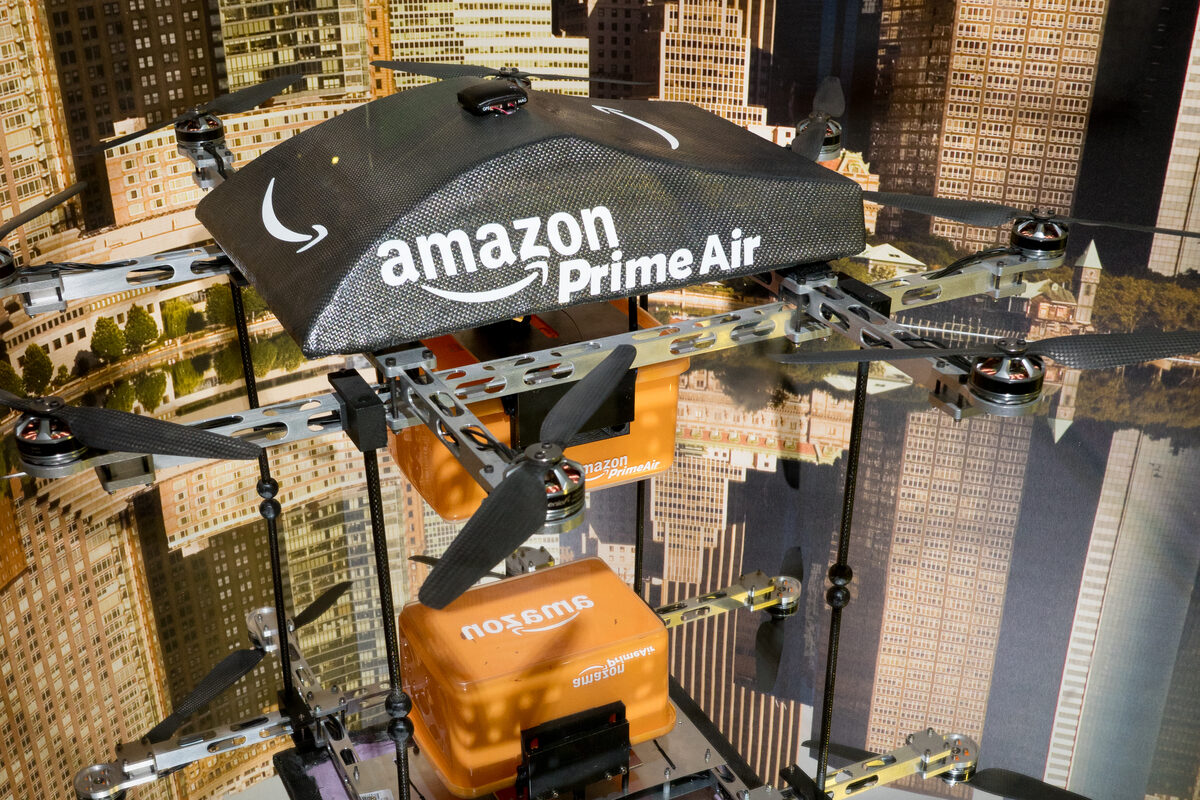
Amazon has opened another Ohio drone delivery site, and the pace is now the story. On Sunday, Nov. 22, the company announced that Prime Air drone delivery is running in the Toledo area out of its fulfillment center on Crossroads Parkway in Rossford, according to DroneXL, which cited WTOL's reporting. Rossford is Amazon's third Ohio drone hub. North Randall, near Cleveland, opened Sept. 24, and Etna, east of Columbus, was reported live Nov. 17. That puts all three launches inside 59 days.
The public paperwork is not keeping up. The FAA's page for environmental review of drone operations was last updated Nov. 9 and, when DroneXL checked on Nov. 23, listed no Amazon document for Ohio. Amazon's own Prime Air pages still showed Toledo and Columbus as "coming soon" on Nov. 23, DroneXL reported, after both sites were already delivering.
What Toledo Customers Get
The Rossford service area is a 7.5-mile radius around the fulfillment center. DroneXL reports that the radius takes in Perrysburg, Maumee and downtown Toledo. Packages can weigh up to 5 pounds, and Amazon says certain orders arrive in about 30 minutes. Pricing is in three tiers:
- Prime members, orders of $50 or more: free
- Prime members, orders under $50: $2.99
- Non-Prime customers: $4.99
Etna uses the same template. Spectrum News 1 reported that customers in eastern Columbus within 7.5 miles of the CMH1 Fulfillment Center at 11999 National Road in Etna can get drone delivery in as little as 30 minutes, free for Prime members on orders of $50 or more. Spectrum also called Etna Amazon's second Ohio drone center after Cleveland, which matches DroneXL's timeline.
Amazon's Prime Air overview page also promises delivery "as fast as 30 minutes." It carries customer testimonials from Hazel Park, Michigan, and Ruskin, Florida. It is a product page, and on the day after the Toledo announcement it did not yet describe the Ohio service that was already flying.
Three Hubs, One Pattern
The Ohio sites share a common model. Etna and Rossford are launched from existing Amazon fulfillment centers, and the sources describe both as 7.5-mile circles with delivery in as little as 30 minutes. Amazon appears to be adding flights to warehouses it already operates in the Columbus and Toledo areas, alongside its Cleveland-area site.
The schedule has sped up. North Randall to Etna took 54 days. Etna to Rossford took five.
The FAA Index Gap
The FAA's Public Involvement and Environmental Review for Drone Operations page is where the agency posts National Environmental Policy Act documents for drone programs. It lists, for example, a Draft Environmental Assessment for Amazon Prime Air in Chicago and a final assessment for Amazon in Florida. For Ohio it lists only an Environmental Assessment and Finding of No Significant Impact for UPS Flight Forward in Columbus. That document covers Matternet M2 operations over about 3.77 square miles. UASFeed found no Amazon entry for North Randall, Etna or Rossford on the page, which the FAA marks as last updated Monday, Nov. 9, 2026.
The likely explanation is a change in how the FAA does these reviews. The FAA page lists a Final Programmatic Environmental Assessment and FONSI/ROD for drone package delivery operations in the United States, signed July 28, 2026, and says the FAA may still require project-specific NEPA documents where more detailed analysis is needed. DroneXL reads that national finding as meaning a hub that fits it can be cleared in an internal FAA review with no public site document, though it notes that whether each Ohio hub was checked against the finding is not public. The page is also internally inconsistent: its introduction still says the FAA is planning a national Programmatic Environmental Assessment. A reader using only FAA material would see a national finding, no Amazon file for Ohio, and three Amazon sites flying in the state.
None of this shows that the Ohio flights lack authorization. The sources here do not say that, and the national finding would plausibly explain why there are no site-specific filings. What it does show is that the public record lags the operations. For residents under the new flight paths, the documents that once laid out noise, routes and coverage for each site are not where people used to find them.
The Michigan Incident in the Background
The Toledo launch came two days after an MK30, Amazon's current delivery drone, ended up on a garage roof in Huntington Woods, Michigan, on Nov. 20. DroneXL reports that the NTSB is gathering information on the flight, and the sources here show no published findings.
One incident does not make a safety trend, and the sources available do not describe what caused it. But it is a reminder that the same aircraft now flies over residential areas in a growing number of places.
Why It Matters
Ohio is starting to look like a template for how Amazon grows drone delivery: put flights at existing fulfillment centers, keep the service radius standard, and open sites days apart rather than months. If the national environmental finding is what allows that pace, as DroneXL reads it, site-by-site environmental review may no longer be the main constraint on new sites. The constraints now are operations, community acceptance and safety performance.
That puts more weight on the public record. The FAA's environmental review page has posted site-specific documents for some operators, such as UPS in Columbus. For Amazon in Ohio it shows nothing, and Amazon's own site still listed Toledo and Columbus as coming soon on Nov. 23.
Competitors face the same rules. UPS Flight Forward's Columbus operation went through a site-specific assessment that is still posted on the FAA index. Amazon's three Ohio sites have no comparable file on the page. That gap may close if the FAA updates its page. Until then, people following drone delivery in Ohio, including local officials, will have to rely on press reports.
Watch next for whether the FAA updates its page, whether Amazon adds more Ohio sites at the same rate, and whether the NTSB's look at the Huntington Woods incident leads to published findings.