
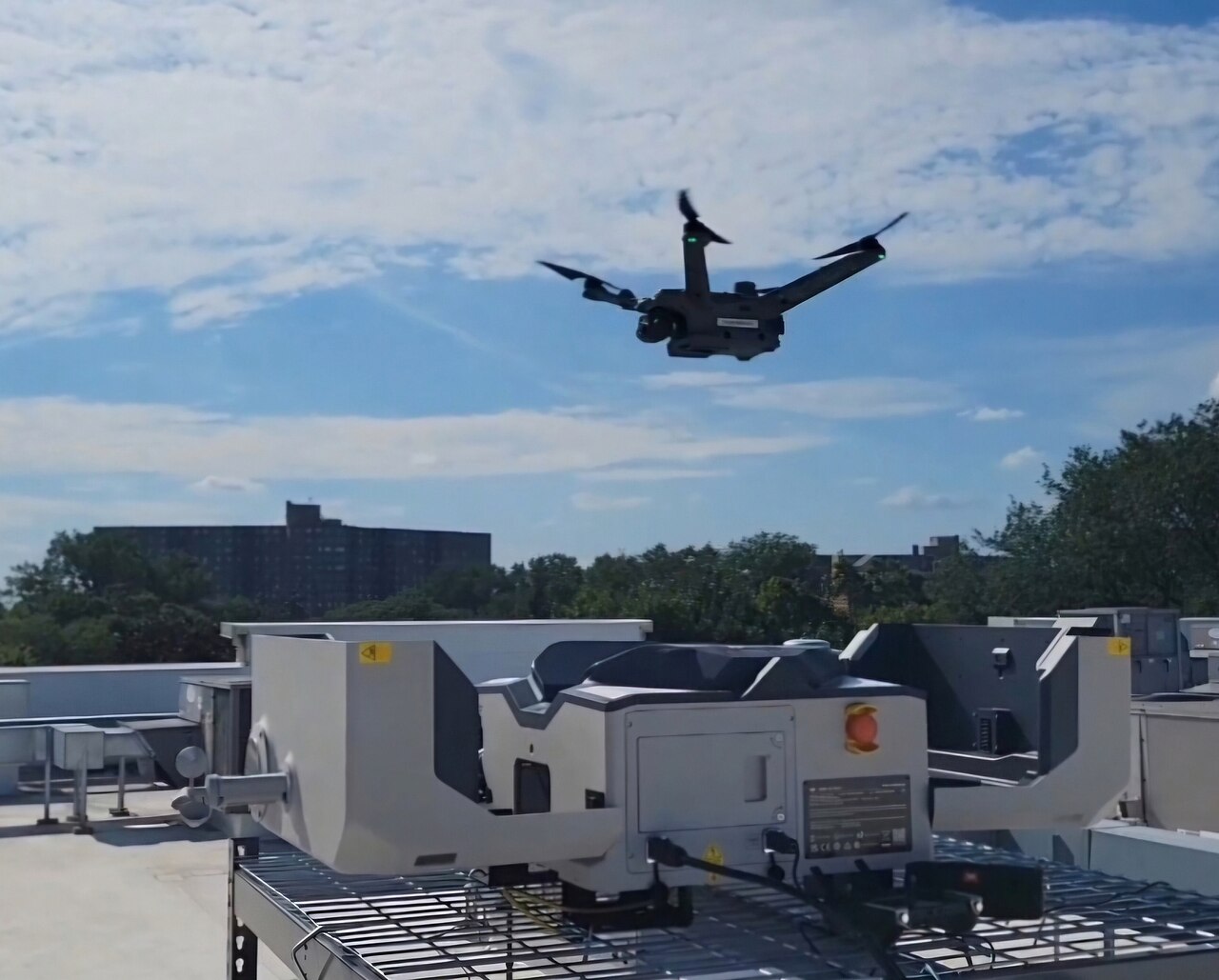
The most useful line in FlytBase's latest launch didn't come from FlytBase. It came from a customer. Speaking at NestGen '26, Ross Doak, Shell's Offshore Robotics Program Manager, said: "The aircraft for us has been very much the easy part. The hard part is the operating model that goes around the entire program."
That quote is the premise of Octane, a new offering FlytBase has built for oil and gas operators. Octane is not a new drone and not a new dock. It combines software, engineering support and regional deployment services, and it is aimed at companies trying to turn docked, beyond-visual-line-of-sight (BVLOS) drone operations from a pilot project at one facility into a program that runs across many sites and several countries.
FlytBase says Octane builds on its deployment experience with more than 20 oil and gas companies, Shell among them. The commercial question is whether a vertical-specific operating model is worth paying for.
What Octane actually is
According to the company's announcement, published on sUAS News, Octane has several layers:
- Deployment flexibility. Operators can run the platform in the cloud, in a private cloud or on-premises, which helps IT teams control where operational data is stored. FlytBase also cites security certifications as part of the package.
- Regional partners. Partners from FlytBase's network provide local pilots, suitable hardware, remote operations and support with aviation approvals. The announcement presents this as the answer to the multi-country problem: aviation approvals and other requirements vary between locations.
- Forward-deployed engineers. FlytBase engineers work with site teams to adapt additional use cases to their standard operating procedures and systems.
- AI agents tied to asset history. Octane links each capture to the relevant asset, giving AI agents the inspection history needed to compare results and flag changes. The idea is that an image or reading lands in the record for a specific asset, such as a tank or wellhead, rather than in a folder of undated files.
The Octane product page frames the scope as covering oil and gas sites from upstream well pads to downstream refineries, with global deployment partners handling local operations and regulatory approvals.
The Shell case, and how to read it
That is where FlytBase's reference case comes in. The Octane page says Shell's offshore drone program with Octane supports earlier post-hurricane assessments and a faster return to production. FlytBase calls it the first fully autonomous dock operation on a floating deepwater facility. The program used DJI hardware and, under local pilot supervision, completed 44 flights with successful landings, including night-time operations, at the Mars platform in the Gulf of America.
Landing a docked drone on a floating platform is plausibly a harder problem than landing at a fixed onshore pad. Forty-four flights is a modest sample, but it is a concrete operational number, not a vague capability claim.
The financial claim needs more caution. FlytBase's page cites $50 million in projected savings over three years. It attributes the figure to restarting production a day sooner after major storms. That is a company figure, and a projection, not an audited result. The logic is plausible: a docked drone already on a facility could begin assessing storm damage once conditions allow, before a crew can be mobilized. But the savings depend on how often major storms hit, how much production a facility carries, and how many days of delay the drone actually saves. None of those inputs appear in the published materials.
Why It Matters
Doak's quote describes where much of the industrial drone market is stuck. Docks and autonomous aircraft work, and Shell's offshore program is FlytBase's evidence of that. What has held back scaling, in the announcement's telling, is everything around the aircraft: hardware, aviation approvals that vary by location, remote operations, IT security, data workflows and site adoption. The product page adds that outputs need to feed into the maintenance systems where teams decide and act.
Octane is FlytBase's bet that oil and gas operators will pay a software vendor to take on that organizational work, not just license a dock-management tool. That positions the company less as a platform provider and more as a systems integrator with a subscription attached. If the model works, similar vertical packages for other industries with many remote sites would be a logical next step, though FlytBase has not announced any.
Two things remain to be shown. One is cost: FlytBase has not published pricing for Octane, which combines software, deployment partners and services, so operators will have to weigh it against the manned inspection work and downtime it replaces. The other is evidence beyond a single headline customer. FlytBase says it has worked with more than 20 oil and gas companies. Independently verifiable outcomes from more of them would carry more weight than one projected savings figure, however large.
For now, Octane is a clear statement of where the hard problem sits. Shell's robotics lead put it plainly: the aircraft is the easy part.
Correction, November 19, 2026: An earlier version of this article said Octane costs $14,999 per dock per year, citing a reseller listing. FlytBase says that listing covers a software subscription, not the Octane offering, and that it has not announced Octane pricing. The price and the cost estimates based on it have been removed.
