
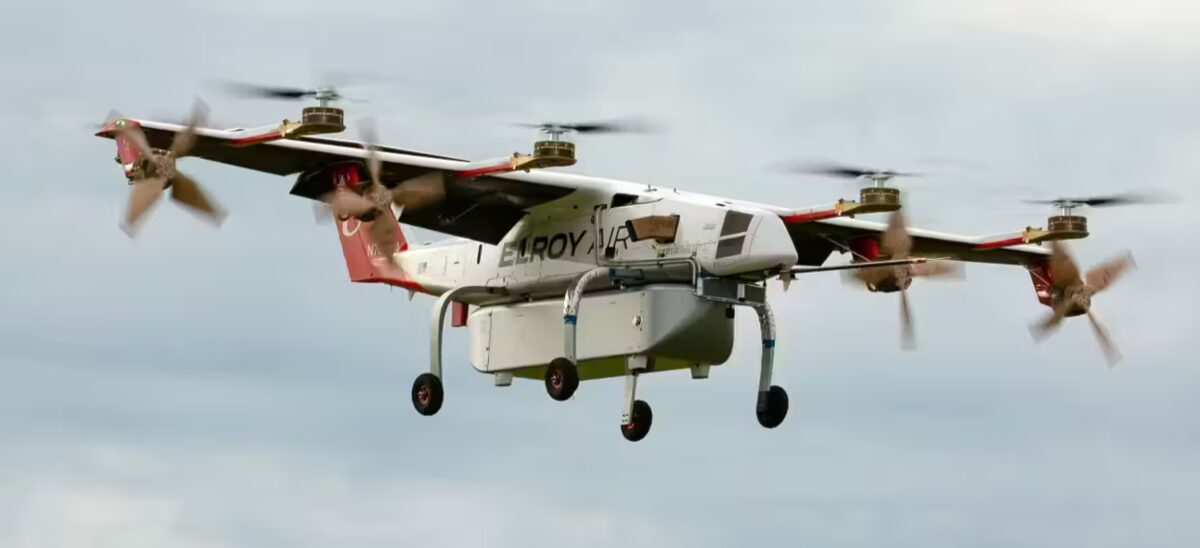
Elroy Air's partnership with Abu Dhabi's Barq Group now includes an actual order. The two companies have signed an Aircraft Purchase Agreement for up to 20 Chaparral hybrid-electric vertical-takeoff cargo drones, valued at up to $70 million for the aircraft alone, according to Elroy Air. Five aircraft are firm orders. The other 15 are deposit-backed reservations for production slots. Barq has paid a $10.25 million initial deposit, and deliveries are scheduled to begin in 2027.
The headline number is "up to $70 million." What has actually been committed is smaller, so it is worth separating the two.
What Barq Actually Committed To
The agreement has two tiers. The first is five firm aircraft. For these, Barq's deposit covers 50 percent of each aircraft's purchase price. This is the part of the deal backed by money already paid.
The second tier is 15 production slot reservations. Elroy describes them as deposit-backed. They hold places in the production line but are not described as firm purchases. The release says additional pre-delivery payments support these reservations, subject to the conditions in the agreement, and it does not say what would convert them into firm orders.
Simple arithmetic gives a rough sense of pricing. A $10.25 million deposit covering half the price of five aircraft points to roughly $4.1 million per firm aircraft. Spreading the $70 million ceiling across all 20 airframes gives a lower average of about $3.5 million. The release does not give a per-unit price or say how the ceiling breaks down, so treat both figures as estimates from the published numbers, not contract terms. Elroy also says the $70 million covers the aircraft alone. Anything else Barq might buy, such as support, training or services, is outside that figure.
DroneXL's Nov. 16 coverage summarizes the same terms: up to 20 aircraft, up to $70 million, five firm orders backed by $10.25 million, and deliveries from 2027. Its article reprints Elroy's release, so it is not independent confirmation of the terms.
The Aircraft
Chaparral is a hybrid-electric VTOL cargo drone with no pilot on board. In the November announcement, Elroy says it carries up to 500 lb of cargo over up to 450 miles.
Those figures are higher than the specifications Barq and Elroy gave ten months earlier. In January, AJOT's report on the joint-venture announcement described the Chaparral as carrying 300 lb over 300 miles. The new figures mean two-thirds more payload and 50 percent more range. Neither company's materials explain the change. It could reflect design changes, a different mission profile or a different way of stating the numbers. Until Elroy publishes the conditions behind each figure, including reserves, weather and whether payload and range can both be reached on the same flight, buyers and analysts should read both as manufacturer claims.
Elroy describes the Chaparral as able to operate without designated runways and as a potentially lower-cost alternative to helicopters, aimed at remote, austere or contested locations, offshore energy operations and disaster response.
Who Builds It
Elroy names Kratos as the exclusive U.S. manufacturer of the Chaparral. Kratos will build the first 20 aircraft in Sacramento, and Elroy says production starts in late 2026. That timeline leaves about a year between the start of production and the first deliveries to Barq in 2027.
That is a short interval for a first production run, and a lot still has to go right. Production has to start on schedule, and early airframes have to be completed and delivered. Exporting a U.S.-built uncrewed cargo aircraft to the UAE will also require approvals, which neither release covers in detail.
The January Framework
The purchase agreement builds on a January deal that was much larger in scale but contained no purchase commitments. According to AJOT, Barq Group and Elroy Air signed a framework agreement in January 2026 to form a joint venture. The venture would invest $200 million in an Abu Dhabi facility to produce the Chaparral for commercial and humanitarian customers in the Middle East and North Africa (MENA), once all approvals are in place. It would also offer maintenance, repair and overhaul (MRO) services.
The January announcement included no aircraft orders. The November agreement adds them: five firm aircraft with half their price paid up front, plus a reserved place in the line for 15 more. This order is for U.S.-built aircraft from Kratos's Sacramento line. The Abu Dhabi factory is still a proposed joint venture, subject to definitive documentation and regulatory approvals, and the November release does not report new progress on it.
That sequence matches the January plan reported by AJOT, under which flight operations in the UAE would begin in 2027 using U.S.-built aircraft, followed by local production in Abu Dhabi in 2028. The November release does not say whether any of the 15 reserved slots could move to a future Abu Dhabi line.
Barq founder and CEO Ahmed AlMazrui is quoted in Elroy's announcement saying the UAE's support for autonomous technology makes it possible to bring Chaparral to the region. The release gives no specific routes, customers or mission types for the first aircraft. The January framework's focus on commercial and humanitarian customers in MENA is the best indication of where the aircraft will be used.
Why It Matters
This deal still has a large "up to" headline. But part of it is binding: five aircraft with half their price paid, a named manufacturer, a named factory and a delivery year.
It matters for Elroy because a firm launch customer with money down helps justify a production line. It matters for Kratos because the first 20 Chaparral aircraft are slated for its Sacramento facility. It also matters for the Gulf region. Barq's CEO tied the deal to Abu Dhabi's SAVI cluster and the Make it in the Emirates initiative, and the $200 million local manufacturing venture is still in planning.
Several questions remain open. Will production start in late 2026 as planned? Will the first deliveries in 2027 meet the newer 500 lb, 450-mile performance figures? And how many of the 15 reserved slots will become firm orders? The answer to the last question will show how much of the $70 million Barq ends up committing.
