
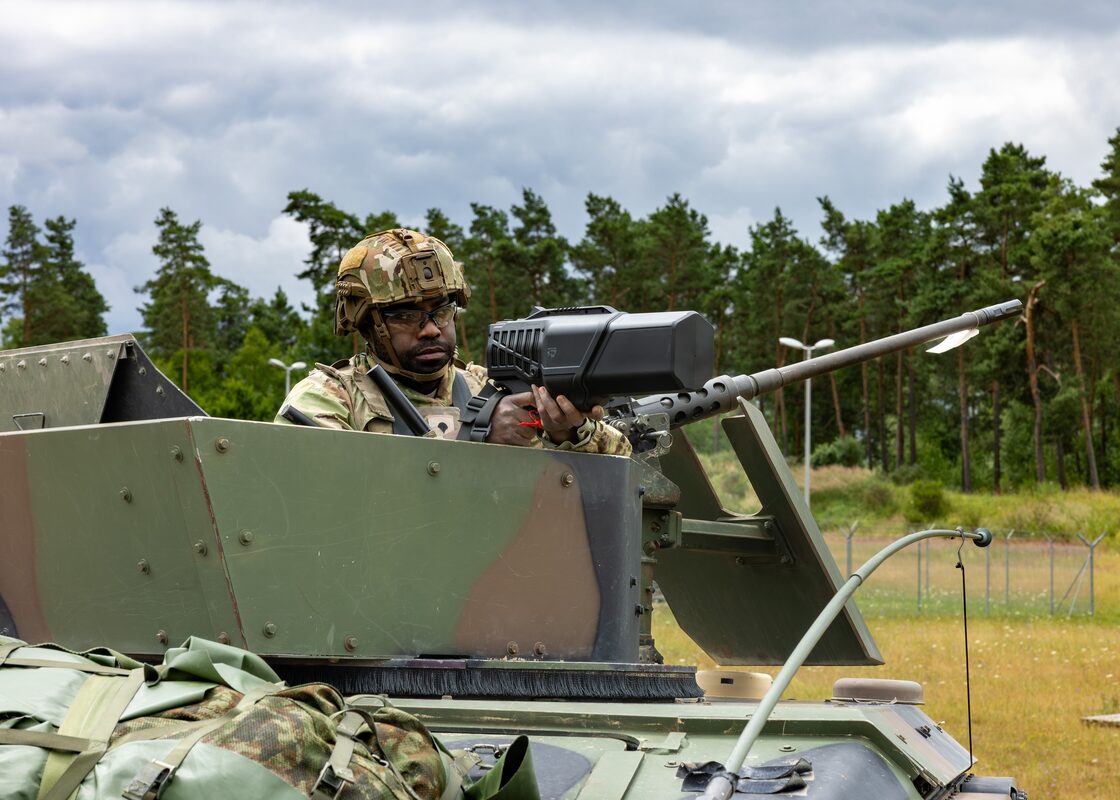
Operation Águila Alta was billed as a rare moment of binational cooperation against the drones cartels use to scout Border Patrol movements along the Tijuana-San Diego corridor. Three weeks in, the numbers tell a lopsided story: Mexican forces have intercepted zero drones, shot down zero drones, and made zero arrests. On the American side of the same border, the U.S. military has downed more than 300 unmanned aircraft in 2026, including a first-ever combat use of a high-energy laser against cartel-linked targets.
The gap was laid out bluntly by Mexico's own Secretary of the Army, General Ricardo Trevilla Trejo, who confirmed this week that Mexican forces participating in the operation had "not intercepted or shot down any cartel drones nor made any arrests" since the deployment began. Trevilla also said his forces had not observed any increase in drone usage by cartels on the northern Mexican border during the operation — a claim that sits awkwardly next to the U.S. side's 2026 tally of hundreds of drone intercepts under the same bilateral counter-drone push.
What Águila Alta Actually Is
Águila Alta — "High Eagle" — is a joint counter-drone operation run under the Mexico-U.S. Bilateral Implementation Group, structured in two phases. The first, running August 31 to September 2, was a coordination exercise between Mexican and American forces to align procedures. The second phase, running September 7 through September 21, calls for the actual deployment of fixed and mobile counter-drone equipment along the Tijuana-San Diego corridor — the stretch of border where cartel scouts have increasingly used small UAS to track the movements of security forces and law enforcement during smuggling operations.
On paper, the operation is a binational answer to a binational problem: cartel drones operating on the Mexican side of the border to surveil U.S. and Mexican forces alike don't respect the boundary line any more than the smuggling routes they're scouting for. In practice, the deployment appears to have produced two very different operational pictures depending on which side of the border is counting.
A Lopsided Scoreboard
The American side of the ledger is being run by Joint Task Force-Southern Border, the roughly 8,000-troop command under U.S. Northern Command that has been a leading counter-UAS actor along the border throughout 2026. According to Trevilla's own comparison, JTF-Southern Border has intercepted more than 300 drones so far this year — a figure that lines up with JTF-Southern Border's own reporting, cited by Mexico News Daily, that the task force had defeated more than 300 UAS in 2026, with more than 100 of those intercepts coming in August alone.
A separate NORTHCOM press release detailed the first operational use of the Army's Multipurpose High Energy Laser, or AMP-HEL, against cartel-linked drones. The system was first employed over the nights of August 25-26, when JTF-Southern Border personnel used it to disable three cartel-linked drones in Texas. NORTHCOM said the aircraft were declared hostile because they posed a threat to U.S. troops and Customs and Border Protection agents operating in the area, and described the engagement as the first use of the AMP-HEL system against cartel-linked drones on the southern border.
Set against that record, zero intercepts and zero arrests on the Mexican side of Águila Alta is a stark asymmetry — particularly since the stated purpose of the operation was joint action, not a solo U.S. effort running in parallel to an inactive Mexican one.
Why It Matters
Counter-drone operations at the U.S.-Mexico border only work as a system if both sides are actually contributing coverage. A cartel scout drone that crosses back into Mexican airspace after mapping a Border Patrol checkpoint is effectively untouchable to U.S. forces the moment it does — unless Mexican units are equipped, authorized, and willing to intercept it on their own soil. Trevilla's admission suggests that, whatever hardware Mexico deployed under Águila Alta's second phase, it has not yet translated into a single intercept, arrest, or even a documented uptick in the drone activity the operation was meant to counter.
That matters for U.S. force protection along the border, where JTF-Southern Border's own numbers — 300-plus intercepts in 2026, over 100 in August, and the debut of a laser weapon against hostile drones — indicate the threat is real, active, and escalating enough to justify newly authorized force. It also matters for the broader premise of bilateral counter-UAS cooperation: if one partner in a joint operation is recording triple-digit intercept numbers while the other reports a flat zero over three weeks, the "bilateral" framing does more diplomatic work than operational work. For an operation explicitly timed to run through September 21, the current scoreboard raises the question of what, if anything, changes before the deployment window closes.
What Happens Next
Águila Alta's second phase is still active through September 21, leaving roughly a week for Mexican forces to record a first intercept before the operation's stated window ends. Whether that happens — or whether the fixed and mobile counter-drone equipment described in the operation's planning remains unused — will be the clearest signal yet of whether Mexico's side of the bilateral effort is a genuine capability gap, a reporting gap, or simply a political commitment that has not yet been matched by action on the ground.
Sources
- All Talk, No Action: Mexico's Anti-Drone Pact with U.S. Delivers Zero Takedowns
- US, Mexico carry out 'High Eagle' operation to ground cartel drones along border
- Joint Task Force-Southern Border uses high-energy laser system to mitigate cartel-linked drone threats
- Mexico, U.S. deploy anti-drone operation at Tijuana border