
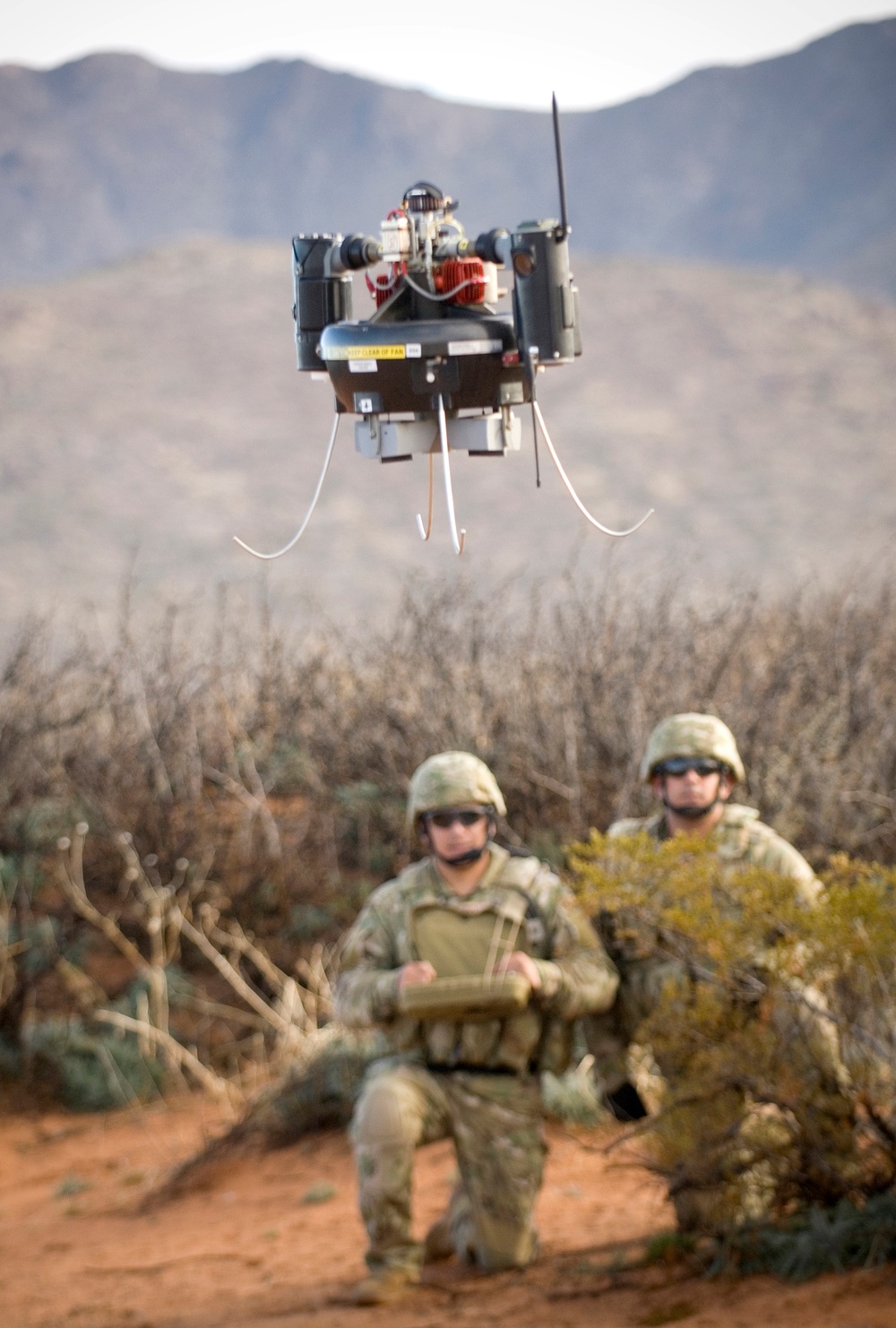
On Nov. 23, Ofir Avram, chief marketing officer of Israeli drone maker Aero Sentinel, posted that the company's new SENIX tactical drone had flown 10 miles (16 km) away from its operator and back. That makes 20 miles (32 km) in one mission, he said, with no external antennas. "We broke our ISR record today," he wrote, and called it a new all-time range record for the company.
The number matters because of what Aero Sentinel published less than two weeks earlier. The Nov. 11 launch release for SENIX gives a communications range of up to 6.2 miles (10 km) "in the appropriate configuration." The leg Avram describes is about 60% longer than that. According to DroneXL, which reported the post, Defence Blog said the post named no location and that the figures could not be verified. That is still true. So far the claim rests on one social media post from the company's own marketing chief.
That doesn't make the claim false. It does make it hard to use. To see why, start with what SENIX is meant to be and what the company has said about it on the record.
What SENIX is
Aero Sentinel showed SENIX publicly at the UVID Dronetech exhibition in Tel Aviv on Nov. 12. Calcalist's English-language CTech reported that the company is a subsidiary of Veloryx, which trades on the Tel Aviv Stock Exchange. SENIX is a foldable intelligence, surveillance and reconnaissance (ISR) drone that fits in a backpack. The German defense outlet ESUT reported that a single operator carries and runs it.
The published specs are modest and specific:
- Endurance: more than 70 minutes in the launch release, up to 80 minutes on the product page, and 70 to 80 minutes in CTech's report.
- Communications range: up to 10 km (6.2 miles), with the release adding "in the appropriate configuration."
- Payload: an electro-optical camera for day and night imaging, paired with the company's Sentinel Ground Control Station.
- Signature: CTech says the drone has a low acoustic signature, an obvious selling point for a small reconnaissance aircraft used near the front line.
The company has said less about range than about how it plans to build the drone. ESUT reported that SENIX was designed for series production, unlike Aero Sentinel's earlier hand-built composite airframes. DroneXL says the airframe is injection-molded from a polymer containing 40% carbon fiber. ESUT quotes Avram as saying that the move to serial production narrows the cost gap with competitors. CTech reported that the company is spending several million shekels on manufacturing infrastructure and camera procurement, and is aiming for about 1,000 drones a year by 2029.
The company has also promised a software change. CTech and ESUT both report that visual, image-based navigation is planned for 2027. The goal is to reduce SENIX's dependence on GPS where satellite signals are jammed, which is now normal in many conflict zones.
According to the company, as reported by CTech, SENIX is already in service with a special unit of the Israel Defense Forces and was integrated with Rafael's Spike family of missiles during exercises. The company is also pitching it as an Israeli alternative to Chinese-made systems.
Spec sheet vs. record flight
The two numbers don't have to contradict each other. Range figures for small drones are almost always about the radio link, not the battery. Here is a rough check that assumes a cruise speed, which Aero Sentinel has not published. A 32 km round trip inside a 70-to-80-minute endurance window works out to an average of roughly 24 to 27 km/h, leaving no reserve. That is believable for a small multirotor or fixed-wing ISR aircraft. In other words, the airframe could plausibly fly the distance. The open question is whether the data link stayed solid at 16 km.
That is why the phrase "in the appropriate configuration" in the launch release matters, and why "no external antennas" is the most interesting part of Avram's post. Antenna choice can easily change link range by a large margin. DroneXL gives an example from Aero Sentinel's own lineup: the Quiet G2 quadcopter has a standard range of 4.3 miles (7 km) and needs a directional antenna to reach 8 miles (13 km). If SENIX reached 16 km on its stock antennas, the 10 km spec looks conservative. If the stock setup was paired with conditions that favor range, such as high altitude, open terrain or a clear line of sight over water, the record may say more about that day than about what an operator can expect.
The post gives no way to tell which of these is true. It doesn't name a location, describe the terrain, give the altitude, mention weather, identify the radio band or power settings, or say whether the aircraft sent live video the whole way or only kept a telemetry link at the far end.
What would make the number useful
For a military buyer comparing backpack ISR drones, one record flight matters less than a repeatable figure with known conditions. At a minimum, these details would turn Avram's post into something a buyer could evaluate:
- Terrain and line of sight. Was the route flat, over water, or through hills and buildings? A link that holds over open ground can fail quickly once terrain blocks the signal.
- Altitude. Flying higher extends radio range by keeping the aircraft above obstacles and the curve of the earth. A record set at an altitude that tactical crews wouldn't use, because it makes the drone easier to detect, says little about routine use.
- Radio configuration. Frequency band, transmit power and ground-station antenna setup. "No external antennas" presumably refers to the aircraft, and possibly the ground station, but the post doesn't say.
- Link quality at maximum range. Was full-resolution day/night video coming back at 16 km, or a degraded feed or telemetry only? For an ISR platform, range without usable imagery is a ferry figure.
- Electronic warfare environment. The company's own roadmap acknowledges jamming by promising visual navigation in 2027. A clean-spectrum range record doesn't show how the link performs against interference, which is the environment SENIX is being sold for.
- A flight log. GPS track, telemetry and link-quality data, ideally reviewed by someone outside the company. Defence Blog said it could not independently verify the figures, and none of this has been released.
Until Aero Sentinel publishes something like this, the honest reading is that SENIX has a published comms spec of up to 10 km, and the company says it beat that once, under conditions it hasn't described.
Why It Matters
SENIX is a small aircraft, but it sits in a crowded and fast-moving part of the drone market. Aero Sentinel is pitching SENIX as an Israeli alternative to a market increasingly dominated by Chinese-made systems. Its case rests on injection-molded airframes, a production target of about 1,000 units a year by 2029, what it says is an existing IDF special unit user, and integration with Rafael's Spike missiles in exercises.
In that kind of competition, range claims carry weight. A link figure means something only when it comes with the configuration, terrain and video quality that produced it. Releasing flight data would show whether 16 km is a new baseline for SENIX or a one-time result, and would turn a marketing post into a spec buyers can plan around.
Until then, the 10 km figure in the launch release is the number on the record. The 16 km flight is the company's claim, and so far nobody outside it has been able to check it.