
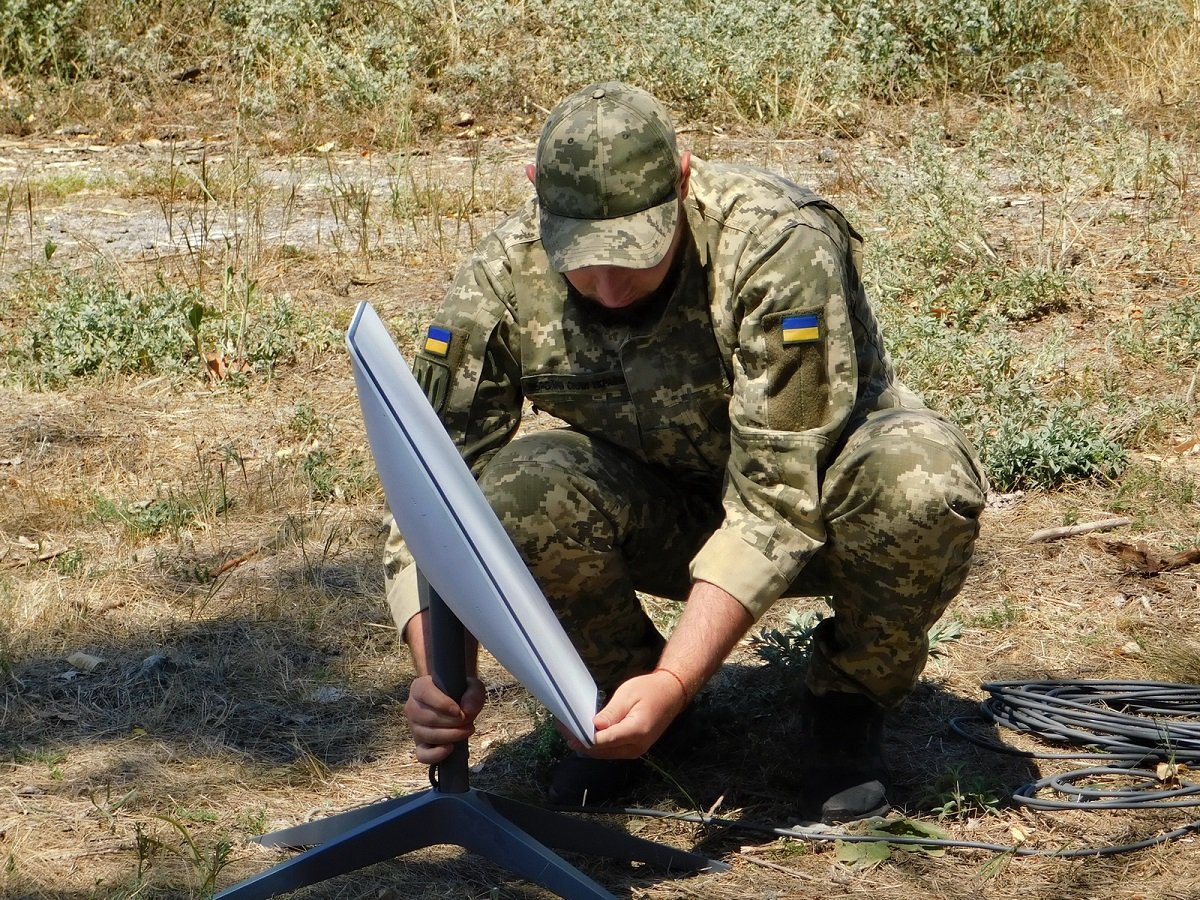
Ukraine says a speed limit on the satellite links that its fastest drones depend on has come back. On Nov. 12, President Volodymyr Zelensky said Starshield, the government-grade version of SpaceX's satellite communications network, is again cutting off connections above roughly 100 mph (161 km/h). He said Ukrainian forces had recorded the restriction for several days along the front line and over occupied territory. In his words, these were "not random errors but systematic speed restrictions."
SpaceX told Axios the claim is false, according to DroneXL. The company declined to comment to Reuters. Neither Musk nor the U.S. government has taken responsibility for the October restriction that came before this one, and the same week brought a deadline from a U.S. Senate inquiry into who controls the network.
What Zelensky Said
Zelensky posted on X after briefings from Defense Minister Yevhenii Khmara and Commander-in-Chief Mykhailo Drapatyi. He said the restrictions limit Starshield's operating speed to 161 km/h. He was blunt about what that costs: "this is helping the Russians kill more Ukrainians and carry out more accurate strikes against Ukraine."
According to the Kyiv Independent, Zelensky said some Russian strikes got through because Ukrainian interceptor systems could not reach the speed needed to catch their targets in time. A corps-level Ukrainian commander, speaking anonymously, told the outlet that the 160 km/h limit was still in force and that it makes Ukraine's mid-range strike drones easier for Russia to intercept or evade. A senior member of a Ukrainian unit in the Unmanned Systems Forces also confirmed the development. Zelensky said Kyiv is trying to establish the circumstances with the United States.
The numbers explain the urgency. DroneXL reports that Russia's jet-powered Geran-4 flies at up to 310 mph (500 km/h), citing a Ukrainian intelligence teardown. By DroneXL's account, an interceptor that loses its link at 100 mph cannot chase a target moving three times faster.
The October Episode
This is the second reported speed cap in about a month. Senator Richard Blumenthal, ranking member of the Senate Permanent Subcommittee on Investigations, wrote to SpaceX CEO Elon Musk on Oct. 22. His letter says Ukrainian military access to Starshield was restricted without notice on Oct. 13. According to the letter, citing Ukrainian officials, devices stopped working properly on drones and other fast-moving platforms. It also says Zelensky confirmed to Blumenthal on a call on Oct. 19 that service was still degraded, including for systems traveling above 100 miles per hour.
The first restriction appeared to end. The Kyiv Independent reports that at the end of October Zelensky said Starlink and Starshield had returned to normal operating speeds, and that Ukraine's Defense Ministry reported stable connectivity above 400 km/h (about 249 mph). DroneXL dates Zelensky's statement to Oct. 24. If the Nov. 12 claims are accurate, the cap came back about three weeks after normal service was announced.
Who Ordered It? The Accounts Conflict
The central question is who has the authority to throttle the network, and the public record contradicts itself. The Blumenthal letter sets out the conflict:
- Elon Musk asserted on Oct. 14 that Starshield systems are "owned and controlled by the US government," and that limits on their use are set by the U.S. military and, ultimately, the President.
- Reuters reported on Oct. 15, citing two U.S. officials, that the order originated inside the White House. A senior U.S. official said the President made no such request.
- The Telegraph and the Wall Street Journal, as cited in the letter, reported that Musk himself pitched or ordered the speed cap.
DroneXL adds that President Trump denied ordering the restriction, and that Defense Secretary Pete Hegseth said in October that the Pentagon had issued no directive. That leaves the October cap without an acknowledged author. SpaceX's position on the November reports, as given to Axios, is that there has been no change.
These statements are hard to reconcile. If the network belongs to the government, then a speed restriction should trace back to someone in the government. Officials who spoke to Reuters pointed to the White House, the President denied it, and the Pentagon said it issued nothing. Unless someone with direct knowledge goes on the record, the question stays open.
The Senate Inquiry
Blumenthal's letter opened an inquiry into the U.S. government's reliance on SpaceX technology, covering both Starlink and Starshield. Among its questions, it asks who holds the authority under SpaceX's Defense Department contracts to activate, restrict, geofence, or shut off Starshield service, and whether SpaceX can technically degrade the service for U.S. or partner forces without Pentagon authorization.
The letter asked for written answers by Nov. 5 and for SpaceX officials with direct knowledge to brief the subcommittee by Nov. 12, the day Zelensky said the cap was back. DroneXL, citing Forbes, reports that it was unclear whether any briefing had been scheduled. The sources reviewed here do not say whether SpaceX answered the written questions.
Contracts add another source of pressure. DroneXL reports that Ukraine's chargé d'affaires in Washington, Denys Sienik, said Ukraine's contract with the U.S. government for Starshield access expires next year and that Kyiv wants talks on a new one to start urgently.
What Is Established and What Isn't
Established in the public record: On Oct. 13, Ukrainian military access to Starshield was restricted without notice. According to the Blumenthal letter, Zelensky told the senator that service was still degraded on Oct. 19, including above 100 mph. Kyiv later said normal service had returned and reported stable links above 400 km/h.
Claimed but disputed: Ukraine says the cap came back in November. Zelensky, an anonymous corps-level commander, and a senior Unmanned Systems Forces member say so. SpaceX told Axios that "there has been no change."
Unknown: Who ordered the October restriction, whether the same authority is responsible now if a cap does exist, and whether SpaceX has answered the Senate subcommittee's questions.
Why It Matters
Ukraine's counter-drone defense leans on fast interceptor drones, and the reporting says the links to those interceptors are among the systems affected. A speed limit applied somewhere in the network's management layer could therefore act like a weapons restriction, with no announcement and no public explanation. That is an inference from the reporting, not a claim any source makes in those words.
This affects more than Ukraine. The Blumenthal letter frames the issue as U.S. government dependence on one commercial provider for critical capabilities, warning that "a single point of control can be turned against the forces that depend on it." If the operator and the government customer can each say the other is in control, then nobody is clearly accountable when service changes in the middle of a war. Any military building drone operations on commercial satellite links faces a similar risk: the link can be throttled for reasons the user may never learn.
The disagreement over the facts also matters. Either Ukraine is recording a restriction that SpaceX says does not exist, or something other than SpaceX's own policy is causing it. The two explanations call for very different responses. The Senate subcommittee asked questions that bear on exactly this, and its Nov. 12 briefing deadline has now passed with no public account of whether it was met.
Sources
- Zelensky Says Starshield's 100 mph Cap Is Back. SpaceX Says It's False (DroneXL)
- Starshield speed restrictions return, hampering efforts to intercept Russian drones, Zelensky says (Kyiv Independent)
- Letter from Ranking Member Blumenthal to SpaceX, Oct. 22, 2026 (Senate HSGAC Permanent Subcommittee on Investigations)
