
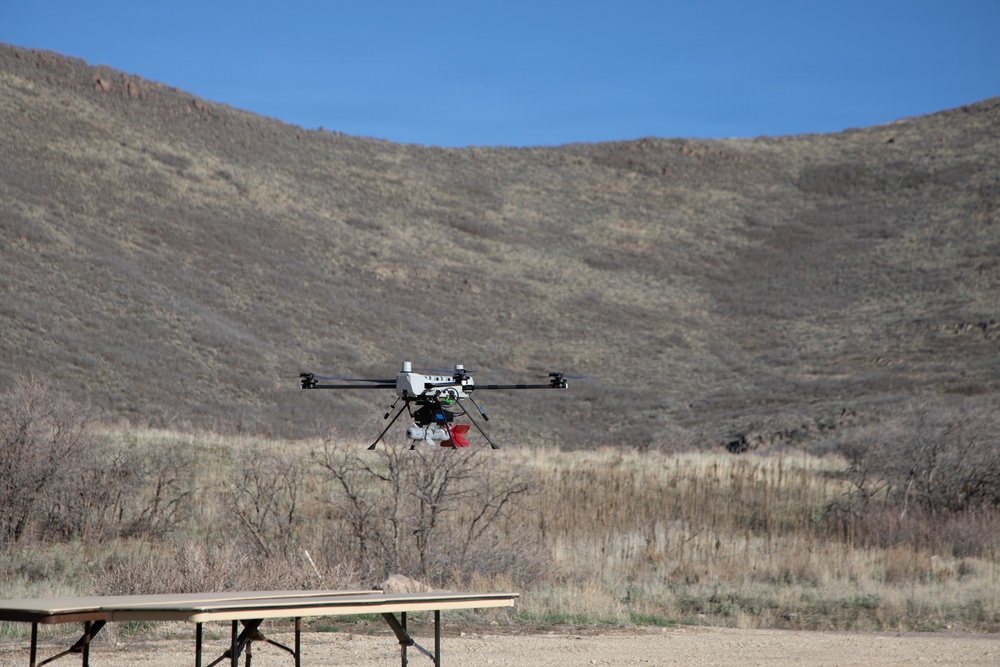
A merger first floated in February is now working its way through the mechanics of U.S. securities law. XTEND, the Israeli defense-robotics company behind the XOS software stack and a family of tethered and autonomous drone systems, and JFB Construction Holdings, a Florida-based, Nasdaq-listed construction firm, are pushing an all-stock, $1.5 billion reverse merger toward the finish line. If it closes as planned, the combined company will trade as XTEND AI Robotics, ticker XTND, on the New York Stock Exchange — giving a battle-tested Israeli drone maker a U.S. public listing without an IPO.
The structure is a reverse merger: JFB Construction, the existing Nasdaq-listed shell with the ticker and reporting history, absorbs XTEND, whose shareholders will end up controlling the resulting company. Under the terms disclosed publicly, XTEND shareholders will hold roughly 70% of the combined entity, with JFB's existing shareholders retaining about 30%. XTEND CEO Aviv Shapira is slated to lead the merged company.
What's Actually Moving Through the SEC
The clearest evidence that this deal is more than a press release sits in XTEND and JFB's SEC filings. JFB Construction Holdings (CIK 2024306, file number 001-42538, based in Lantana, Florida) has filed a string of documents in July 2026 that track the standard path toward a shareholder vote on a business combination: a Form 425 business-combination prospectus filed July 16, a second one filed July 20, an amended 10-Q/A on July 16, and an 8-K covering items 1.01 and 9.01 — also July 16. A cluster of Form 4 insider-ownership filings from July 8-9 rounds out the picture, the kind of paperwork that typically accompanies insiders adjusting positions ahead of a combination closing.
According to StockTitan's tracking of JFB's newsfeed, the companies filed a second amended Form S-4 — the registration statement required for stock issued in a merger — in mid-July 2026. That filing points to the deal closing in the third quarter of 2026, a modest slip from the "mid-2026" timeline reported by DroneLife when the merger was first detailed. Amendments to an S-4 are routine as the SEC staff comments on disclosure; the fact that JFB and XTEND are now on a second amendment suggests the review process is active rather than stalled. StockTitan's coverage of that S-4 filing also states the combined company is slated to list on the NYSE rather than Nasdaq, a detail worth flagging given DroneLife's original report described the post-merger listing as remaining on Nasdaq.
What XTEND Brings to the Table
XTEND's pitch to the public markets rests on its XOS operating system, which the company uses to run a lineup of hardware that spans indoor and outdoor reconnaissance and strike-adjacent roles: the Scorpio 1000, Wolverine, Griffon, and XTENDER platforms. The company opened U.S. headquarters and manufacturing capacity in Tampa, Florida, in July 2025, positioning itself to sell into the Pentagon's drone-procurement pipeline as a nominally domestic manufacturer even as its engineering roots remain Israeli.
Two developments outside the merger itself are relevant to why JFB and XTEND are moving now. First, XTEND has completed its acquisition of Atlas, a Latvia-based robotics firm, adding four XOS-powered ISR (intelligence, surveillance, reconnaissance) platforms and more than 4,200 fielded robotic systems to XTEND's portfolio, per StockTitan's reporting. Second, XTEND is one of 19 companies advancing in a $1 billion Department of War drone-dominance program aimed at fielding 60,000 drone systems — a procurement effort large enough that a seat at the table carries real revenue implications for whichever companies survive the selection process.
On the JFB side, the construction firm has reported second-quarter 2026 revenue up roughly 150% year over year, a growth figure that, combined with its existing Nasdaq listing, has apparently made it an attractive shell for XTEND's reverse-merger route to public markets.
The Trump Connection
When the merger was first announced in February 2026, it came with disclosed investment from Eric Trump, a detail that drew attention given the politically charged environment around U.S.-Israel defense industrial ties and the broader push to reshore drone manufacturing. DroneLife's coverage flagged the investment as part of the original announcement; subsequent SEC filings reviewed for this article do not add further detail on Trump's role or stake in the combined entity.
Why It Matters
Reverse mergers into existing Nasdaq shells have become a well-worn path for defense-adjacent companies — particularly foreign ones — seeking a U.S. public listing faster and with less regulatory friction than a traditional IPO. For XTEND, going public via JFB's shell accomplishes two things at once: it gives the company public-market currency (XTND stock) to use for further acquisitions like Atlas, and it reinforces the "American manufacturer" positioning that matters for Pentagon procurement, where XTEND is competing for a slice of a $1 billion, 60,000-unit drone program alongside 18 other companies.
For JFB Construction's existing shareholders, the deal represents a bet that a growing defense-robotics business is worth more than the construction company's standalone prospects, even after diluting down to roughly 30% ownership of the combined entity. And for the broader drone industry, the merger is another data point in a trend U.S. regulators and Congress have been watching closely: foreign-engineered drone technology, especially from allied nations like Israel, routing into the American defense-industrial base through Nasdaq-shell reverse mergers and domestic manufacturing footprints like XTEND's Tampa facility. Whether that combination — Israeli engineering, U.S. assembly, U.S. public-markets capital — becomes a template for other foreign drone makers eyeing the Pentagon's expanding budgets will be worth watching once XTEND AI Robotics actually starts trading.
