
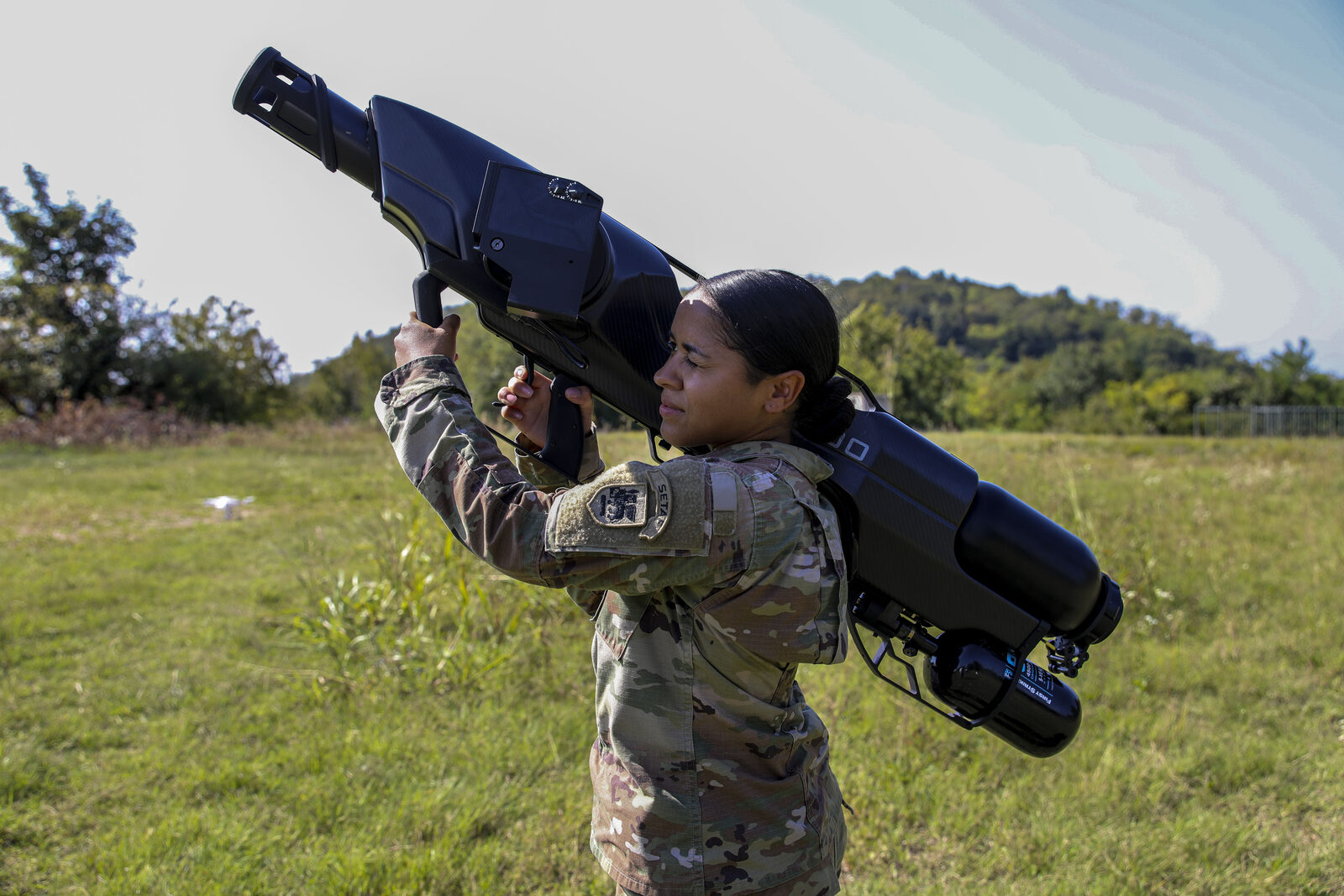
Six days into FIFA World Cup 2026, federal enforcement operations across eight U.S. host cities had logged 145 unauthorized drone incursions into restricted airspace, mitigated 55 aircraft, and physically seized 39. Criminal charges were filed in at least two jurisdictions. The numbers, released June 18, represent the first significant enforcement scorecard for what is arguably the largest coordinated counter-UAS (C-UAS) deployment ever conducted at a civilian sporting event on American soil.
The FAA established temporary flight restriction (TFR) zones around all 78 U.S. World Cup matches plus associated fan-festival locations. Violations carry fines, mandatory drone confiscation, and potential federal criminal charges under FAA TFR penalty provisions. A White House World Cup Task Force headed by Andrew Giuliani coordinates security oversight at the highest level, but the operational footprint falls to a patchwork of DHS, FBI, FAA, and TSA Federal Air Marshal Service (FAMS) units working alongside local police in Atlanta, Dallas, Houston, Kansas City, Seattle, Boston, San Francisco, and Philadelphia.
Atlanta Led in Incursions and Prosecutions
Atlanta recorded the heaviest enforcement activity of any venue: 36 incursions, 20 mitigations, 11 seizures — and one of the first federal criminal prosecutions of the tournament. The FBI arrested Lorenzo Rojas-Martinez, 37, on June 15–16 on charges of operating a drone in a TFR zone and illegal reentry after removal. Prosecutors allege he flew a drone over Centennial Olympic Park during the FIFA Fan Festival on June 12. Court documents note a prior cocaine distribution conviction and two prior deportations. FBI Atlanta's Counter UAV Task Force had seized 21 drones as of that point, according to published reports.
"Unauthorized drone operations in restricted airspace present a serious risk to public safety, particularly during major international events such as the FIFA World Cup." — U.S. Attorney Theodore Hertzberg, Northern District of Georgia
Kansas City: Joint Task Force, Surgical Contact
Kansas City ran what reads like the most operationally precise operation of the venues reported so far. According to the U.S. Attorney's Office for the Western District of Missouri, a joint task force of FAMS, FBI-Kansas City, and Kansas City PD detected 19 drones in TFR zones between June 11 and June 18. That translated into 18 law enforcement contacts with operators, 14 drone seizures, and 5 federal criminal citations — a contact-to-seizure ratio suggesting crews were reaching operators quickly rather than relying solely on mitigation technology.
On June 16 specifically, according to the U.S. Attorney's Office for the Western District of Missouri, 8 drones and controllers were seized and 2 operators received misdemeanor violation notices. The DOJ Western District of Missouri press release on June 18 was the primary federal readout for that single-day action, and it underscores how the task force treated each incursion day as a discrete enforcement event with its own documented output.
Dallas and the Warning Shot to Spectators
In the Northern District of Texas, a 33-year-old North Texas man was charged after flying an unregistered drone approximately 2 miles from Dallas Stadium — inside the 3-mile TFR — before a match. U.S. Attorney Ryan Raybould did not soften the message for anyone watching:
"If you fly a drone over Dallas Stadium during the World Cup games, we will make swift use of our federal statutes to charge you."
That kind of direct prosecutorial statement, paired with actual charges within the first week, is deliberate deterrence signaling — the federal equivalent of broadcasting enforcement speed to suppress future violations before the tournament's heavier attendance weeks.
Why It Matters
The aggregate numbers are worth examining carefully, because 145 incursions across 8 cities in 6 days is not a niche problem. It averages out to roughly 3 unauthorized flights per city per day, every day, from tournament open. The 39 physical seizures out of 55 mitigations suggest that mitigation technology — whether RF jamming, net-capture, or other directed countermeasures — is being backed up by ground-level interdiction fast enough to recover the aircraft. The gap between the 55 mitigation figure and the 39 seizure figure (16 aircraft) likely includes drones that were brought down but not recovered, or situations where mitigation forced a return-to-home without physical confiscation.
The multi-agency coordination model on display here — FBI counter-UAS task forces working with FAMS and local PD, backed by FAA TFR authority and DOJ prosecution pipelines ready to move in days — is the federal government's working answer to the question of how you police drone airspace over a moving, multi-city event. It is conspicuously different from the fixed-site model used at presidential inaugurations or military installations, where C-UAS hardware can be permanently emplaced. World Cup venues rotate; enforcement capacity has to travel with the schedule.
The Atlanta case adds a layer that will draw attention beyond the aviation-security community. Pairing a TFR violation charge with illegal reentry creates a dual federal prosecution that immigration enforcement agencies can use as a template. Whether that prosecutorial pairing was opportunistic or deliberate coordination between U.S. Attorneys and DHS is not clear from the available record, but the precedent is now set.
There is also the matter of what the enforcement data does not show. The incursion count reflects detected, logged events — aircraft that tripped whatever sensor or observation network was in place. The actual number of unauthorized flights is almost certainly higher. C-UAS detection coverage at a stadium perimeter is not the same as radar coverage over open airspace; consumer drones operating low and slow in cluttered urban environments are genuinely hard to catch on sensor alone. The seizure numbers should be read against that floor, not taken as a ceiling.
Matches continue through mid-July. If the incursion rate holds anywhere near its first-week pace, federal enforcement totals will be substantial by tournament close — and World Cup 2026 will likely become the benchmark case study for large-event C-UAS doctrine in the United States.
Sources
- DOJ Western District of Missouri — "Eight Drones Seized and Two Violation Notices Issued During June 16 FIFA World Cup Events" (June 18, 2026)
- DOJ Northern District of Georgia — "Illegal Alien Felon Arrested for Flying Drone in World Cup Restricted Airspace after Prior Deportations"
- AvWeb — "World Cup Drone Violations Draw Federal Response"
- NBC Montana — "Drone pilot accused of flying over Atlanta World Cup festival faces federal charges"