
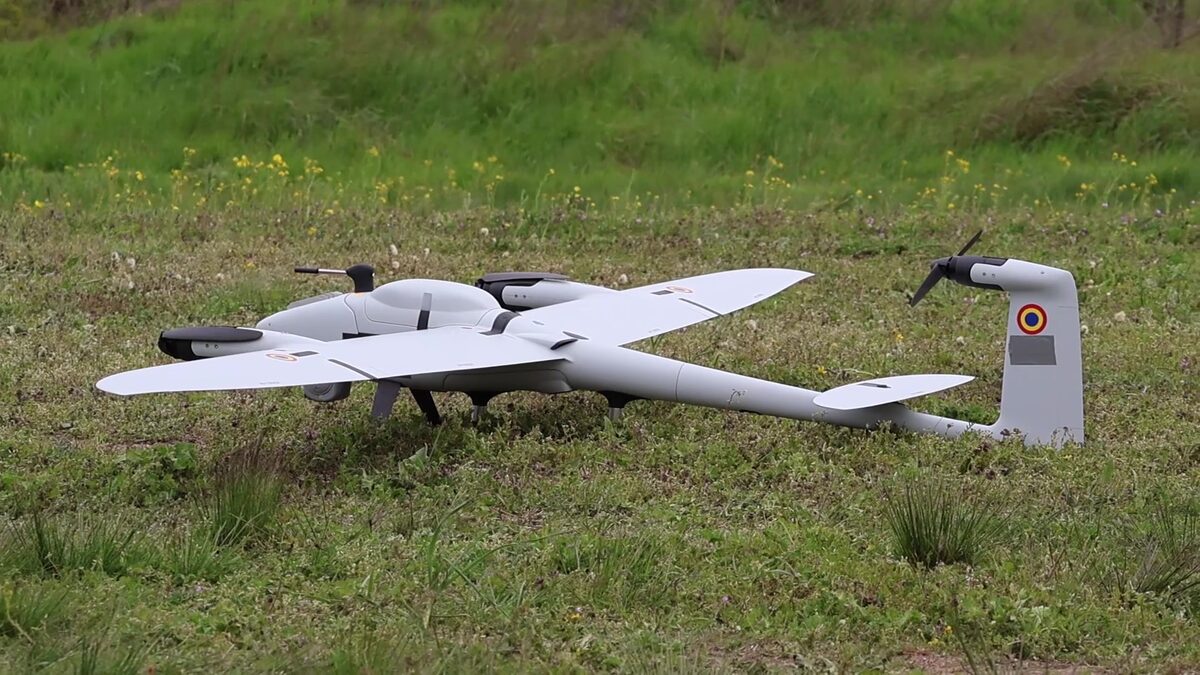
The most important file in a military drone fleet may not be on the drone. Germany's Quantum Systems, one of Europe's best-funded drone makers, has confirmed that attackers got into its infrastructure and put malware on an update server. The malicious file was disguised as an update for QBase, the company's ground-side mission-planning software. The Bundeswehr grounded its Quantum Vector drones, which it flies under the name "Falke", as a precaution. According to the company, they are now flying again.
The basic facts are not in dispute. What remains unclear is how far the poisoned update could have travelled and what it would have done when it arrived. Two credible accounts, built on different German reporting, give noticeably different answers. That gap is the most useful part of the story for anyone who runs or buys drone fleets.
What happened
On 12 November, Der Spiegel and the Financial Times reported that the Bundeswehr had grounded its Quantum drones after malware was found on an update server, packaged to look like a legitimate QBase release. DroneXL summarized that reporting. QBase is ground software that operators use to plan missions and monitor flights; DroneXL describes the QBase 3D version as a Windows program. In other words, it runs on the ground station that talks to the aircraft.
Quantum confirmed the incident that evening. The company said it discovered the intrusion at the end of October and reported it to the authorities. In a statement on Thursday, 12 November, reported by The Register on 13 November, it said its drones were flying again with Germany's military after the precautionary grounding, and that "there is no risk in operating Quantum Systems' unmanned systems for the end users and the operators." Quantum also told Reuters that "the Bundeswehr was the only customer to ground their systems as a precaution." Tagesschau, citing Bayerischer Rundfunk (BR), reported the same point: Quantum says its fleet is operating normally worldwide, and the Bundeswehr was the only customer that pulled its drones, for a few days.
Germany's defense ministry declined to comment to The Register. DroneXL notes that the ministry told the Financial Times it does not discuss the readiness of military equipment, and that accounts differ on how long the grounding lasted and how wide it was: Der Spiegel says the Bundeswehr grounded the entire fleet last month, while Handelsblatt, citing the company, reports a flight ban in Germany with the fleet outside Germany in regular use.
Two versions of the blast radius
The accounts disagree on one technical question: did the malware threaten the aircraft themselves?
The Spiegel/FT account, as summarized by DroneXL: The fake QBase file reached servers at the Bundeswehr and at other Quantum customers, but it did not reach the drones. A check caught it. On this account, the compromise reached the ground-software distribution chain and customer infrastructure, and the airframes were never touched. DroneXL adds that the reports it could read do not say what the malware was built to do.
The BR account, as reported by tagesschau: Unknown attackers installed malware on Quantum's servers at the end of October. That malware would have infected the drones during an update and left them at least temporarily unusable. BR reports that this was apparently prevented. It also reports that the attack apparently aimed to hit not only Quantum itself but the operators of its drones, including the Bundeswehr and especially the Ukrainian military.
The two versions can be read together, but they stress different things. One describes a contained incident: a bad file sat on customer servers and was caught before it went further. The other describes a near miss: the malware was meant to reach the aircraft at an update, and that was apparently stopped. Nobody has publicly explained the technical mechanism, meaning whether a QBase update can push code or configuration to the aircraft, and how. Quantum's public statements deal with the current risk ("there is no risk in operating") rather than the hypothetical one.
Who is investigating, and who is suspected
Three German agencies are involved. The Military Counterintelligence Service (MAD) and the Federal Office for the Protection of the Constitution (BfV, the domestic intelligence agency) are investigating, along with the Federal Office for Information Security (BSI). Tagesschau reports that Quantum says it is working closely with the security authorities, including all three.
No attacker has been named publicly. According to BR, security circles see a likely Russian background but acknowledge it is hard to prove. DroneXL points out that the BfV warned in July of a higher Russian cyber risk to the defense sector, and to companies supporting Ukraine in particular. That warning gives context. It is not an attribution.
Why Quantum is a target
Quantum's position explains why it would draw a capable attacker. The Bundeswehr operates the Vector as Falke, and Germany planned to order 520 Falke systems for delivery in 2026, according to DroneXL. The Register reports that Chancellor Friedrich Merz announced funding last month for "several tens of thousands" of Quantum interceptor drones. In July the company announced a $1.2 billion Series D at a valuation of about $8 billion.
The Ukraine connection probably matters more. According to tagesschau, Quantum has built tens of thousands of surveillance drones for Ukraine and runs a German-Ukrainian joint venture, Quantum Frontline Industries. DroneXL, citing the Financial Times, reports that the company has more than 200 staff in Ukraine and three joint ventures with Ukrainian companies. If BR's reporting is right that Ukrainian forces were a main target, a manufacturer's update pipeline would give an attacker a route toward frontline units that is hard to reach directly.
Why It Matters
This was not an attack on a drone's radio link or its navigation, which are the threats electronic-warfare planners usually focus on. It was an attack on the software supply chain: the vendor's servers and the trusted update channel that customers are supposed to use routinely. That changes the defensive problem in three ways.
The ground station is part of the weapon system. QBase is ordinary Windows software, but it sits between the operator and the aircraft. If the BR account is right that an update could have carried malware onto the drones, then the ground software and its update mechanism belong to the aircraft's attack surface. They should be secured, tested and accredited as part of it, not handled as office IT.
Trust in the vendor is the weak point. Customers install updates because they come from the manufacturer. A file planted on the manufacturer's own update server inherits that trust. On the Spiegel/FT account, the safeguard that worked was a check that caught the file before it reached the drones; BR says only that the infection was apparently prevented. Militaries buying fast-moving commercial drone technology will have to decide how much independent checking of updates they do before deployment, and whether that checking can keep up with the release pace these programs depend on.
Precaution has an operational cost. The Bundeswehr grounded its Quantum drones for a few days, according to the company. Quantum says no other customer did the same. DroneXL notes that the grounding also kept Quantum out of a recent exercise with the military, according to the Financial Times. An attacker who never touches a drone can still take it out of service by creating doubt. For a force planning to field Falke systems in large numbers, and interceptors by the tens of thousands, the ability to verify fleet integrity quickly and convincingly becomes a readiness requirement in its own right.
The open questions are concrete. Quantum has not said how the attackers got onto its update server, how long the file was there before it was found at the end of October, or which other customers received it. It has not publicly reconciled the "servers, not drones" account with the "would have infected the drones" account. The MAD, BfV and BSI investigations may settle the attribution question. Whether they will publish anything is another matter.