
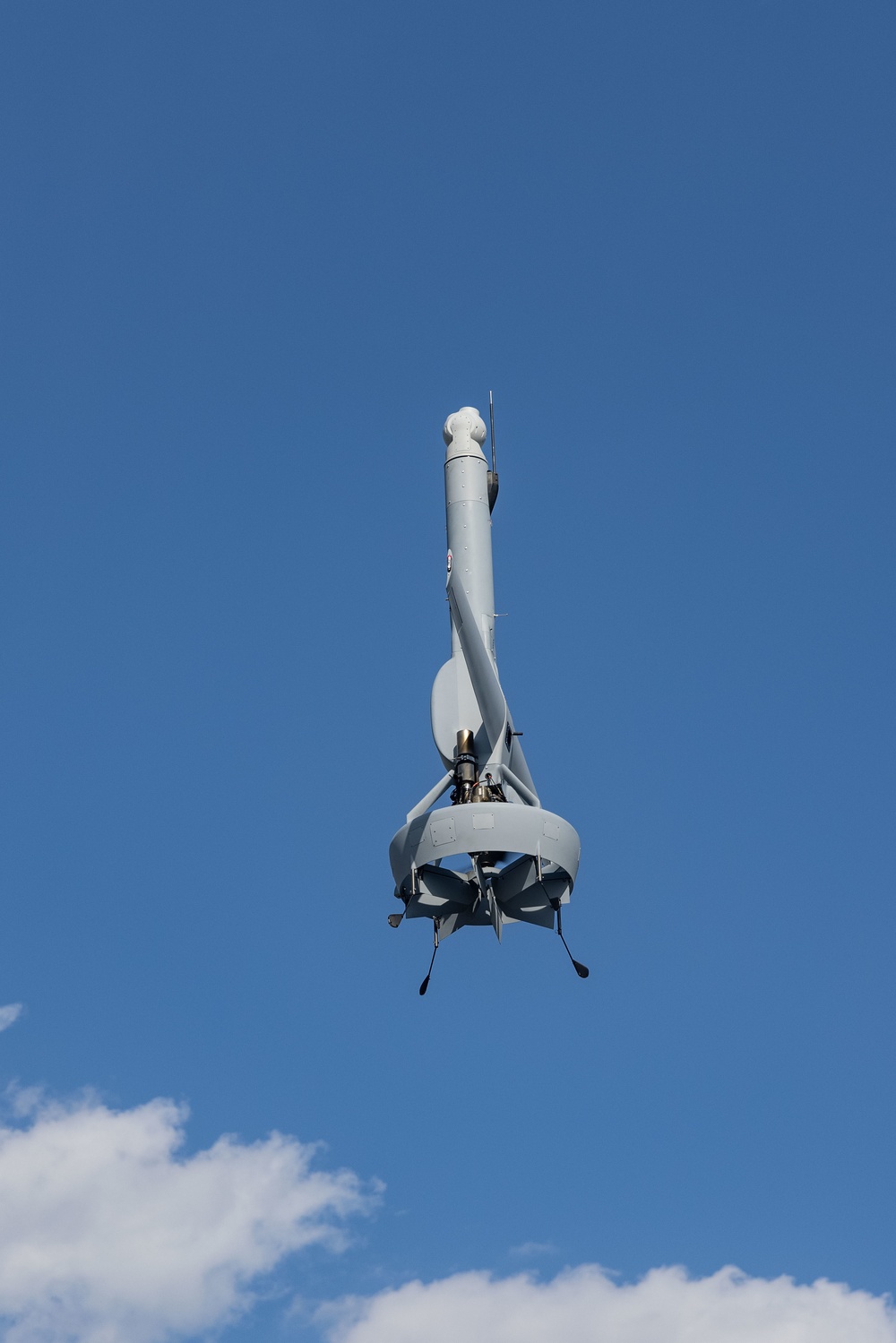
Quantum Systems, the German maker of the Vector and Falke reconnaissance drones, announced on July 2, 2026 that it has closed a $1.2 billion Series D financing round at an approximately $8 billion post-money valuation. CNBC described the raise as the largest private defense-technology financing in European history, while EU-Startups characterized it as one of Europe's largest DefenceTech financings; either way, the round arrives at a moment when the company's hardware is already logging tens of thousands of combat sorties in Ukraine and drawing fresh interest from the U.S. Army.
The round was co-led by Blackstone, Noteus, Airbus and Advent, with additional participation from BOND, Fidelity, Wellington, A.P. Moller Holding and other investors, according to CNBC and The Defense Post. Neither outlet disclosed a full capitalization table, but the roster signals a shift in who is willing to write large checks into European defense hardware: private equity and asset-management names sitting alongside an aerospace prime.
From Bundeswehr Cockpit to Billion-Dollar Balance Sheet
Quantum Systems was founded in 2015 by Florian Seibel, a former Bundeswehr helicopter pilot, according to CNBC. The company's flagship products are the Vector, a vertical-takeoff-and-landing fixed-wing reconnaissance drone, and the Falke, a smaller electric surveillance system. Both airframes have accumulated what CNBC describes as thousands of hours of combat use in Ukraine, and the company says it executed more than 19,000 missions in Ukraine during 2025 alone.
That operational track record has translated into a manufacturing footprint that now spans seven countries. Per CNBC, Quantum Systems produces across Germany, Ukraine, the United States, Australia, Romania, the United Kingdom and the Baltics — a geographic spread that mirrors how European and allied militaries are trying to de-risk drone supply chains from any single national chokepoint after three-plus years of watching attrition rates in Ukraine's drone war.
Where the Money Is Going
According to The Defense Post, Quantum Systems plans to direct the new capital toward expanding manufacturing capacity across its existing production sites, strengthening its supply chain, and building out MOSAIC UXS, a software platform designed to link drones, sensors, counter-drone systems and drone ports into a single operating picture. If MOSAIC UXS works as described, it would position Quantum Systems less as a pure airframe manufacturer and more as a systems-integration player selling connective software alongside hardware — a strategy that mirrors moves by larger U.S. primes and drone-software specialists trying to lock customers into a platform rather than a single aircraft.
A U.S. Army Selection Lands Weeks Earlier
The Series D close follows closely on the heels of a U.S. Army decision that gave Quantum Systems significant American government validation. In early May 2026, the Army named Quantum Systems' Vector AI as one of three new additions to its company-level Small Unmanned Aircraft System portfolio for priority Transformation-in-Contact units, according to an Army.mil release. The other two systems named alongside Vector AI were AeroVironment's Vapor CLE and Mistral's Thor. The addition brought the Army's fielded company-level sUAS options to five systems, joining the already-deployed Performance Drone Works C-100 and Anduril Ghost-X.
The company-level sUAS program is the Army's mechanism for fielding small reconnaissance drones directly to units at the company echelon — a smaller formation than the battalion level where unmanned systems have traditionally been concentrated. Being named a Transformation-in-Contact candidate means the Army will evaluate the Vector AI in operational unit exercises before committing to larger-scale procurement, a process that has become a standard on-ramp for foreign-made systems seeking to break into U.S. Army formations.
Q&A: What This Round Signals
Why does the size of this round matter?
At roughly $1.2 billion, the Series D is described by CNBC as the largest private defense-technology financing ever raised in Europe, with EU-Startups similarly ranking it among the largest DefenceTech financings the continent has seen. That scale matters because European defense-tech startups have historically struggled to raise capital anywhere near the size routinely available to U.S. counterparts, a gap frequently cited as a structural disadvantage for the continent's ability to field new unmanned systems at speed.
Who are the lead investors, and why does their identity matter?
Blackstone and Advent are large private-equity firms not historically associated with early-stage defense hardware; Airbus is a sitting aerospace-and-defense prime; Noteus rounds out the lead group. Their combined participation, along with follow-on money from asset managers Fidelity and Wellington and shipping-and-industrial conglomerate A.P. Moller Holding, indicates that mainstream institutional capital — not just specialist defense-tech funds — now views battlefield-proven European drone makers as investable at scale.
Does the U.S. Army selection and the funding round connect directly?
The available reporting does not establish that the Series D was raised because of the Army selection, or vice versa. What is documented is timing: the Army's Transformation-in-Contact selection of Vector AI was announced in early May 2026, and the $1.2 billion raise closed on July 2, 2026 — roughly two months later. Investors evaluating the round would have had the Army selection as a known data point, but no source cited here draws an explicit causal line between the two events.
Why It Matters
Quantum Systems' raise is a data point in a broader trend: European governments and militaries, chastened by the drone-saturated battlefield in Ukraine, are pushing money toward domestic manufacturers that can demonstrate combat-proven hardware rather than prototypes. A company that can point to 19,000-plus real-world missions in a single year has a different risk profile, in investors' eyes, than one relying on lab testing or limited pilot programs — and that distinction appears to be what unlocked institutional capital at a scale rarely seen in European defense tech.
The parallel U.S. Army interest is equally significant. American small-UAS programs have leaned heavily on U.S.-based suppliers like AeroVironment for years, partly on security and supply-chain grounds. Quantum Systems' inclusion alongside AeroVironment's Vapor CLE and Mistral's Thor suggests the Army is willing to formally evaluate a German-made system against domestic incumbents — a notable crack in the "buy American" reflex that has shaped small-drone procurement. If Vector AI performs well in unit-level trials, it could open a path for other combat-tested European systems to compete for U.S. military business, reversing what has largely been a one-way flow of American drone technology toward European partners.
For the broader defense-tech investment landscape, the round is also a signal to competitors and their backers: the ceiling on what a single European drone manufacturer can raise just moved substantially higher, and the list of investors willing to write the check now includes names — Blackstone, Fidelity, Wellington — that are not typically thought of as defense-sector specialists.
Sources
- US Army expands company-level SUAS solutions by adding three new systems — Army.mil
- Autonomous drone startup Quantum Systems raises $1.2 billion as investors pile into defense — CNBC
- Quantum Systems Raises $1.2B to Scale Autonomous Defense Systems — The Defense Post
- Quantum Systems lands €1 billion Series D in one of Europe's largest DefenceTech financings — EU-Startups
