
Archer Aviation is set to become one of the broadest players in unmanned and autonomous aviation almost overnight. On August 9, 2026, the eVTOL air-taxi developer entered into a definitive Equity Purchase Agreement with Boeing to acquire three of the aerospace giant's subsidiaries: Insitu Inc., the longtime maker of the ScanEagle family of military and commercial unmanned aircraft; Wisk Aero LLC, an autonomous eVTOL developer; and SkyGrid LLC, an airspace-management and traffic-deconfliction software firm. The transaction, disclosed in a Form 8-K filed with the Securities and Exchange Commission, is built around equity rather than cash: Boeing will take Class A common shares in Archer equal to roughly 19.75% of Archer's outstanding Class A stock immediately prior to closing, a figure the filing says is subject to customary closing adjustments. On top of those shares, Boeing will also receive two stock warrants — each covering roughly $100 million worth of Class A shares, exercisable at $13.00 and $17.88 per share, respectively — as additional consideration, and Boeing has agreed to hold the shares it receives for twelve months after closing.
The deal also sweeps in a set of international affiliates tied to the three units: Insitu Pacific Pty Ltd, Wisk Australia Pty Ltd, and Boeing Emirates Ltd. That footprint underscores how much of Boeing's unmanned-systems and autonomy portfolio outside its core defense primes business is changing hands in a single transaction.
What Archer Is Actually Buying
Each of the three companies brings a distinct piece to Archer's stated ambition of building an end-to-end "physical AI" platform spanning crewed eVTOL aircraft and unmanned systems.
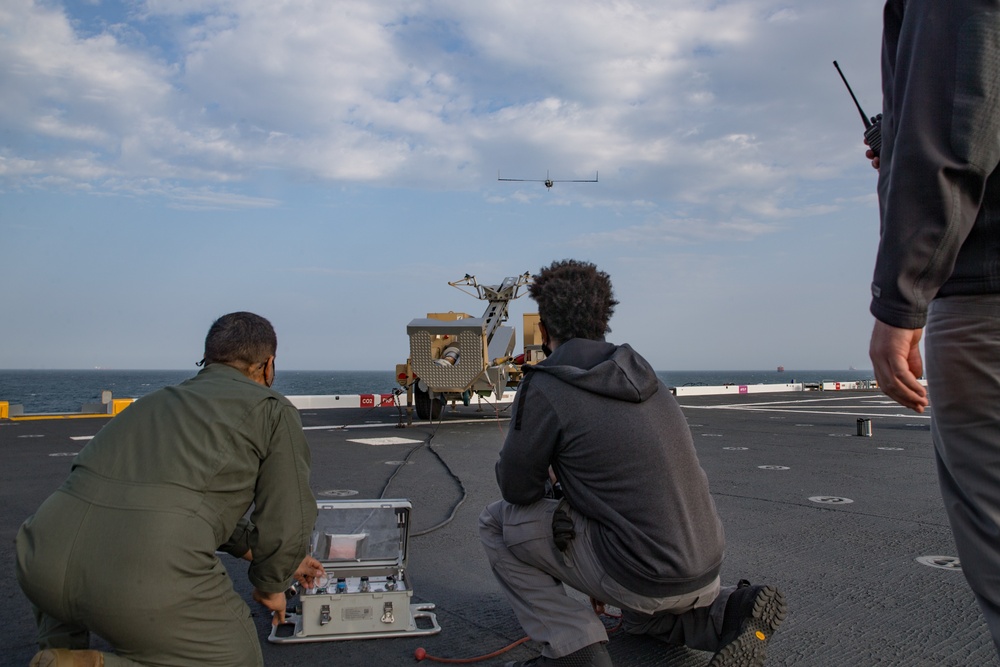
Insitu is the most established of the three by a wide margin. Boeing acquired the company in 2008, and Insitu has since spent close to two decades building and fielding the ScanEagle line of small, catapult-launched unmanned aircraft used for military intelligence, surveillance and reconnaissance work as well as commercial and maritime applications. The SEC filing describes Insitu simply as "a manufacturer of unmanned aircraft systems and AI-enabled technologies," and Archer's own transaction materials say Insitu's aircraft are in service with dozens of nations' armed forces — giving Archer an immediate, combat-proven hardware line and an established defense customer base, something the company has not previously had at scale.
Wisk Aero is a name with particular resonance for Archer. As TechCrunch notes in its coverage of the deal, Wisk was previously a rival in the crowded field of autonomous eVTOL development — the two companies were locked in litigation after Wisk sued Archer in 2021 alleging theft of confidential information and intellectual property, with Archer countersuing, before the dispute was settled in 2023 alongside a new collaboration agreement between the two. Its acquisition folds what was once competing, litigation-entangled air-taxi technology directly into Archer's own program rather than leaving it to develop independently under Boeing.
SkyGrid rounds out the acquisition with software rather than airframes: the unit focuses on airspace-management systems designed to help autonomous and crewed aircraft operate safely in shared airspace, a capability that becomes increasingly important as both Archer's eVTOL fleet and Insitu's unmanned aircraft scale up operations.
Deal Structure and Boeing's Role Going Forward
The equity-driven structure is notable on its own terms. Rather than Archer paying Boeing cash for three operating businesses, Boeing instead becomes a significant Archer shareholder — holding common stock equal to near one-fifth of Archer's Class A share count, plus the two warrants described above, rather than taking a cash payout. Archer's own investor-relations release confirms that Boeing will not simply exit these businesses and walk away — the release itself is headlined with Boeing set to "invest in Archer and collaborate" going forward, suggesting an ongoing relationship rather than a clean handoff.
The SEC filing frames the transaction as covering the full equity interests in Wisk Aero LLC, SkyGrid LLC and Insitu Inc., along with the named international affiliates, with the stock and warrant consideration to Boeing subject to those customary closing adjustments. The filing does lay out closing conditions, including clearance under the Hart-Scott-Rodino Antitrust Improvements Act and unspecified approvals under national-security or foreign-direct-investment laws, plus an outside termination date of May 9, 2027 that either side can extend by three months if other conditions are met. What the 8-K does not spell out is an expected closing date or integration plans for the three businesses; Archer's investor materials point to a close by the end of 2026, pending that Hart-Scott-Rodino review.
Why It Matters
This deal reshapes the competitive map in unmanned and advanced air mobility in a way few single transactions have. Archer has, to date, been defined almost entirely by its eVTOL air-taxi ambitions — a company racing Joby Aviation and others toward commercial passenger service. Absorbing Insitu instantly gives Archer a mature, revenue-generating military UAS product line and a defense customer relationship that took Boeing (and Insitu before it) years to build. That alone repositions Archer as a company with both a civil air-mobility business and a defense unmanned-systems business under one roof — a combination that, as Archer's own release frames it, spans aerospace and defense markets rather than just one.
The Wisk acquisition is equally significant for what it says about industry consolidation. TechCrunch's framing of Wisk as a "former rival" being bought by Archer illustrates how thin the field of well-funded, technically credible autonomous eVTOL developers has become — companies that were racing each other for the same investors and airspace approvals a few years ago are now being folded into single organizations. For competitors like Joby, the deal signals that Archer intends to compete not just on aircraft certification timelines but on breadth: unmanned systems, crewed autonomy, and the airspace-management software (via SkyGrid) needed to operate all of it safely at scale.
For Boeing, the transaction is a notable retreat from directly operating standalone eVTOL and small-UAS businesses, trading operational control for an equity stake — plus a board seat, which the filing gives Boeing the right to designate for as long as it holds at least 10% of Archer's Class A shares — and a stated ongoing collaboration with Archer. The 8-K confirms the deal must still clear Hart-Scott-Rodino antitrust review and national-security or foreign-investment approvals, a nod to Insitu's military applications, before it can close. What the filing does not answer is how Insitu's existing defense contracts and government customer relationships will transfer, or how quickly Archer can integrate three previously separate corporate cultures and product lines. Those details will likely emerge as the deal moves toward closing and as Archer files further disclosures.
Sources
- Archer Aviation Inc. Form 8-K (SEC EDGAR)
- Archer buys former rival Wisk Aero | TechCrunch
- Archer to Shape Physical AI Future of Aerospace and Defense with Acquisition of Boeing's Wisk Aero, Insitu and SkyGrid Subsidiaries (Archer Investor Relations)
- Archer agrees to acquire Wisk Aero, SkyGrid and Insitu from Boeing (Vertical Mag)
