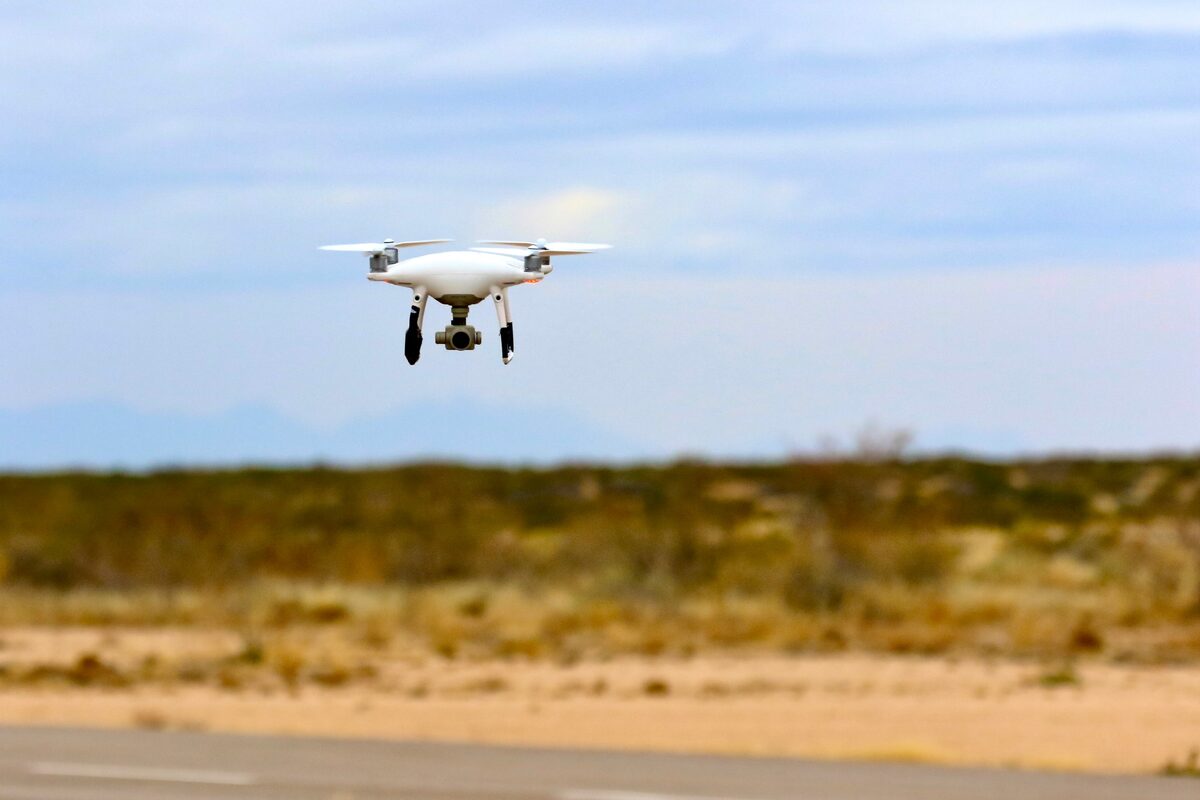
The U.S. Army is dropping one of the biggest barriers standing between small drone and counter-drone companies and real-world military testing. On August 12, 2026, Army Secretary Dan Driscoll announced that the Army Test and Evaluation Command (ATEC) is opening five premier test ranges to private industry, letting companies test unmanned systems, counter-drone technology, long-range fires and low-cost interceptors without first winning a federal contract or navigating the paperwork that has traditionally kept outside firms off military ground.
The move targets exactly the kind of company that has struggled most to get a foot in the door: small, non-traditional drone and counter-drone startups that build promising hardware but have no easy path to prove it works against realistic military conditions.
Five Ranges, One Portal
Under the new initiative, companies can apply for range time through a new online marketplace, testrange.army.mil. The ranges opening to private industry are:
- Dugway Proving Ground, Utah
- West Cibola Range at Yuma Proving Ground, Arizona
- Camp Shelby, Mississippi
- Camp Grayling, Michigan
- An international range in Morocco, accessed through AFRICOM's AMTEC partnership
ATEC's commanding general, Maj. Gen. Pat Gaydon, is overseeing the initiative alongside state National Guard adjutants general, who help administer several of the domestic ranges. The pairing of a two-star test command with state Guard leadership reflects how much of this testing infrastructure sits at the state level, particularly at Guard-affiliated sites like Camp Grayling.
Driscoll framed the change as a direct fix to a bureaucratic bottleneck that has long favored large, established defense contractors over smaller firms. "A company with a good idea shouldn't need a team of lawyers and a program of record just to prove their equipment works," Driscoll said, according to Soldier Systems Daily.
30 Days, No Contract Required
The specifics matter here. Under the previous system, gaining access to an Army test range typically required either an existing federal contract or months to years of administrative review — a process that effectively locked out early-stage companies without in-house government-relations staff or a track record of Pentagon business.
Driscoll's pledge reworks that timeline. Per Stars and Stripes, Driscoll said the Army is aiming to get companies onto a range within 30 days of a request, compared with a typical wait of 12 to 18 months under the old system. Military Times separately confirms that companies can request access without an existing government partnership. Together, those two changes remove the biggest structural obstacle non-traditional drone and counter-drone makers have faced in trying to get real-world test data in front of Army evaluators.
Stars and Stripes' coverage of the plan characterized it as an attempt to cut through the months-long-to-multiyear red tape that has historically slowed small and non-traditional contractors — including drone and counter-drone system builders — in getting onto a military test range.
Electromagnetic Warfare Testing at Camp Grayling
The first concrete test event tied to the initiative is already on the calendar. Camp Grayling will host electromagnetic-contested-environment testing the week of September 13, 2026, according to Soldier Systems Daily. The event is designed to replicate the jamming and electronic warfare conditions observed on the battlefield in Ukraine — an environment where GPS-denial, signal jamming and spoofing have become routine hazards for both drones and the systems meant to defeat them.
That Camp Grayling test is not a one-off. The Army plans to repeat the electromagnetic-contested-environment event quarterly, giving drone and counter-drone developers a recurring, predictable window to validate their systems against realistic jamming and spectrum-denial conditions rather than waiting for a single annual exercise.
Why It Matters
Access to realistic test ranges has long been one of the quiet chokepoints in defense-tech innovation. A startup can build a working counter-drone interceptor or a low-cost first-person-view strike drone, but without a controlled range to fly it against jamming, decoys or live countermeasures, the company has no way to generate the data a program manager needs to take it seriously. That data gap has historically pushed capital and attention toward large incumbents who already have range access baked into existing contracts, while promising smaller players stalled out waiting for a way in.
By explicitly naming drones, counter-drone systems, long-range fires and low-cost interceptors as priority categories — and by stripping out the contract-history requirement — the Army is signaling that it wants faster, cheaper access to the kind of low-cost, attritable systems that have proven decisive in Ukraine. Quarterly electromagnetic-warfare testing at Camp Grayling in particular gives counter-drone developers a standing opportunity to prove their systems can survive and function in a jammed, GPS-denied environment, which is precisely the condition under which most real-world drone engagements now happen.
For the broader unmanned systems industry, the significance is less about any single range and more about the precedent: a major test-and-evaluation command publicly committing to a 30-day turnaround and no-contract-required access is a meaningful departure from how the Pentagon has traditionally gated its physical infrastructure. If ATEC delivers on that promise, it could meaningfully shorten the time between a drone or counter-drone prototype and the flight data needed to compete for Army interest — a change smaller companies in this sector have been asking for.
Sources
- Army.mil — Army opens premier test ranges to private industry for rapid innovation
- Soldier Systems Daily — Army Opens Premier Test Ranges to Private Industry for Rapid Innovation
- Military Times — Army opens test ranges to private industry
- Stars and Stripes — Army opens up 5 test ranges to private sector for weapons tests