
Eight months ago UFORCE came out of stealth with a round that CNBC, as cited by DroneXL, put at about $50 million and a valuation near $1 billion. On Nov. 12 the company announced a $700 million Series A at a $6 billion valuation. That is roughly 14 times the earlier raise and about six times the earlier price. A large part of the new money comes from governments rather than venture firms.
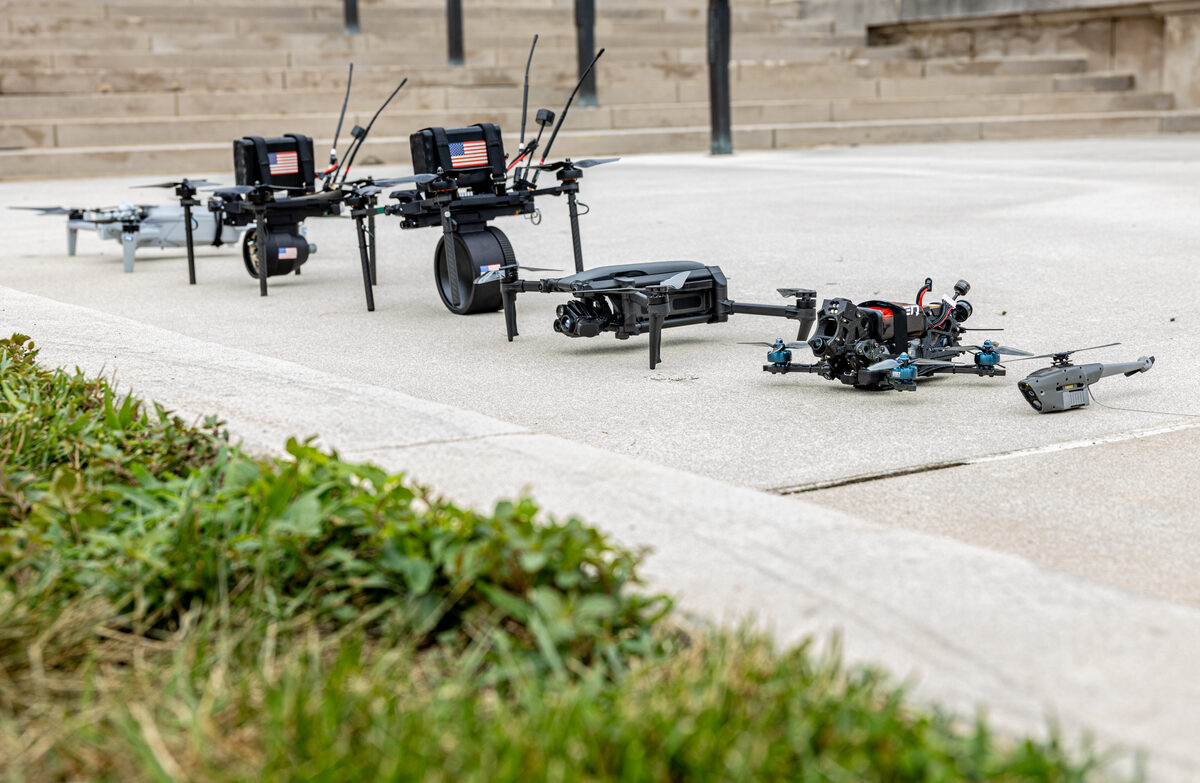
The round is co-led by Valor Equity Partners and the UK National Wealth Fund (NWF), the investment vehicle wholly owned by HM Treasury. The U.S.-Ukraine Reconstruction Investment Fund (URIF) also takes part. UFORCE is headquartered in London, was founded in Ukraine, and builds a portfolio that includes MAGURA uncrewed surface vessels, NEMESIS aerial drones, LIUT uncrewed ground vehicles and PREDATOR weapon turrets.
Who Put Money In
The company's press release, datelined London, Kyiv and Washington, lists Menlo Ventures, Xantium and Hiro Capital as new investors. Shield Capital, Ballistic Ventures, Lakestar and Squadra all increased their existing stakes. According to Interfax-Ukraine, retired Gen. Christopher Cavoli, the former NATO Supreme Allied Commander Europe who is now a partner at Valor, joins the board.
DroneXL reports that the NWF's share is £113 million, or about $150 million. DroneXL says this is the fund's largest defense investment so far. The board UFORCE is building is heavy on political and military figures. DroneXL says it is chaired by Oleksiy Honcharuk, a former prime minister of Ukraine, and notes that former UK Defence Secretary Ben Wallace also sits on it. According to Interfax-Ukraine, Honcharuk co-founded the company with Oleg Rogynskyy, the founder of People.ai, who is UFORCE's chief executive.
URIF's money has a specific job. The press release and Naval Technology both say it goes to UFORCE's Ukrainian operations: staff, research and development, and new products. In other words, the U.S.-Ukraine reconstruction money is paying for the engineering base in Ukraine, while the British state money comes with a promise of UK industrial content.
What the Money Is For
UFORCE says the funding will spread production across the United States, Europe, Asia-Pacific and the Middle East, and will increase output of all four product lines. Naval Technology adds that the company plans to work with international partners to convert existing manufacturing facilities to defense use, and the press release gives converting existing maritime and automotive capacity as an example. It also points to a recent partnership with ReconCraft to scale up U.S. production of MAGURA boats. UFORCE is a founding member of the EU-Ukraine Drone Alliance and plans to build on its partnerships within NATO and the Joint Expeditionary Force.
Rogynskyy described the mission as making "aggression unaffordable," and the company's stated goal is to make defense 100 times cheaper than offensive operations. On the commercial side, DroneXL reports the CEO told CNBC that bookings more than doubled over the past year.
The British Pledge, and What It Leaves Out
The UK part of the deal comes with one concrete commitment. According to DroneXL, citing the National Wealth Fund, more than 70 percent of the content of each UK-built MV-series boat will come from British suppliers. DroneXL says the NWF stake will pay for British production of the MV7, the larger MV11 and Nemesis systems. It also notes that the government's announcement promises "hundreds of high-skilled jobs" but gives no job count, site or production figure, and announces no Royal Navy purchase.
That gap matters because the NWF is not a typical venture investor. It is a Treasury-owned fund that describes its mission as supporting growth and bolstering the UK's security and resilience. A £113 million stake in a defense startup is easier to defend publicly when it can point to a factory, a workforce and a customer. So far, the deal offers a percentage-of-content pledge and a general jobs promise, but no named site, firm job number or customer.
The demonstration attached to the announcement was memorable. DroneXL reports that UK Defence Secretary Wes Streeting piloted an MV7 from aboard HMS Prince of Wales in Oslo while the boat itself was near Portugal, more than 1,500 miles away. The MV7, according to the same report, is 7.8 meters long, reaches about 39 knots and has a range of roughly 800 nautical miles. Controlling a surface drone at that distance shows real command-link capability. It is still a demonstration, not a procurement decision.
How the Price Got Here
The reported figures varied depending on the outlet and currency. DroneXL reported on Oct. 11 that UFORCE was seeking $500 million at about a $5 billion valuation. The Guardian, which converted the figures to sterling and is cited by DroneXL, reported the round as more than £500 million at £4.5 billion. The final announced terms were $700 million at $6 billion, above the figure DroneXL reported in October.
Those numbers are large for any defense hardware company and especially for one whose main products are small boats, drones and ground robots. DroneXL's own view is that $6 billion is a price for a prime contractor while UFORCE's proven customer is still Ukraine, and that it will believe the valuation when the Royal Navy or U.S. Special Operations Command signs for hulls. The company says its MAGURA boats have contributed to the destruction of more than a dozen Russian warships, a claim that comes from UFORCE's own press release. The round is, in effect, a bet that UFORCE can turn a wartime production model into a multinational manufacturing network.
Why It Matters
This round shows how state money is moving into drone production. Two government-linked funds are part of the investor group. One is a British Treasury vehicle making its biggest defense investment yet. The other is a U.S.-Ukraine reconstruction fund paying for Ukrainian R&D and staffing, in what URIF's representative called the fund's largest investment in the emerging technology sector. Governments are no longer just buying finished systems; they are taking equity in the companies that make them.
For the UAS and USV market, the round sets a high valuation benchmark for combat-proven, Ukrainian-founded companies, and it may shape how competitors pitch investors. It also leaves open questions to watch. Where will UK-built MV-series boats be made, and by how many workers? Will the Royal Navy buy them? How quickly can the "convert existing facilities" approach deliver output in the U.S., Europe, Asia-Pacific and the Middle East? Until UFORCE names facilities, jobs and customers, the $6 billion figure is a statement of investor confidence, not proof of industrial scale.
