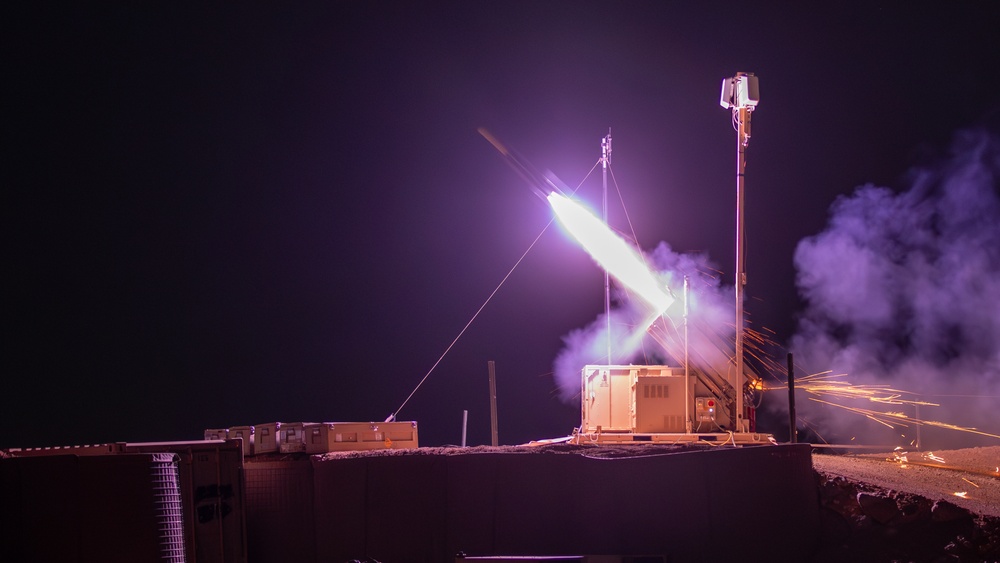
Palladyne AI Corp. announced this week that its subsidiary GuideTech has won a $2.3 million contract to supply avionics and flight software for a new kinetic counter-drone interceptor. The deal, confirmed in a company press release distributed via BusinessWire and reported by The Defense Post, marks GuideTech's latest push into the fast-growing counter-unmanned aircraft systems market — one now crowded with vendors chasing a shared goal: cheap, fast-to-field ways to physically knock small drones out of the sky.
The customer is a defense prime that Palladyne AI has not named. According to the company's disclosures, the prime is developing a low-cost kinetic interceptor designed specifically to counter unmanned aerial systems, and that interceptor has already completed flight testing — meaning the contract covers production or follow-on avionics work rather than a paper concept still years from a test range.
What GuideTech Is Actually Selling
The contract is a direct product sale, not a services or research agreement. GuideTech is supplying its BRAIN modular flight computer — the company's core avionics hardware line — paired with its FLEX flight-software framework, which handles the guidance, navigation, and control logic that turns raw sensor data into flight commands. Together, BRAIN and FLEX form the compute-and-software backbone that a missile or interceptor needs to fly a controlled intercept profile rather than simply following a ballistic path.
GuideTech is also providing its Reveal flight-analytics platform as part of the engagement. Reveal is being used to support the customer's development process, giving the defense prime a way to capture and analyze flight-test data as it refines the interceptor ahead of broader production. In practice, that means GuideTech's involvement extends past a one-time hardware sale into an ongoing role supporting the customer's test and iteration cycle.
Palladyne AI President and CEO Ben Wolff is quoted in the company's press release: "This contract reflects the commercial traction we are seeing for GuideTech's product platforms. BRAIN is a scalable platform for autonomous systems, and we continue to see customers adopt it for operational deployments. Product wins like this generate revenue today while expanding the pipeline of opportunities as customers progress toward production." The release's own headline frames the win as continuing the company's "commercial momentum."
A Pattern of 2026 Wins
This contract doesn't arrive in isolation. It follows a string of GuideTech program engagements disclosed over the first half of 2026:
- In January 2026, Portal Space Systems selected GuideTech to support production of next-generation maneuverable spacecraft platforms — a win entirely outside the missile and interceptor space.
- In March 2026, GuideTech was selected for a Navy program tied to a low-cost, long-range missile effort.
- In May 2026, GuideTech received an invitation to the Air Force Research Laboratory's Relentless Wolfpack Industry Day, a forum tied to AFRL's autonomous and collaborative-systems interests.
- On June 29, 2026, GuideTech disclosed the $2.3 million counter-drone interceptor contract, with trade-press coverage following in the days after.
Taken together, the pattern reflects a small avionics and flight-software supplier working to establish itself across multiple corners of the guided-munitions and interceptor space — a spacecraft platform, Navy missile programs, Air Force research engagements, and now a prime's counter-UAS interceptor — rather than betting on a single flagship program.
Why the Counter-Drone Interceptor Market Looks the Way It Does
The broader context for this deal is a widely discussed cost-imbalance problem in counter-drone warfare: cheap, mass-produced small drones can be countered at scale only if the interceptor's own unit cost stays low relative to legacy air-defense munitions. That dynamic has driven a wave of primes and startups toward "low-cost kinetic interceptor" designs — smaller, cheaper, mass-producible rounds purpose-built to knock down UAS rather than repurposed air-defense missiles.
GuideTech's pitch fits neatly into that dynamic: rather than build a complete interceptor, it supplies the avionics core — flight computer, flight software, and the analytics tooling to support test and iteration — that a prime needs to get a low-cost interceptor airborne and refined quickly. That's a lower-risk, faster-revenue model for a subsidiary than trying to compete as a full interceptor prime itself, and it lets GuideTech pick up contracts across multiple customers' programs rather than being tied to the fate of one platform.
The identity of the defense prime remains undisclosed in all currently available filings and reporting, and no additional technical specifications about the interceptor — its size, seeker type, warhead, or intended engagement envelope — have been released publicly.
Why It Matters
Counter-drone defense has become one of the most urgent and fastest-moving segments of modern warfare, driven by the proliferation of cheap FPV and loitering munitions across multiple active conflicts. The economics only work if interceptors are cheap enough to use at volume, which means the supply chain underneath those interceptors — flight computers, guidance software, and the analytics used to refine them — matters as much as the airframe itself. A $2.3 million contract is modest in dollar terms, but it signals that established primes are turning to specialized avionics subcontractors like GuideTech rather than building every component in-house, a sourcing pattern that could shape how quickly low-cost interceptors reach production at scale. It also illustrates how a single subsidiary can accumulate credibility across a spacecraft platform, Navy, Air Force research, and now counter-UAS customers within a single year — a track record that may matter more to future contract awards than any one deal's size.