
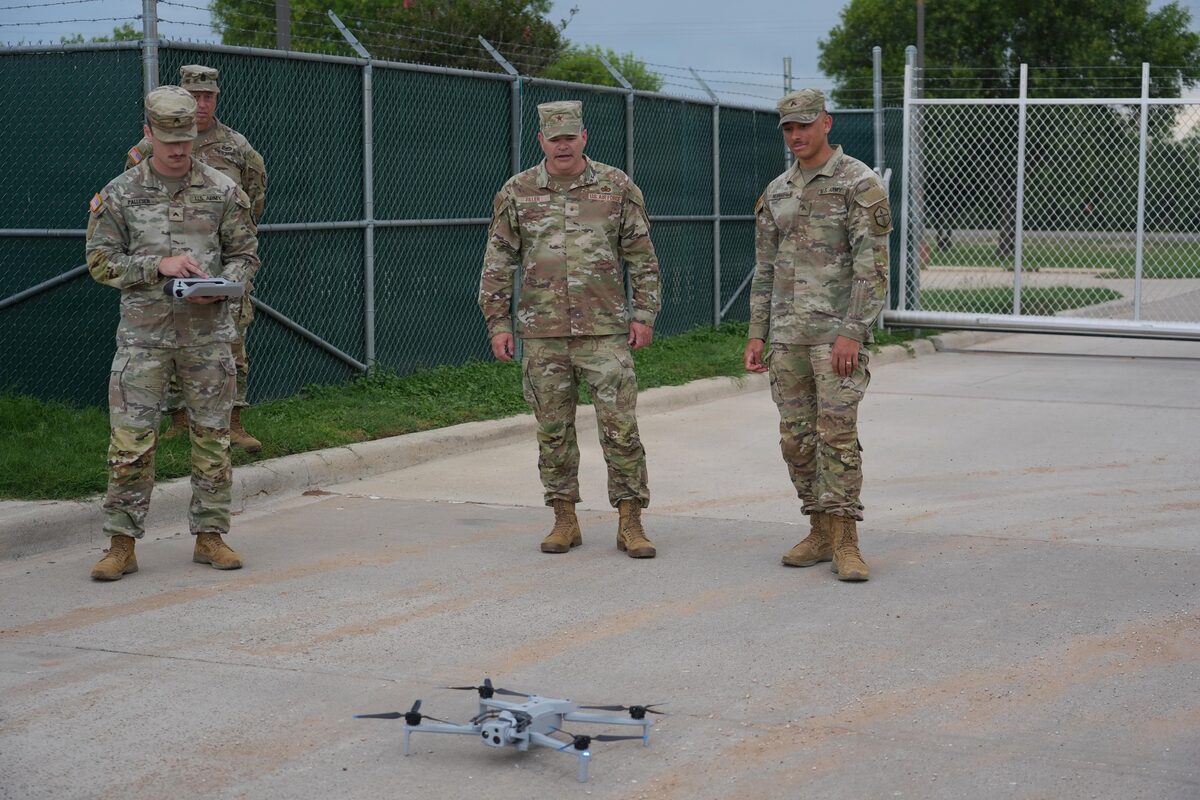
On June 23, 2026, the city council in Redmond, Oregon — a small city tucked against the high desert of Central Oregon — approved a five-year, $410,762 financed contract with Axon for six Skydio drones. On paper it reads like routine municipal procurement, the kind of consent-agenda item that clears in under a minute. In practice, it is a line-item receipt for a federal policy decision made three thousand miles away, and it is arriving in police budgets across the country whether departments asked for it or not.
The Redmond Police Department has run a drone program since 2019, built around DJI airframes that cost the department roughly $7,000 apiece. The replacement fleet, built around Skydio hardware, runs about $25,000 per unit — a jump of roughly 3.5x on sticker price alone. Nothing about the mission changed. What changed is who is allowed to sell drones to a U.S. police department.
The Ban That Set the Price
A federal NDAA provision restricting the use of Chinese-made unmanned aircraft systems by U.S. entities has pushed law enforcement agencies nationwide off DJI hardware — long the default choice for small-department drone programs on the strength of its price and capability — and onto a narrower list of Pentagon-vetted alternatives. Skydio, the Bay Area drone maker, is one of the beneficiaries: it is among the manufacturers cleared under the Defense Innovation Unit's Blue UAS program, the DoD effort that certifies which unmanned systems are approved for government use.
That list itself is currently in transition. Per a July 10, 2025 memo from the Secretary of War titled "Unleashing U.S. Military Drone Dominance," Blue UAS certification authority is moving from DIU to the Defense Contract Management Agency, which will run the program going forward at bluelist.dcma.mil. The mechanics of who signs off are shifting; the underlying effect on municipal drone budgets is not — Blue UAS-listed hardware is the approved lane, and Blue UAS-listed hardware costs more.
Redmond's Public Information Officer, April Huey, framed the purchase in operational terms: "Drones are a tool of technology and staying up to date is critical." That is true as far as it goes. But the timing and math tell a more specific story: this wasn't a fleet reaching end-of-life or a capability gap the department had identified on its own. It was a compliance deadline that happened to land on a small city's books at the least convenient possible moment.
How the Deal Is Structured
The contract is built like a police-fleet lease rather than a straight equipment purchase, and the financing details are where the real story sits:
- Total value: $410,762 over five years, contracted through Axon.
- Units: Six Skydio drones, at roughly $25,000 apiece versus the ~$7,000 DJI units they replace.
- Initial funding source: The first two years are being paid for out of $100,000 in savings left over from construction of Redmond's public-safety building — a one-time capital surplus, not a recurring line item.
- Built-in fleet swap: The contract includes a full replacement of the six-drone fleet at the 30-month mark, plus a full warranty for the contract term — meaning the department is paying not just for hardware but for a guaranteed mid-contract refresh.
That structure is notable on its own terms. Financing a drone fleet the way a department finances patrol vehicles — multi-year payments, warranty coverage, a scheduled hardware refresh — is a meaningfully different budget posture than buying six relatively disposable quadcopters outright and expensing them. It converts a capital cost into a recurring five-year obligation, at a moment when the department happened to have one-time savings on hand to cover the opening stretch. What happens to the payment schedule once that $100,000 cushion runs out is the open question the council did not have to answer in June.
What the Fleet Actually Does
Redmond's drone program is not a large-scale operation. In 2025, the department logged 84 total flights — 65 operational missions and 19 training flights. That is a modest cadence for a program now carrying a $410,762 price tag, though it is broadly consistent with how small-department drone-as-first-responder and evidence-documentation programs tend to run: infrequent by big-city standards, but valuable enough that departments don't want to give the capability up.
Regional coverage from the Redmond Spokesman and The Bulletin, both published July 1, 2026, corroborate the contract value and financing structure, and frame the purchase the same way the department itself does: as fleet modernization made necessary by the federal ban, layered on top of a program with a six-year operating history.
Why It Matters
Redmond is not a special case — it's a preview. The NDAA restriction on Chinese-made drones was written as a national-security measure, aimed at supply-chain risk in hardware capable of collecting imagery and geolocation data for U.S. government users. Whatever the merits of that rationale, the second-order effect is now showing up in city council minutes: a small police department is converting cheap, owned equipment into pricier, financed equipment, on a timeline dictated by Washington rather than by its own budget cycle or operational needs.
Redmond had leftover construction savings to soften the first two years. Plenty of departments won't. As DJI-era fleets across the country reach the same forced-replacement point over the next several budget cycles, the Redmond contract is a useful line-item template for what that replacement actually costs: roughly 3.5x the per-unit price, financed rather than purchased outright, with a fleet-wide hardware swap built into the contract before the original units are even three years old. The plainest way to summarize it: a rule written in Washington turned cheap hardware Redmond owned into pricey hardware it rents.
Watch for two things going forward: first, how many other small departments follow Redmond's lease-financing model rather than paying cash, since that model effectively spreads the NDAA compliance cost across years instead of concentrating it in one budget shock; and second, what the Blue UAS Cleared List looks like once its certification authority fully migrates to the Defense Contract Management Agency — because whoever controls that list controls, in practice, which vendors get to set the price for every small-city drone program in the country.