
Until late May, a public-market investor who believed drone delivery was real had no clean way to express that conviction. Wing is a division of Alphabet. Prime Air is an Amazon project that has absorbed billions with little investor visibility. Zipline, the highest-profile dedicated operator, remains private. For more than a decade, the only honest position was that there was no position to take.
That changed on May 28, when Matternet completed a reverse merger with Los Altos Ventures Corp., a blank-check shell company, and renamed the combined entity Matternet, Inc. The deal — whose details have been accumulating coverage this week — created the first publicly traded pure-play drone delivery company. The structural novelty is not incidental to the story. It is the story. Whatever one thinks of the company's near-term revenue outlook, the class of asset now exists where it did not before.
The Mechanics: $33M, Oversubscribed, Institutional Anchors
Alongside the merger, Matternet closed a $33 million private placement that it describes as oversubscribed — a meaningful signal given how roughly the advanced air mobility cohort has traded since Joby and Archer hit the public markets via SPAC. The placement was led by Ed Eisler of EE Holdings and Mark Tompkins of Montrose Capital Partners, with The Benchmark Company and Seaport Global Securities acting as placement agents. Those are recognizable institutional names, not retail-driven momentum money, which distinguishes this raise from the frothy 2021 eVTOL listings.
Proceeds are earmarked for a next-generation delivery platform and commercial expansion across food, retail, and healthcare verticals. Matternet has not disclosed a valuation, but the oversubscription and institutional lead structure suggest the round did not require distressed pricing to close.
The Certification Moat
Matternet's core asset — and the phrase the company leans on hardest — is a pair of regulatory credentials that no competitor currently holds simultaneously: an FAA Type Certification and a Production Certification for its M2 drone, credentials the company has now held for several years. Type Certification validates that a specific aircraft design meets FAA airworthiness standards. Production Certification validates that the manufacturer can consistently build to that standard at scale. Together they are the prerequisite gate for Part 135 BVLOS operations over people — the regulatory regime that governs commercial drone delivery at any meaningful density.
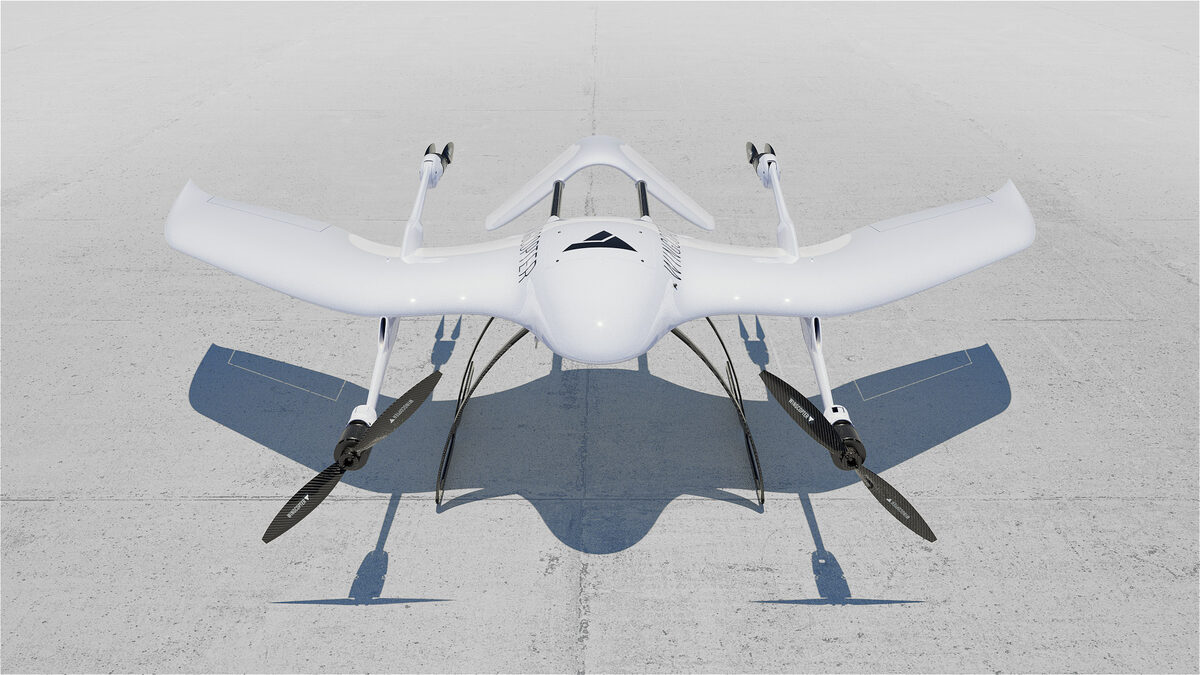
The M2 itself is a fixed-station electric quadcopter built for small-payload, point-to-point runs. That form factor is purpose-built for the hub-and-spoke medical and quick-commerce logistics use case: a small, certified package, point to point, reliably. It is not a general-purpose aircraft.
Whether the certification moat holds depends on a race condition. Other operators — most notably Zipline with its fixed-wing platform — have pursued or are pursuing their own type certification paths. The FAA's certification pipeline is slow, which gives Matternet a time advantage. But certification alone does not guarantee commercial scale; it is a necessary condition, not a sufficient one. The company has been certified for years and is still raising growth capital, which implies the ramp from certification to profitable operations is longer than the promotional framing often suggests.
Operating Record: 60,000 Flights, UPS, the NHS
Matternet has been operating since 2014, which makes it one of the oldest continuous drone delivery programs anywhere. The company reports more than 60,000 commercial flights across U.S. and European cities — a figure that, while not independently audited in the research available, is consistent with the company's documented partnership history.
The anchor U.S. relationship is with UPS Flight Forward, which has used Matternet's platform for hospital medical logistics — a deployment that predates the M2's Type Certification and has operated across multiple regulatory frameworks as the FAA's BVLOS rules evolved. In Europe, the NHS deployed the platform for medical supply runs in Central London. Other named partners include Dave's Hot Chicken and SoftBank Robotics America, which gesture at the quick-commerce expansion the company is now funding.
The healthcare logistics use case is worth dwelling on: it is the deployment context where drone delivery's value proposition is least contested. A 2 kg payload, 12-mile range, and certified reliability are not competitive weaknesses in a hospital-to-hospital or lab-to-clinic run. They are exactly what the mission requires. The question Matternet's public investors are ultimately betting on is whether those same economics translate to the far larger, far more competitive consumer food and retail verticals.
Raptopoulos's Timing Thesis — and the Skeptic's Counter
"As we enter the era of physical AI, we believe 2026 is the inflection point for drone delivery in the United States." — Andreas Raptopoulos, CEO
Founder and CEO Andreas Raptopoulos has been making variants of the inflection-point argument for years. The 2026 version is pinned to regulatory momentum: the FAA is under sustained legislative pressure to accelerate BVLOS rulemaking, several city-scale commercial deployments have demonstrated safety records sufficient to support expanded operations, and the administration has signaled interest in streamlining drone commerce approvals. Raptopoulos is betting that the combination of Matternet's certified platform, its operating history, and a more permissive regulatory environment in 2026 creates a window the company is uniquely positioned to exploit.
The skeptic's counter is amply supplied by recent history. Joby Aviation and Archer, which went public via SPAC on comparably bullish timing theses, have both faced extended timelines to commercialization and sustained stock price pressure. The advanced air mobility space has proven particularly punishing for public investors, partly because the regulatory timelines are genuinely unpredictable and partly because the capital intensity of the certification and operations ramp is enormous relative to early revenue. Matternet's reverse-merger structure and the oversubscription of its placement suggest the company's backers have studied those precedents and priced their conviction accordingly — but the structural lessons from the eVTOL wave apply with real force to any aviation company going public ahead of at-scale revenue.
What is different here, structurally, is the certification status. Joby and Archer went public while still pursuing their primary regulatory approvals; Matternet has held its Type and Production Certifications for years and has the flight record to show operational continuity under them. That is a meaningfully different risk profile, even if the commercialization ramp remains the hard problem.
For the drone delivery sector, the more durable significance of the May 28 transaction may simply be that the asset class now has a price. Public markets are imperfect, but they are the mechanism by which a technology moves from venture-backed hypothesis to capitalized industry. Matternet's listing, whatever the stock does from here, is the moment drone delivery acquired one.
Sources
- Business Wire — Matternet raises $33M private placement as part of go-public transaction (May 28, 2026)
- DroneLife — Matternet drone delivery raises $33M and goes public in reverse merger (May 28, 2026)
- DroneDJ — Drone delivery: Matternet public stock (June 8, 2026)
- DroneXL — Matternet $33M reverse merger (June 6, 2026)
- DC Velocity — Drone provider Matternet goes public to raise $33 million (June 2026)
