
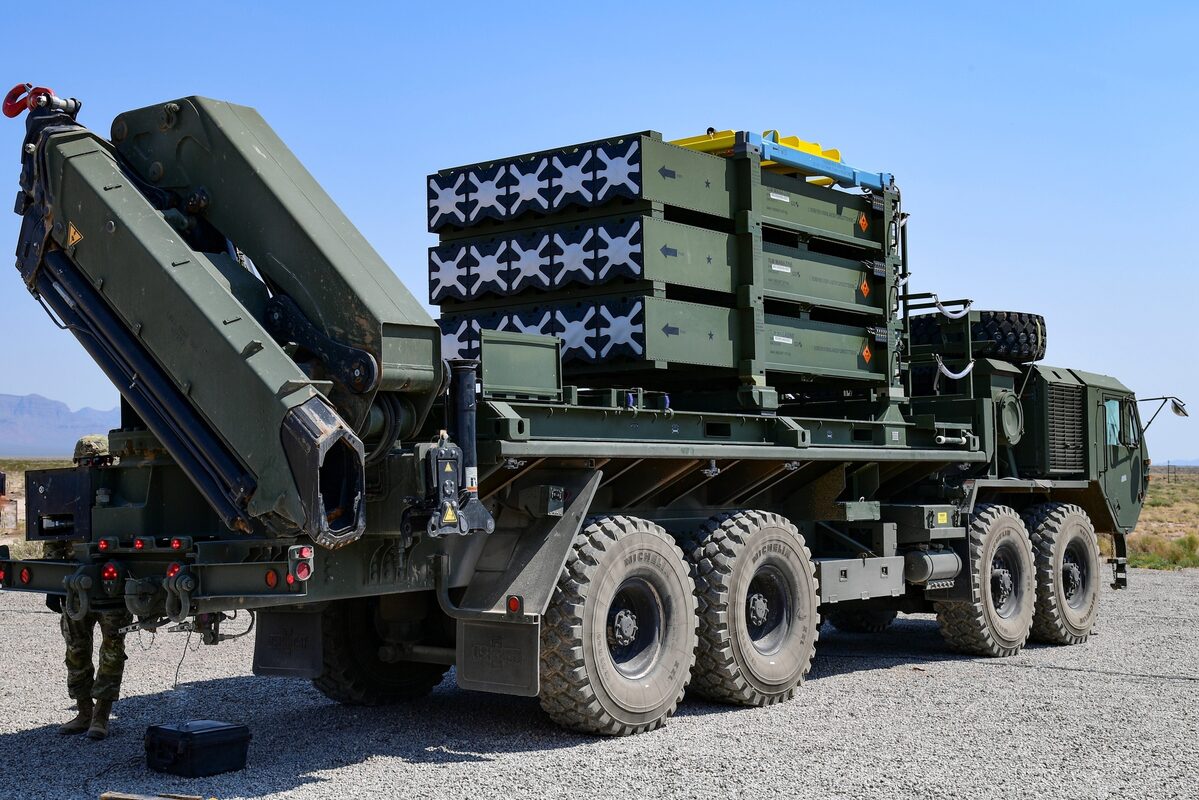
Israel's Ministry of Defense announced on June 30-July 1, 2026 that it had completed a test campaign validating an upgraded Iron Dome system against saturation attacks — coordinated barrages mixing artillery rockets, cruise missiles and drones designed to overwhelm defenses through sheer volume. The tests mark the first operational integration of the Iron Beam laser weapon into Iron Dome's battle-management center, giving commanders the ability to dynamically choose between a $50,000 Tamir interceptor missile and a laser pulse costing just a few dollars per shot, depending on the threat.
The trials were led by Rafael Advanced Defense Systems, Iron Dome's prime contractor, and were run through joint scenarios executed directly from the system's existing battle-management center rather than a standalone laser control node. According to reporting from Army Recognition, the effort also drew in Israel's Missile Defense Organization, IAI's ELTA Systems, the Directorate of Defense Research and Development (DDR&D), Elbit Systems — which supplies the laser source — and component makers mPrest, SCD and Shafir. The EL/M-2084 radar, Iron Dome's longstanding detection and tracking backbone, was used throughout the campaign.
What Was Actually Tested
Per the Israeli MoD's statement, cited by Janes, the test campaign simulated artillery rockets, cruise missiles and UAVs arriving as high-volume, simultaneous threats — the profile of a coordinated saturation attack rather than a single inbound target. The stated goal of the upgrades is to improve detection, classification and engagement of exactly that kind of high-volume simultaneous threat picture, where a defender has to sort and prioritize many objects of different types and speeds in a short window.
The MoD described the results as "a significant leap" in capability, while Rafael CEO Yoav Tourgeman characterized the work as "a further expansion of the system's capability envelope" — language that points to added engagement options and improved discrimination rather than a wholesale redesign of the underlying architecture.
Missiles and Lasers, Now on the Same Screen
The headline change is architectural: Iron Beam, which entered Israeli Air Force service in December 2025, has now been integrated into Iron Dome's battle-management center. That means an operator working a saturation scenario is no longer choosing between two separate systems — they're choosing between two engagement options inside one interface, selecting per-threat which weapon effect to apply.
The economics of that choice are stark. A standard Iron Dome battery carries roughly 20 Tamir interceptors, each priced at around $50,000, and the system covers threats at ranges from 4 to 70 kilometers, per Defense News reporting. Iron Beam, by contrast, is a shorter-range tool — effective out to 10 kilometers, with a 4-to-5-second engagement time per target — but at a cost of just a few dollars per laser pulse. That cost differential, several orders of magnitude, is the central rationale for pairing the two systems rather than relying on interceptor missiles alone.
Iron Dome has been operational since 2011, built primarily to counter short-range rockets and artillery fired from Gaza and Lebanon. The addition of a laser option inside its command loop is aimed squarely at a newer problem: threats that arrive not as a single missile but as a swarm — cheap, numerous, and expensive to counter one Tamir at a time.
Why Saturation Defense, and Why Now
The timing of the announcement is not incidental. Defense News reported that the test campaign took place amid a US-Iran ceasefire and against a backdrop of continuing Hezbollah drone launches from Lebanon. Israel has spent the past several years absorbing exactly the kind of mixed-threat salvos the tests were designed to simulate — rockets, cruise missiles and drones launched together or in close succession, intended to exhaust interceptor stocks or split attention between different air-defense layers.
A saturation attack's core logic is arithmetic: if every interceptor costs tens of thousands of dollars and every incoming threat costs a fraction of that to build and launch, the economics eventually favor the attacker in a prolonged exchange, even if the defense system technically "wins" every individual intercept. Giving Iron Dome's operators a near-free laser option for a subset of threats — likely slower, lower-value targets such as small UAVs, within Iron Beam's 10-kilometer envelope — is a direct answer to that arithmetic problem, reserving the $50,000 Tamir missiles for threats the laser can't reach or can't engage fast enough.
Q&A: The Basics of the Integration
Is Iron Beam replacing Iron Dome? No. The reporting describes an integration, not a replacement — Iron Beam is now a selectable engagement option inside Iron Dome's existing battle-management center, alongside the Tamir interceptor.
What can Iron Beam actually hit? Based on the disclosed figures, its useful range tops out around 10 kilometers, with a 4-to-5-second engagement window per target — parameters that fit a shorter-range, high-volume threat like small drones or close-in rockets more readily than a long-range cruise missile.
Who built what? Rafael is the prime contractor and led the test campaign. IAI's ELTA Systems, DDR&D, Elbit Systems and component suppliers mPrest, SCD and Shafir were named as contributing organizations, alongside Israel's Missile Defense Organization. The EL/M-2084 radar remains the system's detection and tracking sensor.
When did Iron Beam become operational? It entered Israeli Air Force service in December 2025, according to the MoD statement reported by Janes.
Why It Matters
For counter-UAS watchers, this is a case study in a broader industry problem: how do you defend against cheap, numerous drones without bankrupting your own air-defense budget round after round? Iron Dome's answer — folding a directed-energy weapon into an existing, combat-proven battle-management center rather than standing up a parallel laser-defense system — is a template other militaries facing drone saturation threats will be watching closely. The cost asymmetry Rafael is targeting, a few dollars per laser pulse against a $50,000 missile, is precisely the math that has made drone swarms an attractive tactic for state and non-state actors alike, from Hezbollah's launches out of Lebanon to broader regional missile-and-drone barrages. If the integration holds up in real combat conditions rather than simulated test scenarios, it offers a rare instance of a defender's per-shot cost curve bending back in its favor — a dynamic with implications well beyond Israel's borders, for any force trying to make layered air defense financially sustainable against mass drone attacks.