
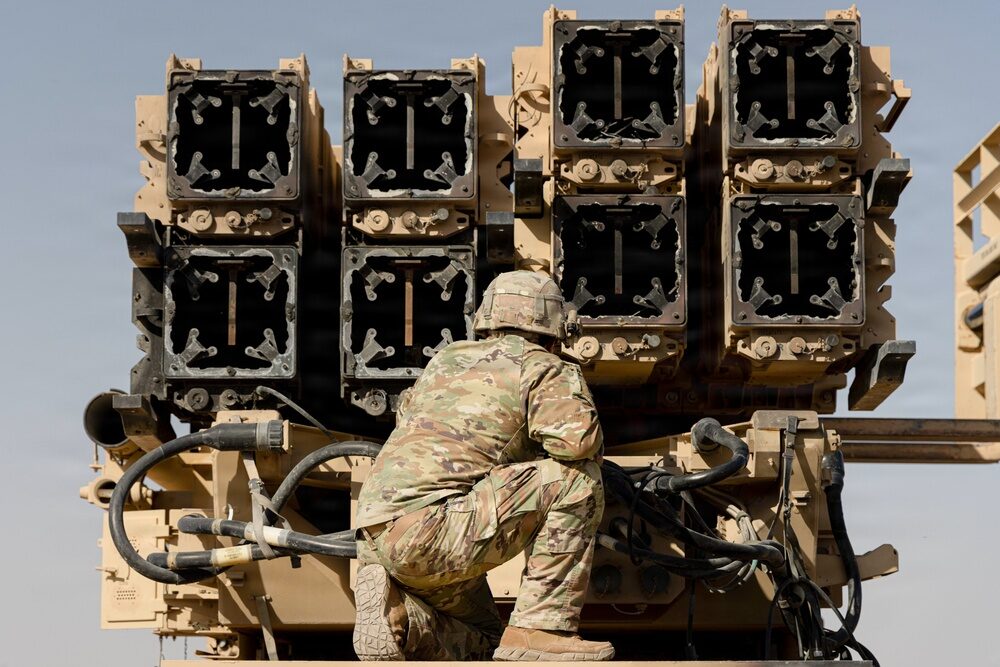
In the early hours of June 10, Iranian forces did not probe a single US installation — they hit three at once. Ballistic missiles and Shahed-class drones targeted Navy Fifth Fleet headquarters in Manama, Bahrain; Muwaffaq Salti Air Base in Jordan, home to US F-35s; and positions in Kuwait in a coordinated overnight salvo that represents the most serious flare-up of the April 7 ceasefire period. The simultaneity was the message: this was not a localized retaliation but a deliberate, multi-vector pressure campaign executed as negotiators in Doha and Tehran were working toward a deal that US and Pakistani officials said was nearly finalized.
The Action-Reaction Sequence
US officials framed the trigger as the downing of an AH-64 Apache helicopter, which they attributed to Iranian fire. Tehran offered a different account, claiming one of its own Shahed drones shot down the aircraft — a version the US disputed but that both sides have left standing in parallel in public statements. Whatever its provenance, the Apache loss became the stated justification for what followed on both sides. (A separate article covers the Corsair sea-drone rescue of the Apache crew from Gulf waters.)
CENTCOM's response came in three waves, striking approximately 20 Iranian targets including air-defense systems and radar sites in southern Iran. The command framed the action in terms that underscored the ceasefire's paper-thin status: "CENTCOM forces remain vigilant and ready to defend against unwarranted Iranian aggression." The phrase "ongoing ceasefire" doing considerable diplomatic work in a sentence describing active strikes on Iranian territory.
Jordan's military reported intercepting missiles aimed at Muwaffaq Salti. The IRGC claimed hits on hangars and command centers at the base — though no independent verification of damage has emerged. Muwaffaq Salti carries specific weight in this context: it sits in the same country as Tower 22, the installation where a January 2024 drone strike killed three US service members and marked the first American fatalities from Iran-backed fire in that conflict cycle. Its reappearance on the targeting list is not incidental.
Roughly twelve hours before the salvos began, US forces disabled the oil tanker M/T Settebello in the Gulf of Oman at 11:14 pm on June 9, killing two Indian seafarers and leaving one missing. The tanker incident, the Apache downing, and the overnight salvo form a compressed sequence that suggests a mutual escalation dynamic rather than isolated incidents.
"We hit 'em hard yesterday, and we're going to hit 'em hard today." — President Trump, June 10
The Iranian Foreign Ministry offered a characteristically double-edged formulation in response: "Diplomacy and the battlefield are not separate matters." Read one way, that is a statement about the inevitability of linkage between military and political tracks. Read another, it is a warning that Iran intends to keep both levers engaged simultaneously — exactly what the overnight salvo demonstrated.
The Drone Dimension: Shahed-Class as Harassment Instrument
The Shahed-class loitering munition has functioned as Iran's harassment instrument of choice throughout this conflict — cheap enough to expend in volume, slow enough to track but numerous enough to saturate point-defense systems, and politically calibrated to stay below the threshold that would force an unambiguous escalatory response. The pattern has been consistent since the conflict began on February 28: Iranian drone barrages hit 12 or more countries in the opening weeks, with the UAE alone intercepting thousands of drones and hundreds of missiles in the late-February-through-early-April window, by NPR's accounting of earlier phases of the conflict.
The June 3 strike on Kuwait International Airport illustrated the instrument's reach and the operational signature. Thirteen ballistic missiles and 17 drones hit Terminal 1, killing one person and wounding 63. The airport strike was not a military target in any traditional sense — it was a demonstration of the IRGC's willingness to accept civilian infrastructure as acceptable collateral, and of the political costs it was prepared to impose on neighboring states it deemed insufficiently resistant to the US presence.
Earlier in the week, additional incidents around the ceasefire had been reported, underscoring how porous the truce had become. The geographic scope of these incidents, from the Gulf to the Strait to the Levant, reflects a deliberate strategy of keeping the US and its partners simultaneously engaged across multiple theaters rather than allowing any single front to stabilize.
Salvos Hitting While Mediators Were Closing
The negotiations paradox sharpens the picture considerably. As of June 12, Mediating parties reported progress toward a formal deal, with Qatari negotiators in Tehran working remaining gaps. That announcement came after the overnight salvos — meaning the IRGC launched its three-base attack while a ceasefire agreement was, by the account of at least one mediating government, essentially within reach.
This is either a breakdown in command coherence or a deliberate signal that Iran's negotiating posture and its military posture are being managed as separate instruments of coercion — precisely what the Foreign Ministry's "diplomacy and the battlefield are not separate matters" formulation suggests. The practical effect is that any deal signed now will be reached against a backdrop of CENTCOM conducting active retaliatory strikes on Iranian soil and Iran claiming hits on named US installations, with no independent damage assessment available on either side.
The ceasefire that held from April 8 has been punctured repeatedly since. The overnight salvo of June 9–10 is the most compressed and multi-directional test yet: three bases, one night, with a tanker incident on the same timeline and a rescue operation for a downed Apache crew playing out in parallel. Whether the deal Pakistan's PM described survives what Iran's drones and missiles delivered that night is the operational question that follows every diplomatic statement out of Doha.
Sources
- U.S. Central Command — CENTCOM Forces Defeat Missiles, Drones Launched by Iran
- The War Zone — Overnight Attacks Rattle U.S.-Iran Ceasefire
- CBS News — US-Iran self-defense strikes, missiles, drones, ceasefire
- CBS News live updates — Trump, Iran war, Kuwait airport, ceasefire
- NPR — Iran war updates, June 3, 2026
