
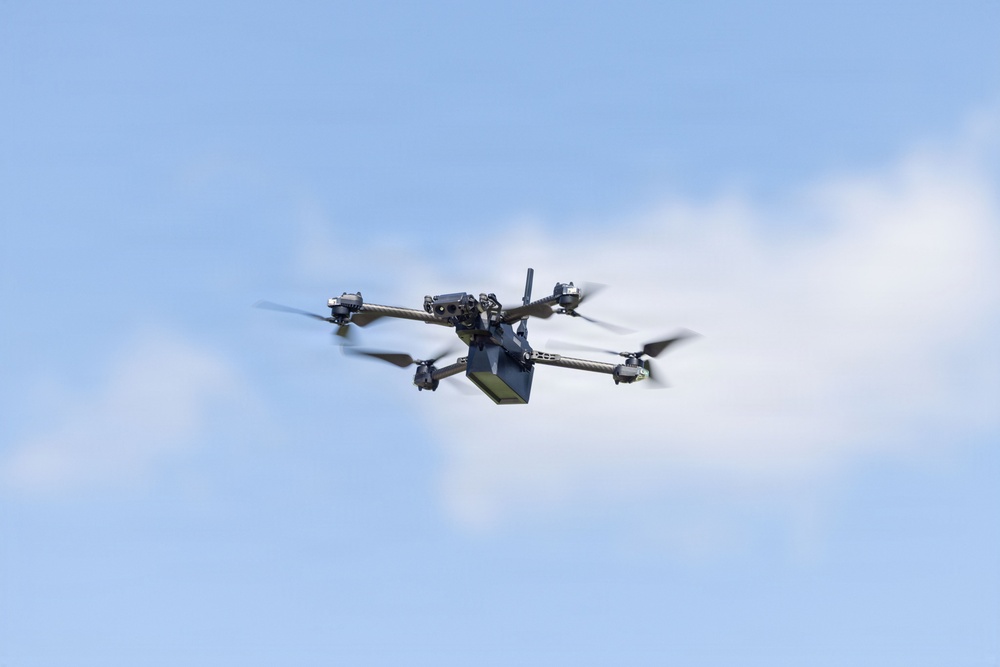
Defense Secretary Pete Hegseth used a Sept. 30 "State of the Force" speech at Marine Corps Base Quantico to announce the Pentagon's plan for a new Autonomous Warfare Command, abbreviated AUTOWARCOM. He described it as a four-star combatant command, built with service-like authorities, to take charge of drones, artificial intelligence and autonomy across the joint force. A same-day memorandum sets a target stand-up date of Oct. 1, 2027. The date is a goal, not a done deal. Congress has to act first, and the public documents leave major questions open.
What Hegseth said
According to The War Zone, Hegseth called the new organization "a new four-star combatant command with service-like authorities built to scale autonomous and robotic capabilities across the joint force in the fastest peacetime shift in modern military history." He framed it as the next step after earlier efforts including Drone Dominance and JIATF-401, and used a "high-low mix" thunderstorm analogy to explain the force mix he wants. He also pointed to the Ukraine lesson of purpose-built, adaptable systems, and said the speech will become an annual event.
Air & Space Forces Magazine reported that the audience at Quantico was roughly 600 officers and senior enlisted, at the E-6 and O-3 level. Defense One called the planned organization the military's 12th combatant command. The portfolio, per Air & Space Forces Magazine, covers drones, AI, and command and control.
What the memo actually says
The primary document is a Sept. 30, 2026 memorandum from the Secretary of War titled "Project Agincourt - Pathway to the Autonomous Warfare Command." We read it via a Wayback Machine mirror of the Defense Department's media site. Its main directives:
- Lead organization. The Direct Reporting Portfolio Manager for Unmanned Systems (DRPM-UxS) leads Project Agincourt and establishes the pathway to AUTOWARCOM.
- End state. AUTOWARCOM is described as a functional combatant command that will lead the Joint Force in unmanned and autonomous warfare. It is to have directed manpower, budget and acquisition authorities, plus dedicated military career pathways for both officers and enlisted personnel.
- Congress. The DRPM is to collaborate with Congress on legislation.
- Date. The target establishment date is Oct. 1, 2027.
- Acquisition. Agincourt is to prototype a new acquisition model that teams operators with innovators. The stated goal is an output of "not a particular drone, but the ability to adapt in combat."
- People. Owen West and Max Strasiser are named CEO and COO of DRPM-UxS.
- Deadlines and reporting. A 30-day plan of action and milestones (POAM) is due to the Secretary with support from the Chairman of the Joint Chiefs of Staff. An attached list of implementation requirements has the military departments provide phased manning plans and proposals for new or adapted military occupational specialties and ratings as part of that POAM, and the DRPM reports monthly to the Secretary.
Defense One adds context: the planning flows from the roughly three-month-old direct reporting portfolio manager for unmanned offensive and defensive systems, which is to be renamed Project Agincourt. It is led by West, who currently runs the Defense Innovation Unit, and a Navy senior chief described as a SEAL and test pilot. The outlet says Agincourt will prototype "warfighting acquisition," and that the services are to create new MOS frameworks.
The congressional hurdle
The memo itself acknowledges the dependency by directing collaboration with Congress on legislation. Per Air & Space Forces Magazine, Senate lawmakers proposed such a command during deliberations on the 2027 defense policy bill. The measure cleared the committee, but the bill is still pending and the House must also approve. Until the authorization question is resolved, the Oct. 1, 2027 date rests on legislation that has not been enacted.
The rest of the speech
AUTOWARCOM was one of several announcements. Air & Space Forces Magazine describes several others: an installation power program office under a two-star officer; a 20 percent cut to generals and admirals; Project Meridian, involving Palmer Luckey, Elon Musk and Newt Gingrich; a "Next Great American Base" for 15,000 to 25,000 personnel; five new cadet corps; and an Office of Religious Affairs. Defense One reports that the Project Meridian committee has a four-month deadline.
Unanswered questions
Air & Space Forces Magazine notes it is not clear how the command will be structured, who will lead it, or how it fits with the autonomy efforts already under way inside the individual services. The memo does not settle those points either, at least in the portions we reviewed. A few specifics worth watching:
- Commander. A four-star combatant commander has not been named. West and Strasiser lead the interim DRPM, but the memo does not say they would carry over.
- Authorities. "Service-like authorities" and "directed manpower, budget, acquisition authorities" are significant claims. How such powers would be granted, and what the services give up, is not spelled out in the sources.
- Overlap. How AUTOWARCOM would relate to existing efforts such as Drone Dominance and JIATF-401, and to service-run autonomy programs, is undefined.
- Timeline. The first concrete checkpoint is the 30-day POAM, which the memo says will cover command relationships, resources, required authorities, manning and milestones for command establishment.
Why It Matters
If it happens, AUTOWARCOM would put drones, AI and autonomy under a single four-star-led command with its own people, money and buying power, rather than leaving them spread across service programs and temporary task forces. The memo's emphasis on career paths and new MOSs and ratings suggests an intent to build a permanent autonomy workforce, not just buy hardware. The stated acquisition goal, adaptability in combat over any particular airframe, points toward fielding approaches that can be updated quickly, which matters for the drone industry's relationship with the Pentagon.
The caveat is that everything hinges on an unfinished authorization bill and on design decisions not yet made. Readers should treat Oct. 1, 2027 as an ambition, and watch the NDAA, the 30-day POAM, and any leadership announcement for signs of how real and how fast this will be.
Sources
- Memorandum: Project Agincourt - Pathway to the Autonomous Warfare Command (Secretary of War, Sept. 30, 2026, via mirror)
- Hegseth Unveils New Autonomous Warfare Command in 'State of the Force' Address (Air & Space Forces Magazine)
- Hegseth plans 'Autonomous Warfare Command' (Defense One)
- Vision For New Autonomous Warfare Command Laid Out By Pentagon (The War Zone)
