
Germany's army is building a formation made up of drones. On Oct. 1, Defense Minister Boris Pistorius was at the Bergen training area in Lower Saxony for the Bundeswehr's Experimentalserie Land trials. There he announced that the Heer will begin standing up its first drone regiment, or Drohnenregiment, during 2027. It will be an independent formation that brings the army's unmanned reconnaissance, strike and counter-drone tasks together under one command.
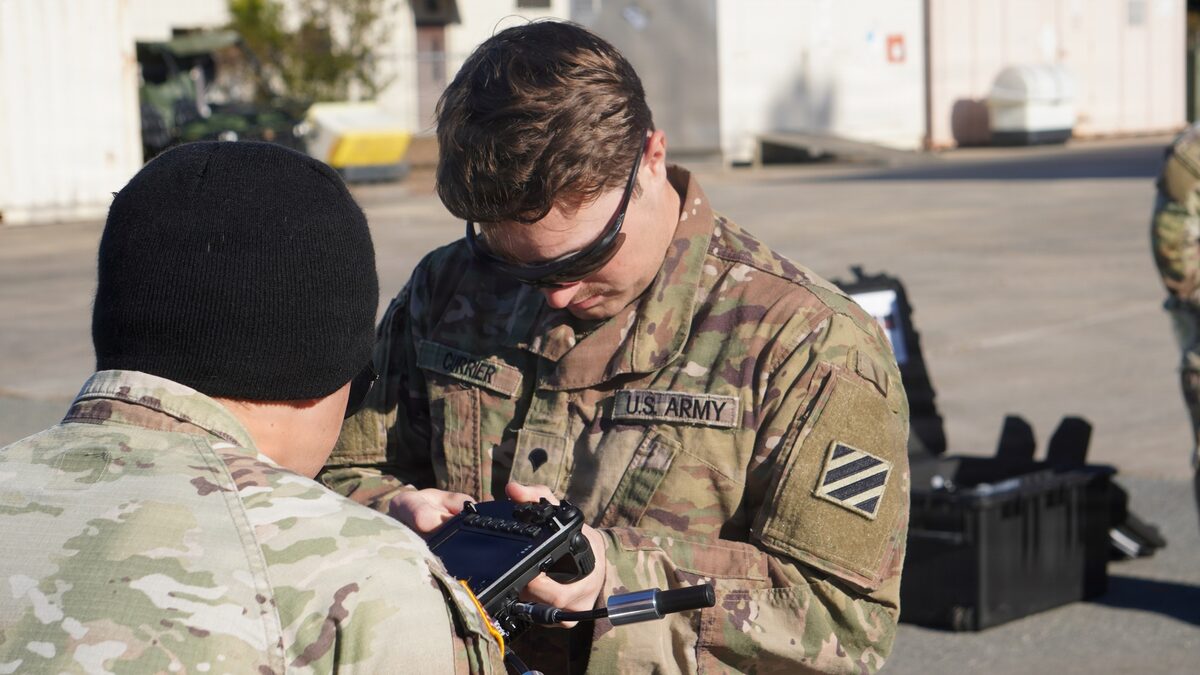
The announcement came a few weeks after the US Army went the other way. A paratrooper battalion of about 600 soldiers that had been built around drones lost that mission in September. Two NATO armies have now made opposite decisions about the same kind of unit.
What Germany Announced
According to the Defense News / C4ISRNET report, formation of the regiment begins in 2027. It will be a divisional asset of the 10th Panzer Division, which DroneXL notes is headquartered in Veitshöchheim. The regiment will start with 300 to 350 personnel and is planned to grow to as many as 600. Lt. Gen. Christian Freuding told the German news agency dpa that the regiment should reach full operational capability by 2029.
The planned structure has five or six companies:
- a close-combat company
- a deep-strike company, with reach out to about 500 km depending on commercial equipment availability
- an electronic warfare company
- a counter-UAS company
- a trials company that tests new systems
The Bundeswehr's own announcement gives the regiment a broad remit. It will combine reconnaissance, effects and the interception of enemy drones, use both aerial and ground systems, and cover ranges from close to long distance. The ground systems mean unmanned ground vehicles are part of the plan alongside aircraft. The electronic warfare company is listed separately in the official text, so the regiment is expected to fight in the electromagnetic spectrum and not only fly drones.
Several important details are still open. C4ISRNET reports that the defense ministry has not yet settled a permanent base or awarded contracts for the long-range platforms the regiment requires.
Bergen: The Testbed Behind the Decision
The setting of the announcement mattered. Experimentalserie Land was a ten-day trial on Range 20 (Schießbahn 20) at Bergen, where soldiers tested prototype systems in the field. DroneXL counted more than 40 prototypes in the trial. The Bundeswehr describes the series as testing prototypes in the open air, with troops rather than development engineers, and says what proves itself feeds into structures, doctrine and new requirements for industry.
Pistorius explained the regiment using lessons from Ukraine. In the Bundeswehr's account, he said data sovereignty, networking and innovation cycles decide success or failure there. A regiment with its own trials company fits that view, since hardware is expected to change quickly and the unit will include people whose job is to keep evaluating systems.
Loitering Munitions Arrive First
Germany has already funded the most important strike capability. DroneXL reports that in February, the Bundestag budget committee approved about €269 million each for loitering munitions from Helsing and from Stark. The first rounds are due in 2027 and will go to the German brigade in Lithuania. C4ISRNET separately reports that loitering munitions are being evaluated and will reach troops in 2027.
The army is also not waiting for the regiment before fielding drones more widely. Light infantry, reconnaissance and armored units start fielding tactical unmanned systems at the turn of the year, according to C4ISRNET. The regiment will therefore not be the army's only drone user. C4ISRNET describes a dual-track strategy: dedicated formations alongside drone use throughout the entire force.
The American Counterpoint
DroneXL compares Germany's plan with a recent US decision. The US Army's 3rd Battalion, 504th Parachute Infantry Regiment was activated in January at Grafenwöhr, which is also in Germany. It has about 600 paratroopers, roughly the size Germany plans for its regiment at full strength. In September, after the Saber Junction 26 exercise, the battalion lost its drone mission. DroneXL also cites a letter to Army leaders dated Sept. 1 from three senators and a House member in its coverage of the episode.
The sources available here do not explain why the Army made this decision, and this article does not guess at the reasons. What is documented is the timing. Within a few weeks, one army ended a dedicated drone-battalion experiment in Germany, and the other announced a permanent drone regiment of about the same size.
Why It Matters
There are two common ways to organize drones in an army. One spreads them across every unit, so that each squad, platoon and company has its own. The other puts them in a specialist formation. Germany is doing both. Its line units start getting tactical drones around the turn of the year, and a dedicated regiment will take on deep strike, electronic warfare, counter-UAS and continuous experimentation.
Placing the regiment under the 10th Panzer Division, as a divisional asset, suggests it is meant to serve the division as a whole rather than a single brigade. The 500 km strike figure is especially ambitious, because it depends on commercial equipment availability and no contract for the long-range platforms has been awarded yet.
The plan also leaves several questions open. A 2029 full-capability date gives Germany about three years to recruit and train up to 600 specialists, choose a home base and buy long-range systems. Each of those can run into delays. The US case shows that a drone battalion can be created and then lose its mission within months. Whether Germany's regiment does better will depend on decisions that have not been made yet: where it will be based, which systems it will fly, and whether the trials company can keep pace with the rapid changes in drone warfare that Pistorius pointed to in Ukraine.
