
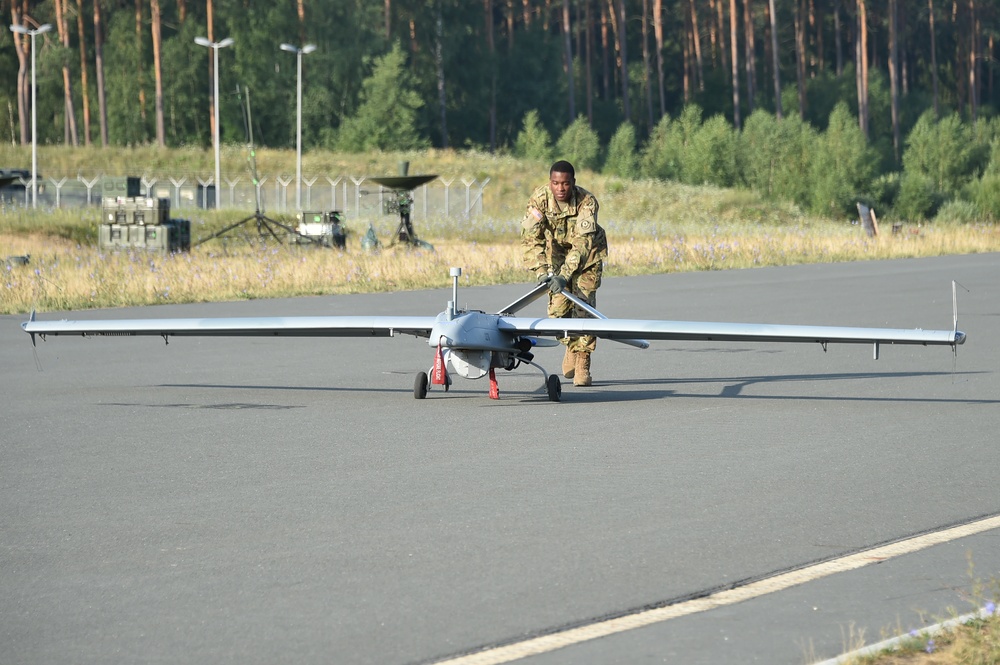
Since 1991, a single section of the Federal Communications Commission's rules has kept 800 MHz cellular radios from being used in anything that flies. The rule was written for people making phone calls from airplanes. In practice it also covered drones, which kept a large block of licensed, nationwide, low-band spectrum off-limits to uncrewed aircraft at a time when the industry wants reliable command links for flights beyond visual line of sight.
That could change on Oct. 29. FCC Chairman Brendan Carr announced on Oct. 7 that the Commission will vote at its October open meeting on a Report and Order titled "Unlocking the 800 MHz Cellular Band for Drone Use." The draft text and a fact sheet were published the next day. If commissioners adopt it, the order would exempt uncrewed aircraft from the airborne prohibition, add a primary mobile allocation for uncrewed aircraft systems (UAS) to the U.S. Table of Frequency Allocations, and keep the ban on airline passengers using mobile devices in flight.
The FCC labels the document a draft circulated for tentative consideration. Its text can change before the vote, and the item could be revised or pulled.
A rule written for airplane phones
The FCC documents give the background. The Commission set up its 800 MHz cellular rules in 1981. A policy adopted in 1984 restricted airborne use of cellular phones, and the agency codified that policy as 47 CFR 22.925 in 1991. According to DroneXL's reading of the draft, the rule targeted fast-moving handsets in airplanes that could see many cell towers at once, and the FCC says it was meant to address the risk of interference to cellular networks.
As DroneXL reported, the band covers 824-849 MHz and 869-894 MHz. DroneXL notes that drones already fly on carrier spectrum at 700 MHz and in the 1.9 GHz PCS band, because those bands carry no airborne restriction. Under Section 22.925 as written, a drone could not legally use the 800 MHz cellular band in flight. DroneXL reports that AT&T told the commission manufacturers have been reluctant to build drone radios that work around band-by-band airborne prohibitions.
The draft concludes that the decades-old restriction is "no longer necessary" as applied to UAS. According to the FCC, modern wireless networks use advanced technologies that prevent drones from causing interference to those networks. The fact sheet says the change unlocks 50 megahertz of licensed, nationwide, low-band spectrum and gives the band parity with other flexible-use bands.
What the order would actually do
The core change is short. DroneXL reports that the draft adds a paragraph (b) to Section 22.925 stating that the prohibition "shall not apply to uncrewed aircraft or uncrewed aircraft systems." Alongside that, the order adds a footnote to the Table of Frequency Allocations giving UAS a primary mobile allocation in the band.
If adopted, the rule takes effect 30 days after it is published in the Federal Register, according to DroneXL.
The item sits in three dockets: GN Docket No. 26-74, captioned "Unleashing American Drone Dominance," and WT Docket Nos. 22-323 and 24-629. The FCC document cites Executive Orders 14307 and 14305, both signed June 6, 2025, as policy direction for the proceeding.
This has been in progress for some time. The FCC document says the Commission first sought comment on the question in a January 2023 rulemaking under WT Docket 22-323. More recently, a public notice issued April 1, 2026 (DA 26-314, per DroneXL) set comments due May 1 and replies due May 18.
What it does not change
The order is narrower than a headline about "drones on cellular" might suggest, and some limits are worth spelling out:
- Airline passengers are not affected. The draft explicitly keeps the prohibition on passengers operating mobile devices in airborne aircraft. The carve-out covers uncrewed aircraft only.
- Unlicensed control links are untouched. Per DroneXL, the order does not address the 2.4 GHz and 5.8 GHz unlicensed bands that most consumer and many commercial drones use for direct radio control and video.
- One slice comes without protection. The draft says UAS operations in the 890-894 MHz portion of the band may not cause harmful interference and may not claim protection from it.
- No new power or altitude caps. Zipline and one individual commenter asked for reduced-power or altitude limits on drone operations in the band. According to DroneXL, the draft declines to impose them.
- Not final. The FCC itself describes the item as subject to change before the Oct. 29 meeting.
Who weighed in
The record shows an unusual degree of agreement. DroneXL reports that AT&T, Verizon, T-Mobile and the wireless trade group CTIA filed in favor, and that Ericsson and Qualcomm supplied the engineering case. Skydio, Lockheed Martin, the Choctaw Nation of Oklahoma, the Commercial Drone Alliance, the Small UAV Coalition and AUVSI also supported the change. In DroneXL's reading, the draft cites no commenter opposing it. The Zipline request was about operating conditions, not about whether drones should have access to the band.
Carrier support matters here. The original rule concerned terrestrial networks run by those same licensees, and the draft's own cost-benefit section, as DroneXL describes it, finds no added interference costs for licensees.
Applications named in the proceeding include precision agriculture, infrastructure inspection, search and rescue, wildfire monitoring and last-mile delivery, according to DroneXL.
One of three spectrum items on the agenda
The drone order is one of three spectrum items Carr scheduled for Oct. 29. TV Technology reports that the others are an auction of 25 MHz in the 1675-1695 MHz and 2020-2025 MHz bands and rules for direct-to-device service. In his announcement, Carr said the final drone rules would provide "the emerging American drone economy with usable spectrum to support the next generation of commercial and defense innovations."
(TV Technology's article describes the drone item as seeking comment. The FCC's own draft is a final Report and Order, and this story follows the FCC document.)
Why It Matters
Routine beyond-visual-line-of-sight operations depend on a command-and-control link that keeps working when the aircraft is out of direct radio range. The FCC document says operators have shown considerable interest in using existing wireless networks for UAS communications, given the coverage, low-latency and security those networks offer. The fact sheet describes the 800 MHz band as 50 megahertz of licensed, nationwide, low-band spectrum. That combination has been unavailable to drones because of a rule written for airplane handsets more than three decades ago.
The order does not settle the airspace side of BVLOS, which falls under the FAA, and it does not replace the unlicensed links most drones fly on today. What it does is remove a federal spectrum barrier that kept cellular-connected drones from using one of the bands carriers hold. Carriers, chipmakers, drone manufacturers and a defense prime all filed in support, and the draft cites no opposition. Unless the text changes before the vote, the outcome will hinge on whether commissioners adopt it as circulated on Oct. 29.
Sources
- FCC Fact Sheet and draft Report and Order: Unlocking the 800 MHz Cellular Band for Drone Use (FCC-CIRC2610-03), Oct. 8, 2026
- DroneXL: FCC Oct. 29 Vote Ends 35-Year Ban on Drones in 800 MHz Cellular Band (Oct. 9, 2026)
- TV Technology: FCC to Vote on Restrictions for Device Testing, Spectrum for D2D and Drones