
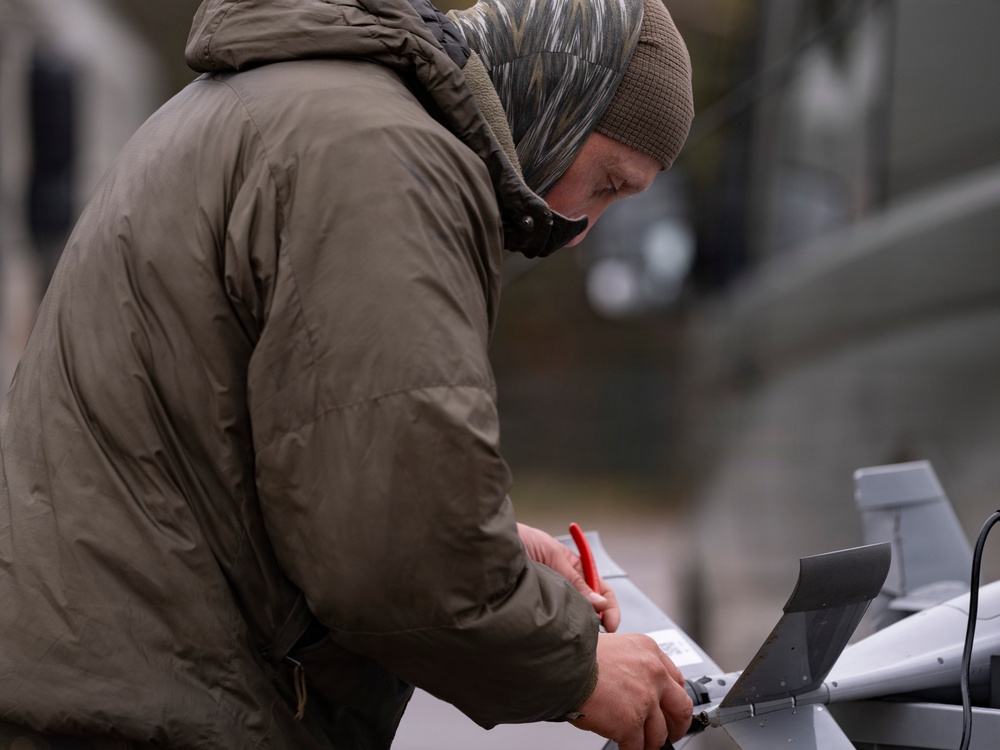
Associate Attorney General Stanley Woodward, the Justice Department's No. 3 official, visited the FBI's National Counter-UAS Training Center at Redstone Arsenal in Huntsville, Alabama, on Oct. 1. He said the center will more than double its capacity in its second year. He did not say what the first-year capacity was, so it is impossible to tell how big "more than double" actually is.
The timing is not accidental. The school is the only route by which state and local officers can gain authority to take down drones under the federal Safer Skies rule. It is also coming off its first major real-world test, the 2026 FIFA World Cup. During the tournament, federal agencies seized more than 700 drones across the 11 U.S. host cities. Officials say demand for the school now outstrips its seats, and the sources suggest one campus cannot keep up.
From 12 Officers to a National Pipeline
According to DroneXL, the center was created by an executive order in June 2025. Its first class, in late October 2025, had 12 officers. When the Safer Skies rule was published in July 2026, 61 state and local officers held certification.
The rule sets up two tiers. Detection, meaning finding and warning about drones, does not require in-person training. DroneXL reports that the government expects roughly 1,500 agencies to reach the detection tier within two years. Mitigation is different. The authority to actually disrupt, seize or take control of a drone requires resident training at Redstone, and that requirement is the bottleneck.
Woodward was blunt about why the federal government wants more local operators. As 256 Today reported, he said the FBI is "only so big" and needs trained state and local partners to cover the threat.
The World Cup Stress Test
The FAA's July 22 account of the tournament describes a large security operation. The agency set up no-drone zones with nearly 250 temporary flight restrictions. The FBI and the Department of Homeland Security seized more than 700 drones across all 11 U.S. host cities, with Ground Intercept Teams of federal and local personnel deployed at venues. The FAA release includes statements from Transportation Secretary Sean Duffy, DHS Secretary Markwayne Mullin and FBI Director Kash Patel, and it says the operation will help strengthen protections for future events, including the 2028 Olympics.
FedScoop reported more detail on the operation, citing the FBI's Mike Torphy: nearly 1,700 unauthorized drones detected, 700 seized and more than 400 mitigation actions.
One detail weakens the threat case. Woodward said none of the 700 drones intercepted at FIFA events "were loaded with ordnance," according to 256 Today. That does not mean the drones were harmless. A drone flying over a packed stadium is a hazard and a disruption even without a payload. It does mean the World Cup numbers mostly show how many people flew into restricted airspace, not how many attacks were stopped.
The Arithmetic Problem
Doubling capacity sounds like a lot until you compare it with demand. FedScoop quotes the FBI's Mike Torphy as saying the bureau expects to train 250 more UAS mitigation officers by the end of next fiscal year. FedScoop adds that, counting those graduates, the FBI will have trained around 1,000 people over three years.
Charles Werner of DroneResponders gave FedScoop a sense of the need: about 340 metropolitan cities in the United States. If the 250 new graduates were spread evenly, which they won't be, that would be fewer than one new mitigation-certified officer per metro area. Werner told FedScoop that one person does not provide a firm mitigation capability, and the same logic applies to round-the-clock coverage, multiple simultaneous events, leave and turnover.
DHS Secretary Mullin described the same gap. FedScoop quotes him telling lawmakers at a June hearing that more people are asking to get into the school than the FBI has space for, and that DHS is looking for ways to put its own funding into it.
Why It Matters
The Safer Skies framework gave state and local police something they had wanted for years: a lawful path to take down drones without depending on a federal team being present. Because mitigation training is tied to a single campus, that authority is likely to spread slowly no matter how much policy support it has.
The two tiers are also out of balance. About 1,500 agencies may be able to detect drones within two years, while the pool of officers able to act on what they detect is, by the sources' numbers, 61 at the rule's publication plus 250 planned graduates. Many departments may be able to see a drone over a stadium, a prison or a critical facility but still have to call the FBI or DHS to deal with it. That is the dependence the program was supposed to reduce.
Several questions remain open. Woodward did not give the baseline capacity behind the "more than double" pledge. The sources reviewed do not say whether a second training site or a regional model is under consideration, and they report DHS as looking for ways to fund the school rather than committing to a figure. With the 2028 Olympics already named as the next big counter-drone deployment, the pace of graduations from Redstone over the next two years will help decide whether local agencies can carry part of that work or whether federal teams will have to cover it again.
Sources
- FBI Drone School to Double Capacity After 700 World Cup Seizures (DroneXL)
- Successful Counter-Drone Efforts Helped Keep Millions of Fans Safe During FIFA World Cup 2026, With More Than 700 Drones Seized (FAA)
- FBI counter-drone training isn't keeping pace with demand (FedScoop)
- DOJ's No. 3 Official Visits Redstone to See FBI Training (256 Today)