
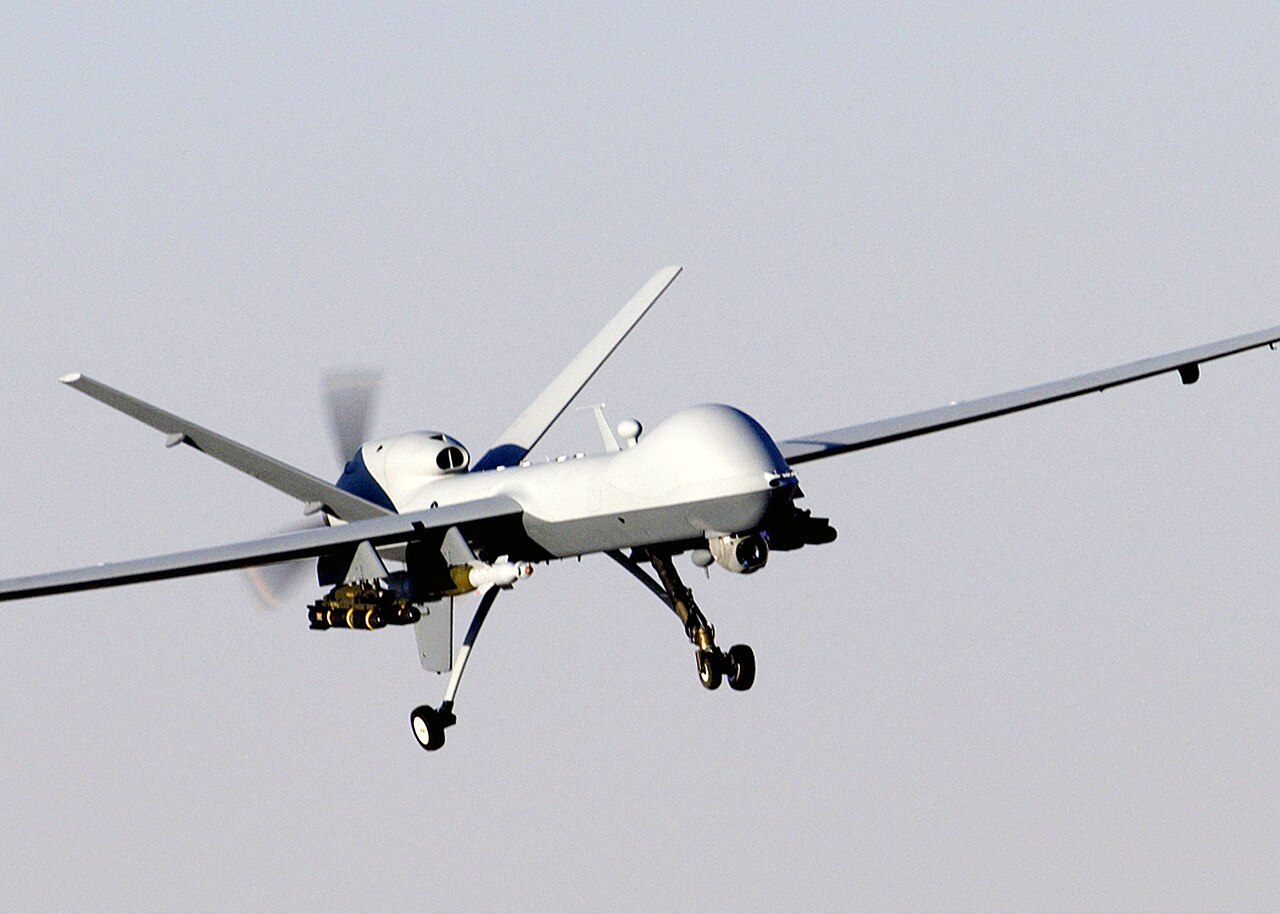
On Oct. 5 the Federal Aviation Administration said it had awarded $12 million for 19 drone research projects through its UAS Broad Agency Announcement (BAA) program. Each project is paired with one of the FAA-designated UAS Test Sites. The agency tied the awards to the Unleashing American Drone Dominance executive order. Administrator Bryan Bedford said the program gives the FAA "another way to directly work with industry and our test site partners" and that the research will "give us better data."
Better data for what is the open question. The rule that would turn this kind of research into routine beyond-visual-line-of-sight (BVLOS) operations, Part 108, has been under review at the White House Office of Information and Regulatory Affairs (OIRA) since July 10, DroneXL reports. The award round adds research while the rule stays unsigned.
Where the money comes from
The $12 million is not a new appropriation or a discretionary push by the agency. The FAA's BAA program page cites Section 925 of the FAA Reauthorization Act of 2024 (P.L. 118-63). That section makes $6,000,000 available for each of fiscal years 2025 through 2028 as matching funds for commercial entities that contract with a UAS test range, with the money divided evenly among the designated test ranges. As DroneXL notes, $12 million is exactly two fiscal years of that amount.
The way the program is built explains why test sites come up in every award. The BAA funds "Qualified Commercial Entities" that have partnered with a test site, so the money moves through industry-and-test-range teams and is not granted to the ranges directly. The program page also says final reports have been posted for Calls 001 through 005, so earlier rounds have left a public record. The page was last updated March 30, 2026, and points readers to SAM.gov for updates.
This round also took a while to arrive. DroneXL reports the solicitation went up on SAM.gov on Sept. 30, 2025. The deadline for Call 001-2026 then slipped twice because of the government shutdown, from Nov. 14 to Dec. 12 and then to Jan. 9, 2026. The awards were announced almost exactly a year after the solicitation was posted.
Who got the awards
The FAA release calls the 19 recipients companies. By DroneXL's count, 14 organizations share the 19 awards, and one of them, Oklahoma State University, is a university. ANRA Technologies won four awards, SPS Aerial Remote Sensing won three, and General Atomics, Skydweller and DroneUp won one each. That leaves nine awards for the nine other names on the FAA's list.
The FAA's project descriptions show where the technical gaps are:
- ANRA Technologies has the widest portfolio: tools to connect air taxi operations, vertiports and flight procedures, a common altitude reference, a link between drone traffic systems and airport air traffic control, and AI-based identification of drone types.
- SPS Aerial Remote Sensing is working on a visibility test, a sensor system for drone traffic management and counter-drone operations, and tools for assessing sensor performance.
- General Atomics is developing ground-based systems that help drones avoid other aircraft.
- NAVMAR is working on safety systems for large drones.
- OneRadio is working on passive radar for detect-and-avoid.
- Censys is testing satellite communications for long-range flights.
- Devorto is working on a long-range cargo service.
- DroneUp is working on secure identity and approval verification.
- Aerial Vantage is working on reserved urban airspace.
- Oklahoma State University has Aero Aware, a drone-visibility project.
- Frequentis USA, Skydweller, Lighthouse Avionics and ResilienX are also on the list.
The FAA release and Unmanned Airspace's summary of it both say there are currently nine FAA-designated test sites.
Most of the list deals with the same few problems that hold back routine BVLOS flight. Several projects address seeing and avoiding other aircraft: General Atomics' ground systems, OneRadio's passive radar, and SPS Aerial's sensor work. Others address command and communications links: Censys' satcom and ANRA's links to ATC and vertiports. A third group covers identity and authorization, including DroneUp's verification project and ANRA's AI drone-type identification. A routine BVLOS framework has to answer all of these.
DroneUp's appearance shows how much the sector has changed. DroneXL notes that the company lost its Walmart delivery business in January 2025. It now shows up in a federal research round with an identity-verification project, not delivery.
What the FAA did not disclose
The release lists projects but no money per project. DroneXL found that the FAA gives no per-award dollar figure and no schedule for the work. With ANRA holding four awards and SPS three, readers cannot tell whether the money is split evenly or weighted toward a few large efforts. They also cannot tell when results might appear.
The earlier calls do offer a guide. The program page says final reports for Calls 001-005 are posted, so this round's results should eventually be published too. But without a published schedule for the new projects, it is not clear when that would happen, or how it would line up with Part 108.
Why It Matters
The FAA says this program is about producing data that supports safe integration of drones into the national airspace. Bedford's own framing is that the research will give the agency "better data." But the main regulatory vehicle for that integration, Part 108, has been at OIRA since July 10, per DroneXL. Until it is signed and published, the industry is doing research to inform a rule whose final text has not been released.
That gap matters in practice. Companies like ANRA and SPS Aerial are working on detect-and-avoid, altitude reference and traffic-management sensing ahead of requirements that are not yet final. The Section 925 money is also set only through fiscal 2028. If Part 108 stays held up, that funding could run out before the rule it was meant to support has been operating long enough to show where more research is needed.
None of this makes the awards a bad idea. Paying test sites and industry to work on detect-and-avoid, communication links and identity is reasonable. But the announcement should be read for what it is: Congress made the money available in 2024, the FAA has now awarded two years of it, and the result is a list of projects with no dollar amounts and no timelines. The more consequential decision for the drone industry is still waiting at OIRA.
