
At 3:06 a.m. on Saturday, Nov. 14, a group tried to break into Threod Systems' site in Viimsi, just outside Tallinn. According to Estonia's Internal Security Service (KAPO), the plan was to smash windows, pour flammable liquid inside and set off an explosion. Threod's own security team stopped them. By the end of the weekend, eight Latvian residents were in custody and Estonian counterintelligence had named Russia's military intelligence service, the GRU, as the organizer. The Estonian government then announced it would close its road border crossings with Russia.
The plot failed. The case still matters because of what was targeted. Threod builds hardware that Ukraine's drone units have used since 2022. Russia's sabotage campaign in Europe has gone after many kinds of targets, and this attack went after a company that helps keep Ukrainian unmanned aircraft flying.
What Happened in Viimsi
Prosecutor General Astrid Asi said the attempt to enter Threod's property began at 3:06 a.m. and that the company's security team stopped it. KAPO Director General Margo Palloson gave more detail: the attackers meant to break windows, pour in flammable liquid and cause an explosion. If they had succeeded, he said, the result would have been "very significant damage."
That did not happen. Palloson said no one was hurt, the company suffered no significant damage, and its production and delivery capabilities were not affected.
KAPO and Estonia's Police and Border Guard Board detained eight Latvian residents, and prosecutors have asked a court to order the arrest of five of them. Palloson said counterintelligence work had confirmed that Russia was behind the attack and that the GRU coordinated it.
The Latvian Side of the Operation
Latvia's State Security Service (VDD) has published its own account. It says it obtained risk information about possible sabotage plans and passed it to KAPO, and that the two services then launched jointly coordinated activities on Nov. 13 and 14. Eight Latvian nationals were detained on Estonian territory on the night of Nov. 14, and the sabotage attempt was thwarted.
The VDD statement also adds something the Estonian accounts did not include. On Nov. 14 the VDD carried out searches at nine sites in Latvia linked to the suspects and seized explosive devices, pyrotechnic articles, ammunition, and a large number of mobile phones and other data storage devices. The agency did not say what those items were for, and it did not link them to any further plots.
The Latvian statement does not name the GRU. In the VDD's assessment, sabotage organized by Russia is meant to escalate tension and fear and to delay support for Ukraine. It also says Russian intelligence and security services are increasingly recruiting citizens of other countries for sabotage in 2026, a tactic it believes was chosen to hide the links to Russia.
Hired Hands, Not Officers
The recruitment point matters for understanding the case. Neither Estonian nor Latvian officials have said that the eight detainees are Russian intelligence officers. Palloson explained that one of the GRU's methods is to recruit European Union residents who can move freely within the Schengen Area to carry out physical attacks and sabotage, drawing perpetrators from criminal circles and from people in difficult socioeconomic circumstances. KAPO also posted on X warning people against considering "such job offers from Russia." Taken together, that points to recruited outsiders rather than trained operatives, though officials have not said how the eight became involved.
For an intelligence service, this approach has clear advantages. A recruit from an EU country raises less suspicion at a border and has no official link to Moscow. The cost is reliability. People hired for one job can be careless, and their phones and messages can lead investigators back to whoever recruited them. The VDD's seizure of a large number of phones and data storage devices suggests investigators have material to work with, and Asi said the criminal proceedings aim to establish how the attack was organized, the roles of those involved and possible links to other individuals.
Who Threod Is
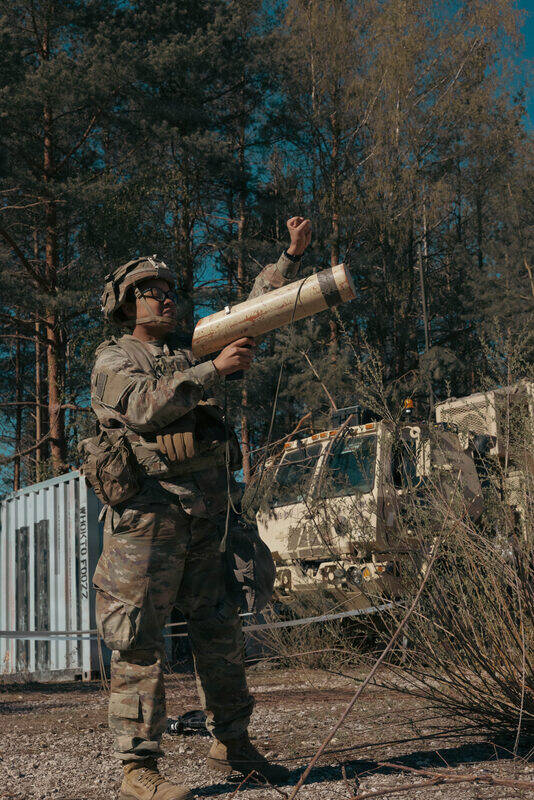
Threod was founded in 2012 and makes three main product lines: Eos reconnaissance drones, eOpic gimbal payloads, and Cata pneumatic launchers. According to DroneXL, the company says its systems are used in 32 countries, 18 of them NATO members. In September 2025 it gave lower figures to Defense News: 27 countries, including 13 NATO member states and Ukraine.
The launchers explain why Threod is known in Ukraine. Ranno Pajuri, Threod's chief commercial officer, told Defense News in 2025 that Ukrainian forces have used the company's Cata pneumatic launchers extensively since 2022. He said they are silent and need just four minutes between launches.
Threod delivered its first VTOL drone in 2020. According to DroneXL, its current Eos C is an electric vertical-takeoff reconnaissance aircraft with a 50 km (31 mi) radio link range and three hours of endurance.
Second Attempt This Year
ERR News reports that this was the second known attempted arson against an Estonian defense company in 2026. In August a fire was reported at an office of Milrem Robotics in Tallinn's Lasnamäe district, which KAPO also attributed to Russian special services. Milrem builds unmanned ground vehicles. Two attacks in three months on Estonian defense firms point to a pattern, even though officials have not formally connected the two cases.
The Response: Closing the Road Crossings
Estonia responded with a significant policy step. Prime Minister Kristen Michal asked for the "necessary steps" to close the eastern border. The Ministry of Foreign Affairs then said the road border crossing points would close on Dec. 1.
The closure affects Estonia's three open road crossings with Russia: Narva, Luhamaa and Koidula. They currently admit pedestrians and freight and operate from 7 a.m. to 7 p.m. "We will not be intimidated," Michal said. He argued that Russian intelligence services exploit border crossings to exert influence over people. Interior Minister Igor Taro said the government would discuss whether the closure is temporary or indefinite, and that Estonian residents and truck drivers in Russia would have about two weeks to return home.
Foreign Minister Margus Tsahkna presented the move as both a security measure and a sanctions measure. "Any attempt to threaten Estonia's security, sow fear, or act hostilely against us will be met with a decisive response," he said. He added that closing the crossings "will reduce Russia's ability to conduct hostile activities against Estonia and help mitigate risks related to sanctions circumvention." Tsahkna said he had been in contact with his counterparts in Lithuania, Latvia and Finland, and that he would discuss increasing pressure on Russia at Monday's meeting of EU foreign ministers in Brussels.
Moscow's Reaction, and the Open Question of Evidence
According to DroneXL, citing TASS, Russian Foreign Ministry spokeswoman Maria Zakharova said Moscow would check whether Estonia really plans to close the border.
There is a gap in the public record. Estonian ministers and KAPO are confident that the GRU directed the operation, but they have not released the evidence behind that conclusion. That is normal for counterintelligence cases, where publishing sources and methods can damage future work, and the court process for the five suspects may bring more out. For now, readers have to rely on KAPO's assessment, supported in general terms by Latvia's VDD, which describes Russian organization without naming the GRU.
Why It Matters
Since 2022, much of the debate about drones in Europe has focused on production capacity: who can build enough drones, launchers and payloads, and how quickly. The Threod case shows another side of that. The companies supplying Ukraine's unmanned forces are now targets too. KAPO has said Russia aims to disrupt and weaken defense companies' production and prevent defense products from reaching Ukraine. A company whose launchers are used by Ukrainian units fits that description, and an arson attack carried out by recruits from another country is cheap and deniable.
Three points stand out. First, the attack was stopped by the company's own security team, with an intelligence warning from Latvia behind it. That is a reminder that small and mid-sized drone makers now need physical security suited to a target, not just to a business. Second, the method fits what the VDD describes: in 2026 Russian services increasingly use citizens of other countries, which makes attribution slower and harder to prove in public. Third, Estonia chose a structural response. Closing the road crossings is a larger step than a one-off diplomatic protest, although officials have not yet said whether it is temporary or permanent.
The coming weeks will show whether the Dec. 1 closure goes ahead as announced, whether court proceedings reveal more about who hired the eight detainees, and whether Estonia's neighbors take similar measures after Tsahkna's meeting in Brussels. For drone makers on NATO's eastern flank, the August attack on Milrem and the November attempt on Threod already show what the threat looks like.
Sources
- 8 detained after GRU-linked arson at Estonian drone company Threod Systems (ERR News)
- Estonia to close border crossings with Russia after GRU-linked sabotage attacks (ERR News)
- Foreign Minister Tsahkna: Estonia to close road border crossings with Russia (Estonian Ministry of Foreign Affairs)
- VDD provides support to KAPO in preventing a sabotage act in Estonia (State Security Service of Latvia)
- Estonia Blames GRU For Attack On Drone Maker Threod, Will Shut Border (DroneXL)
- This Estonian firm helps launch Ukraine's combat drones (Defense News)
