
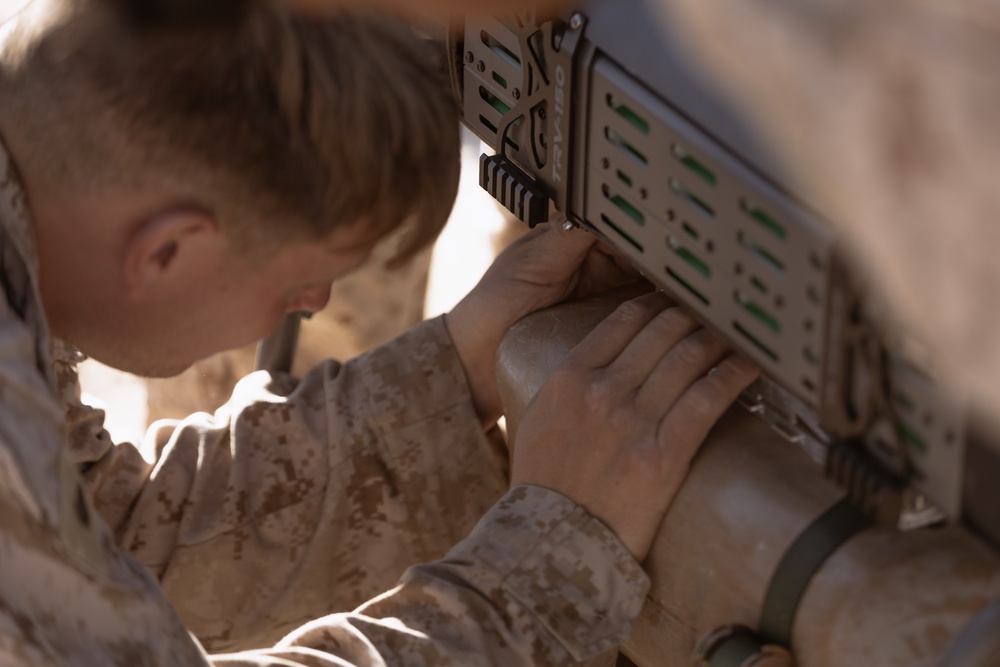
Elroy Air, the San Francisco-based developer of the hybrid-electric Chaparral cargo drone, has agreed to become a publicly traded company through a merger with a special-purpose acquisition company, according to a Form 8-K filed with the Securities and Exchange Commission. The definitive business combination agreement, signed June 26, 2026, pairs Elroy Air with Columbus Circle Capital Corp II (Nasdaq: CMII), a blank-check vehicle backed by Inflection Point Asset Management and Cohen & Company.
If the deal closes as planned in the fourth quarter of 2026, Elroy Air will trade on Nasdaq under the ticker ELRY, and Columbus Circle Capital Corp II will be renamed Inflection Point Acquisition Corp VII, according to a summary of the SEC filing published by StockTitan. The transaction still requires a Form S-4 registration statement and a shareholder vote before it can be finalized.
The Numbers Behind the Deal
The merger values Elroy Air at approximately $800 million pre-money, translating to roughly $1 billion in enterprise value once the transaction closes, according to trade publication DroneDJ. The deal is backed by more than $165 million in committed PIPE (private investment in public equity) financing — capital that will flow onto the combined company's balance sheet to fund manufacturing scale-up and continued development of the Chaparral platform.
Independent financial coverage from Investing.com corroborated both the $1 billion valuation figure and the expected fourth-quarter 2026 closing timeline.
What the Chaparral Actually Does
Elroy Air's flagship product, the Chaparral, is a hybrid-electric vertical takeoff and landing (VTOL) aircraft designed to move cargo without a runway. According to specifications reported by DroneDJ, the aircraft can carry payloads exceeding 500 pounds over distances up to 450 miles. That combination of lift capacity and range positions the Chaparral as a middle-mile logistics tool — capable of moving palletized cargo between distribution points that lack conventional airstrips, rather than competing with small delivery drones that carry a single package to a doorstep.
Kratos Defense & Security Solutions, an established defense contractor already active in unmanned systems production, serves as the Chaparral's exclusive U.S. manufacturer, according to DroneDJ. That arrangement gives Elroy Air a domestic supply chain story that is likely to matter both to commercial logistics customers and to prospective military buyers wary of foreign-sourced components in autonomous aircraft.
Order Book and Customers
Elroy Air has cited a stated order pipeline of more than 1,400 aircraft, with a combined value of roughly $5 billion, according to DroneDJ's reporting. Named commercial customers include helicopter services operator Bristow Group, logistics and aviation group Barq Group, SLI, and package-delivery giant FedEx. On the defense side, the company has reported interest from the U.S. Army, Marine Corps, and Air Force — branches that have each explored autonomous cargo resupply as a way to reduce risk to ground convoys and aircrews in contested logistics environments.
Elroy Air CEO Andrew Clare characterized autonomous flight as "the next major evolution in transportation," according to DroneDJ's report — a framing that positions the Chaparral not as a niche defense tool but as infrastructure for a broader shift in how cargo moves across last-mile and middle-mile logistics networks.
Why a SPAC, and Why Now
Special-purpose acquisition companies raise capital through their own IPO, then merge with a private operating company — in this case Elroy Air — to take that company public without the longer, more disclosure-heavy process of a traditional initial public offering. Columbus Circle Capital Corp II, sponsored by Inflection Point Asset Management and Cohen & Company, already trades on Nasdaq; the merger effectively swaps the SPAC's public listing for Elroy Air's operating business.
The SEC's Form 8-K filing confirms the transaction structure and the SPAC's planned rename, alongside the material terms that have circulated in trade press since the deal was signed. A subsequent Form S-4 registration statement — required before shareholders vote on the merger — will provide more granular financial detail on Elroy Air's revenue, backlog, and cash position than has so far been disclosed publicly.
Why It Matters
Elroy Air's move to Nasdaq marks one of the more concrete tests yet of whether the heavy-lift cargo drone sector can convert years of prototype development and pilot programs into a durable, publicly accountable business. Unlike small quadcopter delivery ventures, the Chaparral targets a segment — hundreds of pounds of cargo over hundreds of miles, without runway infrastructure — that has clear applications in both military logistics and commercial supply chains, but that has also proven difficult to certify, scale, and manufacture profitably.
A public listing brings quarterly disclosure obligations that will let outside observers, for the first time, check Elroy Air's stated $5 billion order pipeline and 1,400-aircraft backlog against actual delivered units and recognized revenue. It also adds Elroy Air to a growing list of 2026 defense-tech SPAC listings, a trend that reflects both investor appetite for autonomous systems exposure and the difficulty smaller unmanned-aircraft makers face raising late-stage private capital on their own. The Kratos manufacturing partnership, meanwhile, underscores how thoroughly domestic-sourcing requirements now shape which cargo-drone makers are viable bidders for U.S. military contracts — a dynamic that will likely determine which of Elroy Air's rivals can compete for the same Army, Marine Corps, and Air Force resupply missions the company says it is already pursuing.
