
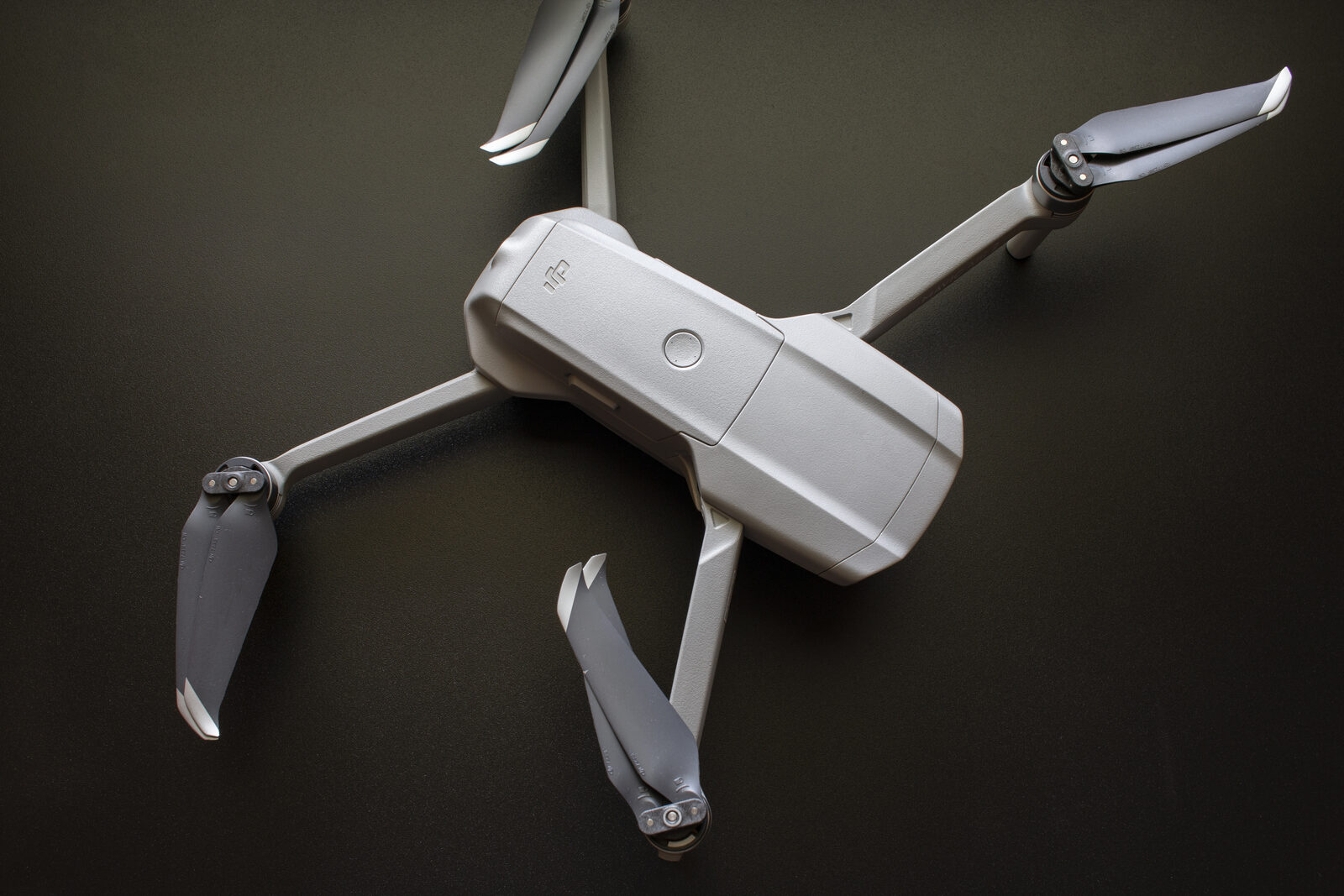
The drone delivery industry spent years solving for range, payload, reliability, and airspace integration. It assumed noise would resolve itself — smaller, electrically powered rotorcraft would simply be quieter than the manned aircraft they supplement. A small commercial quadcopter generates roughly 71 dB(A) at one meter; heavier platforms (above 3 kg) have been measured above 85 dB(A). Those figures sit in household-appliance territory. The premise was reasonable. It did not survive contact with the neighborhoods.
Drone noise is not louder than traffic or jet flyovers. It is, by measurable psychoacoustic metrics, substantially more annoying — and the body of aviation noise law designed to control it was built for propeller planes and subsonic jets, not for electric multirotors completing repeated delivery passes over the same residential block. That mismatch is now a live policy problem with direct consequences for whether commercial drone delivery can scale.
Why the Decibel Count Misleads
The A-weighting scale underlying most noise regulation does not accurately capture what makes drone noise aversive. A drone's acoustic signature consists of "low- and mid-frequency tonal and harmonic components coupled to the rotor speed, and high-frequency broadband noise," according to a 2021 systematic review in the International Journal of Environmental Research and Public Health. Each propeller pair operating at slightly offset RPMs produces discrete tones, harmonics, and a beating interference pattern. Blade passage frequencies typically fall between 100 Hz and 300 Hz, with harmonics extending into the multi-kilohertz range — territory where A-weighting can undercount tonal annoyance.
The perceptual penalties are quantified. Multiple independent studies find drone noise rated approximately 5.6 dB more annoying than road vehicles at equal sound pressure level, and 4 to 10 dB more annoying than jet aircraft at the same level. The Effective Perceived Noise Level (EPNL) metric used for jet certification applies a tonal correction that may be insufficient for the tonality levels typical of drone rotors. Laboratory subjects consistently rate sounds that "loiter" as more aversive: a delivery drone is not a flyover but a recurring event on a fixed schedule — a distinction standard metrics cannot encode.
The Measurement Gap and NASA's Annoyance Model
Reliable emission characterization requires microphone arrays. Drones exhibit roughly 10 dB of directivity difference between vertical and horizontal radiation axes, making single-microphone readings inadequate for the emission models regulatory analysis requires. Propagation follows a point-source model (6 dB reduction per doubling of distance) but degrades near building facades under real atmospheric conditions.
NASA's Langley Research Center tackled the annoyance modeling problem directly. A June 2024 Technical Memorandum (TM-20240003202) developed a psychoacoustic annoyance model for quadrotor Urban Air Mobility noise using a latent scale constructed from just-noticeable-difference (JND) listener responses. The model achieved a correlation coefficient of 0.98 with raw annoyance ratings and incorporates loudness, sharpness, fluctuation strength, roughness, and tonality as predictor variables. A scientifically defensible metric is the prerequisite for any noise standard that could survive legal challenge. The FAA has not finalized one.
A Certification Pathway Without a General Standard
Federal aviation noise law traces to 14 CFR Part 36, written for subsonic jets and propeller-driven manned aircraft. Facing drones whose acoustic signature Part 36 procedures were not designed to characterize, the FAA has issued Rules of Particular Applicability (RPAs) — bespoke noise limits for individual aircraft models. The FAA has issued the first drone noise certifications (RPAs) for delivery models including the Matternet M2, the Wing Hummingbird 7000W-A, the Amazon MK27-2, the Zipline Model Zip, and the Percepto Sparrow 2.4.
The RPA approach works as a manufacturer certification path. It does not produce a general noise standard. Each rule covers one model; there is no cross-industry test procedure and no community noise ceiling limiting cumulative overflights above a neighborhood. The 2024 FAA Reauthorization Act, signed in May 2024, directed the FAA to establish noise criteria using standardized metrics applicable to all drone operations nationally. Those are legislative mandates. As of mid-2026, the universal noise standard remains unfinished.
What Communities Confronted While the Standard Stalled
In Bonython, Australian Capital Territory, Google's Wing ran delivery trials beginning in 2018. Residents described the aircraft's noise as "a really, really loud, high-pitched whining sound," audible up to a kilometer away; one resident documented 35 drones over their home in a single day. The ACT Legislative Assembly inquiry received approximately 150 public submissions and found that "no territory or federal authority had direct responsibility for policing drone noise." The episode established the template for deployment outpacing jurisdiction.
In College Station, Texas, Amazon Prime Air drew descriptions of a "flying chainsaw," "giant hives of bees," and a "relentless leaf blower." At planned expansion capacity, drones would have passed overhead every 58 seconds for 15 hours per day. The FAA's environmental review attracted approximately 150 opposition comments — against a baseline of fewer than three for comparable drone operations — and the agency ruled community concerns "meritless or outside its purview." Amazon suspended operations voluntarily in January 2025 and did not renew its facility lease.
Brad Marquardt, a resident of Brookwater Circle, told his city council his home had gone from "a quiet residential area" to "effectively an industrial zone" because of Prime Air drones.
Amazon launched operations in Richardson, Texas, in December 2025, covering a 7.5-mile radius. Stephanie Puri documented 122 drone overflights over her home in a single 10-hour period. Quiet Skies TX estimated approximately 70 dB per passing drone — above the threshold that triggers noise disclosure requirements in many real estate transactions. The Richardson City Council approved operations on a 4-3 vote in June 2025 and found, when formal complaints arrived, that federal airspace jurisdiction preempted most of what local ordinance could reach. Operating-hour restrictions and a 115-foot minimum altitude were the effective ceiling of municipal authority.
The research literature points toward what a workable framework would require. Using WHO indoor noise guidelines — 42 dB LAmax to prevent awakening; 35 dB LAmax at EEG-assessed sleep disruption thresholds — researchers calculate minimum drone-to-facade distances of 15 to 130 meters for lighter platforms and 60 to 180 meters for heavier ones, depending on window configuration. None of those figures appear in any active U.S. regulatory proposal; ICAO has not established noise standards for unmanned aircraft. The drone delivery industry does not have a noise problem waiting for a quieter motor. It has a policy problem waiting for a standard.
Sources
- FAA — Noise Certification of UAS/AAM using Rules of Particular Applicability
- Drone Noise Emission Characteristics and Noise Effects on Humans — Systematic Review, IJERPH 2021
- Requirements for Drone Operations to Minimise Community Noise Impact, Drones (MDPI) 2022
- NASA TM-20240003202 — Toward a Psychoacoustic Annoyance Model for Urban Air Mobility Vehicle Noise
- Sparke Helmore — The Unique Noise of Drones: A Regulatory Update
- Acentech — Drone Noise: A New Challenge in Acoustics
- Canberra Times — Vindication: Noisy Drones to Face Restrictions After ACT Inquiry
- Region Canberra — Drone Delivery Service Looking for Permanent Home Despite Noise Complaints
- Quiet Skies TX — Community Advocacy Group
- Community Impact — Richardson Residents Voice Concern About Amazon Delivery Drone Noise
- DroneXL — Amazon's Drone Delivery Dreams Face Turbulence: The College Station Showdown
- DroneLife — How the New FAA Reauthorization Bill Facilitates UAS Integration
- Federal Register — Noise Certification Standards: Matternet Model M2 Aircraft