
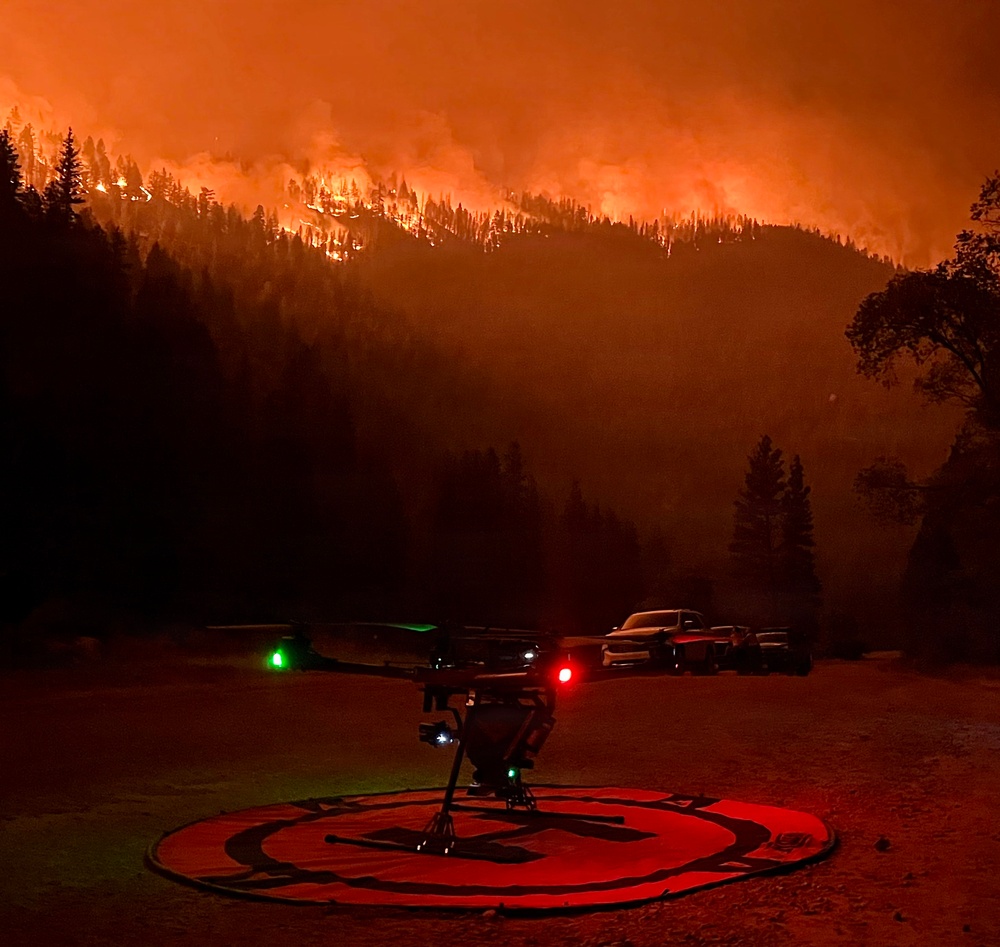
Firefighting helicopters and air tankers battling the Aspen Acres Fire near Pueblo, Colorado, were forced to stop suppression work on July 3, 2026, after multiple unauthorized drones were spotted flying inside the federal Temporary Flight Restriction (TFR) covering the fire. The Alaska Complex Incident Management Team, which is overseeing the response, issued a public warning about the incursions the same day — the latest example of a recurring problem that has plagued major wildfires for years: hobbyist and unauthorized drone flights that ground the very aircraft trying to save homes and lives.
The incursions occurred as the Aspen Acres Fire, which ignited June 29 in Custer County and has since spread into Pueblo County, continued an aggressive overnight run driven by high winds. By July 4, the fire had grown to 85,585 acres, according to the Colorado Sun, making it one of the largest wildfires in state history — the 8th-largest on record. More than 180 structures have been destroyed, including at least 55 homes in Custer County, and roughly 11,000 people across more than 3,800 homes have been evacuated, according to Colorado Public Radio and the Colorado Sun. Colorado City was fully evacuated on July 3 as the fire grew overnight.
How a Single Drone Can Shut Down an Entire Air Operation
The mechanics of why a handful of hobbyist drones can halt a multimillion-dollar aerial firefighting operation come down to basic airspace deconfliction. When a wildfire reaches a certain size or threat level, the FAA establishes a TFR over the area — in this case one that also encompasses Pueblo Reservoir — that bars all unauthorized aircraft, manned or unmanned, from entering. The restriction exists specifically to protect the low-altitude, high-density traffic of firefighting helicopters and fixed-wing air tankers, which often operate in smoke-degraded visibility at altitudes and speeds that leave little room to see and avoid a small quadcopter.
Because a drone is difficult to detect visually from a fast-moving tanker or helicopter, incident commanders cannot simply tell pilots to "watch out" for one. Instead, standard protocol requires that once any drone is detected inside a TFR, all aerial firefighting assets are grounded until the airspace can be confirmed clear. According to KRDO's reporting on the Aspen Acres incidents, that is exactly what happened on July 3: multiple drone sightings inside the TFR forced a stand-down of the aircraft assigned to the fire, directly delaying suppression work at a moment when the fire was actively growing and threatening structures.
The FAA has spent years trying to drive home this exact point to the public. In its wildfire-specific outreach toolkit, titled "If You Fly, Firefighters Can't," the agency states plainly that flying a drone within a wildfire TFR is a federal offense, and that any detected drone — regardless of the operator's intent — forces firefighting aircraft to ground until the area is cleared. The FAA toolkit also spells out the penalties: a civil fine that can reach $20,000, on top of a separate federal crime — interfering with firefighting efforts on public lands — that carries up to 12 months in prison.
Why Do People Fly Drones Over Active Fires?
Motives vary, but the pattern is consistent across large wildfires nationwide: some operators are storm chasers or content creators seeking dramatic footage of flames and smoke columns for social media; others are residents trying to check on their own property from the air; a smaller number are journalists or bystanders unaware that a TFR is even in effect. None of those motives change the outcome. A drone inside the restricted airspace is functionally indistinguishable, from an air-safety standpoint, from any other unauthorized aircraft — and it triggers the same grounding protocol regardless of why it's there.
The Alaska Complex Incident Management Team's warning on July 3 did not detail the drone operators' intentions or whether any enforcement action was taken. It did make clear, however, that the incursions were happening in real time over an active, wind-driven fire where every flight hour of aerial support matters.
The Fire on the Ground
The disruption to air operations came at a particularly costly moment. The Aspen Acres Fire has been described by the Colorado Sun as continuing "onward march" into the Fourth of July holiday weekend, expanding overnight from prior-day totals to reach 85,585 acres by the morning of July 4. The National Interagency Fire Center's Incident Management Situation Report for July 4 lists Aspen Acres among the active large fires being tracked federally, alongside acreage, containment, and resource assignments — the authoritative government tally against which news accounts of the fire's size and status are corroborated.
On the ground, the human toll has mounted quickly. Colorado Public Radio reported that the entirety of Colorado City was evacuated on July 3 as high winds drove rapid fire growth. The Colorado Sun's July 4 update put the number of evacuated homes at more than 3,800, affecting approximately 11,000 residents, with more than 180 structures — including at least 55 homes in Custer County alone — already destroyed. Those figures place Aspen Acres among the most destructive fires in recent Colorado history even as containment lines remained incomplete.
Q&A: What Happens If You Fly a Drone Over a Wildfire?
Is it actually illegal, or just discouraged? It is a federal offense. The FAA's own guidance states that operating a drone inside an active wildfire TFR violates federal law, independent of whether the operator causes an accident or is merely detected by ground or air crews.
What are the penalties? Per the FAA toolkit, violators face a civil fine that can reach $20,000, and interfering with firefighting efforts on public lands is separately a federal crime punishable by up to 12 months in prison, depending on the circumstances and any resulting endangerment to firefighting personnel.
Does the drone have to hit an aircraft to cause a problem? No. Detection alone is enough to trigger a stand-down of aerial firefighting assets under standard protocol, because crews cannot verify the airspace is clear without grounding operations to search for and confirm the drone's departure.
How long does a stand-down typically last? Duration varies by incident and wasn't specified for the July 3 Aspen Acres incursions, but the delay is inherently open-ended — aircraft remain grounded until incident command confirms the restricted airspace is clear of unauthorized traffic.
Why It Matters
The Aspen Acres incidents are a case study in how a handful of unauthorized drone flights — flown by people who may have no intention of causing harm — can materially worsen the outcome of a wildfire that has already destroyed more than 180 structures and displaced roughly 11,000 people. Every minute that air tankers and helicopters sit grounded because of a drone sighting is a minute the fire is free to spread unchecked by aerial suppression, on a blaze that grew by roughly 10,000 acres in a single overnight period. As Colorado's 8th-largest wildfire on record continues to threaten communities during the July Fourth holiday, the incident underscores a persistent and largely low-tech vulnerability in wildfire response: a $20,000 fine and the threat of up to 12 months in prison have not been sufficient, on their own, to keep hobbyist drones out of the exact airspace where their presence carries the highest cost.
Sources
- Drone incursions over 'Aspen Acres' fire force warning from incident management team (KRDO)
- National Interagency Fire Center — Incident Management Situation Report, July 4, 2026
- "If You Fly, Firefighters Can't": Drones and Wildfires are a Toxic Mix (FAA)
- Aspen Acres fire grows to 85,000 acres overnight, continuing onward march into Fourth of July holiday (Colorado Sun)
- Aspen Acres fire: All of Colorado City is evacuated after fire grew overnight (Colorado Public Radio)
