
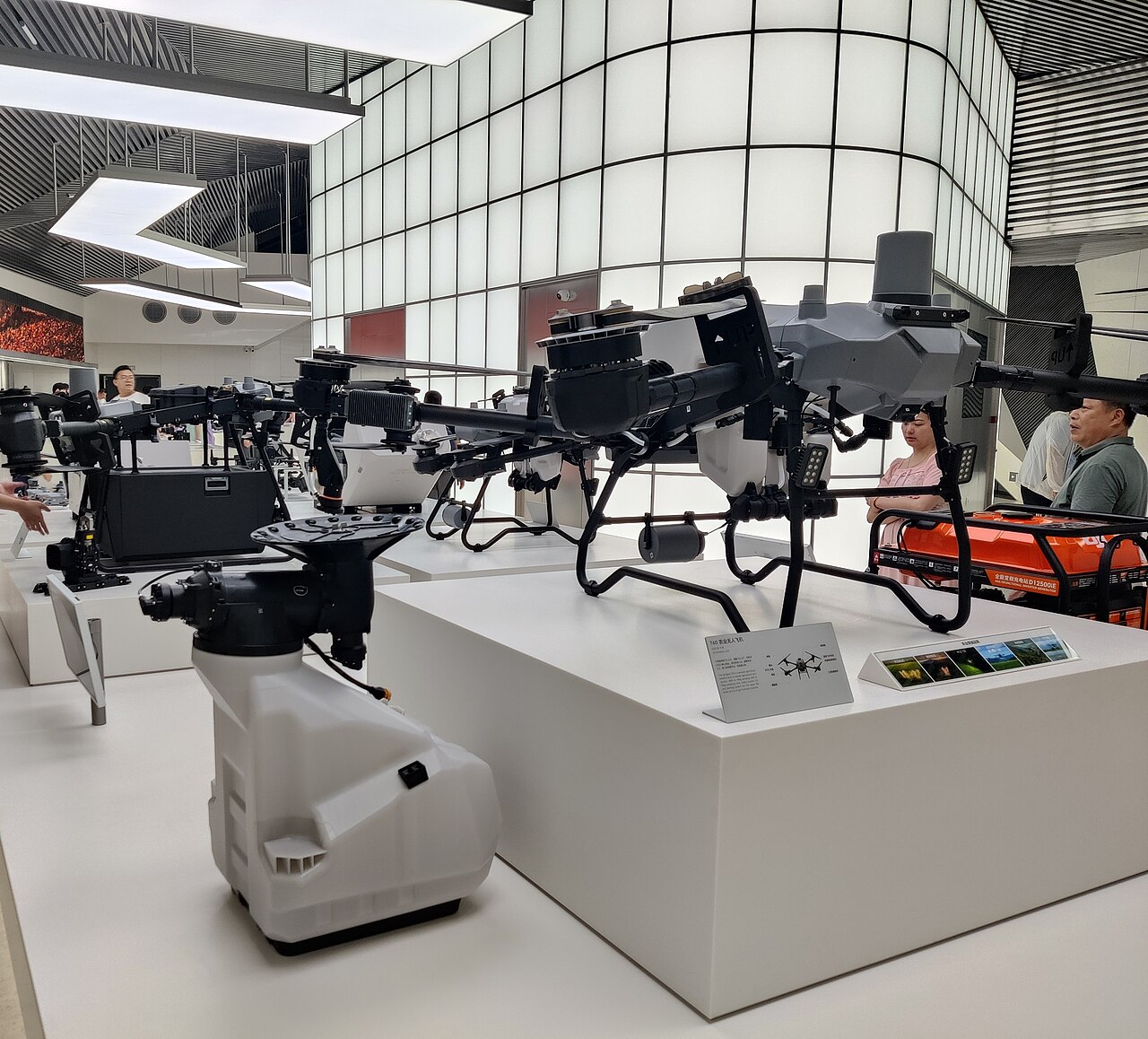
On a side street in Tokyo's Omotesando district, shoppers can now walk in off the pavement, pick up a DJI drone and fly it indoors before deciding whether to buy it. The DJI | Hasselblad Authorized Concept Store Tokyo Omotesando held its grand opening on October 31, 2026. It has two floors of retail space. The ground floor belongs to DJI and includes a permanent indoor flight cage. The upper floor is a showroom for the Swedish camera maker Hasselblad.
Sekido runs the store. It is an authorized DJI distributor in Japan, and it is the operator named in the opening release published on PR Times. For an American audience, the store's main interest is its stock. Posters for the Mavic 4 Pro and the Osmo Pocket 4P feature in the Tokyo store, and the Osmo Pocket 4P is on display there, but DJI does not sell either one in the United States.
What is actually in the building
According to Digital Camera Watch, the store is in the La Porte Aoyama building, opposite Aoyama Gakuin University and about five minutes on foot from Exit B2 of Omotesando Station. The publication's Shuji Takeishi toured it before opening and reported a ceremony at 13:00 on October 31, followed by the grand opening at 13:15 with a limited run of opening-day novelties. DroneXL reports a roulette giveaway for the first 150 visitors on Sunday, November 1.
The release lists the first-floor DJI range as follows: Mavic, Air and Mini drones; Osmo Pocket, Osmo 360 and Osmo Action cameras; and the indoor drone flight cage for what the company calls a real flight experience. The release also names the Osmo 360 II and the Osmo Pocket 4P. Digital Camera Watch adds that the drone corner includes the new Avata 360, and that a LITO X1 sits at the entrance.
Upstairs, the second floor is set aside for Hasselblad. The release lists the X2D II 100C, the 907X and the XCD lens line. DroneXL notes that Hasselblad has closed its Harajuku showroom.
Digital Camera Watch reports that each brand's home-country team directed its own interior. It also reports that most products and accessories are in stock for same-day takeaway. The store is not a service center, though. According to Digital Camera Watch, it does not accept repairs on DJI or Hasselblad products, and sensor cleaning is being considered for later.
The flight cage is the point
Drones are harder to demo than cameras. A shop cannot hand a customer a Mavic and point at the street outside. The Omotesando store's answer is a permanent indoor cage. Digital Camera Watch reports that first-time pilots can fly in it with staff coaching them.
Sekido's release gives a business reason for the format. Customers want to handle and try products before they buy them, and the company says online sales and short-term events could not meet that need. The store offers one-to-one personal consultations with specialist staff, which positions it as a place to get advice as well as a stockroom.
The format has been used before. DroneXL notes that the London Regent Street store, which opened in 2024, also offered indoor test flights. Tokyo brings the same approach to a district that Digital Camera Watch says draws many domestic and overseas tourists.
Built for tourists as much as locals
The store is aimed clearly at international visitors. The release says staff can serve customers in Japanese, English and Chinese, and that the store handles tax-free purchases for inbound tourists. Digital Camera Watch says the operator expects tourists to drop in during trips. For a visitor from a market where some DJI products are not sold, that combination of factors matters.
That brings up the US question. DroneXL reports that the Mavic 4 Pro launched on May 13, 2025 without a US release, and that the Osmo Pocket 4P also skipped the US when it launched on July 30, 2026. DJI has been on the FCC Covered List since December 22, 2025. Two of the products featured on the store's own promotional material are therefore ones American consumers cannot buy through DJI at home. A US visitor can see and handle them in Tokyo and, in the drone's case, fly one.
This article does not assess whether US travelers could legally bring that equipment home or use it there. The sources do not address that question. The store's existence still makes the gap between DJI's US market and its markets elsewhere easy to see.
First what, exactly?
The sources do not agree on what to call the store, and the difference is worth noting. The DJI Japan release calls it the first location of a combined DJI and Hasselblad flagship format, and DroneXL reports that DJI Japan calls it the first DJI concept store in Japan. Digital Camera Watch's headline calls it the first DJI directly operated store in Japan. The release does not use the phrase "directly operated." It says the store is opened by Sekido, an authorized distributor, not by DJI itself. DroneXL's headline describes it as DJI's first concept store in Japan.
Readers should treat "first DJI concept store" as the company's own label, and treat the "directly operated" wording as one publication's description that the release does not support.
More stores, maybe
DroneXL cites a July report from Digital Camera Watch saying stores in Osaka and Nagoya are planned through 2027. The October release names no other locations. Until Sekido or DJI Japan confirms those sites, the expansion is a reported plan, not an announced one.
Why It Matters
For the drone industry, the Omotesando store shows that DJI keeps investing in physical retail in markets where it can still operate normally, as its US position has worsened. A permanent flight cage, consultation-based selling and a floor shared with Hasselblad suggest DJI and its partners are presenting the brand as a premium consumer-imaging company, not only a hardware supplier.
For US operators and buyers, the store makes it concrete how far the American DJI lineup has fallen behind what is sold elsewhere. Products like the Mavic 4 Pro and the Osmo Pocket 4P have not reached US shelves through DJI. In Tokyo, anyone who walks in can try the drone and handle the camera. Whatever the policy reasons behind the US situation, the hardware gap is now on display in a Tokyo shop window.
The disagreement over labeling is also a reminder for anyone tracking DJI's corporate structure. The store is operated by a distributor, and calling it "directly operated" reads more into the release than it says.
