Bellingham, Washington, now has a police drone program that promises to put an aircraft over a scene in two minutes or less. Seven weeks in, the public flight log shows something closer to a training program. On Oct. 6, DroneXL read the department's public Drone as First Responder (DFR) dashboard and counted 23 flights since Aug. 19. Twenty-two were training flights or carried no label. One was an incident response.
The money behind the program comes from a state grant. It traces back to a Washington public safety funding law whose text never uses the word "drone."
What the Dashboard Shows
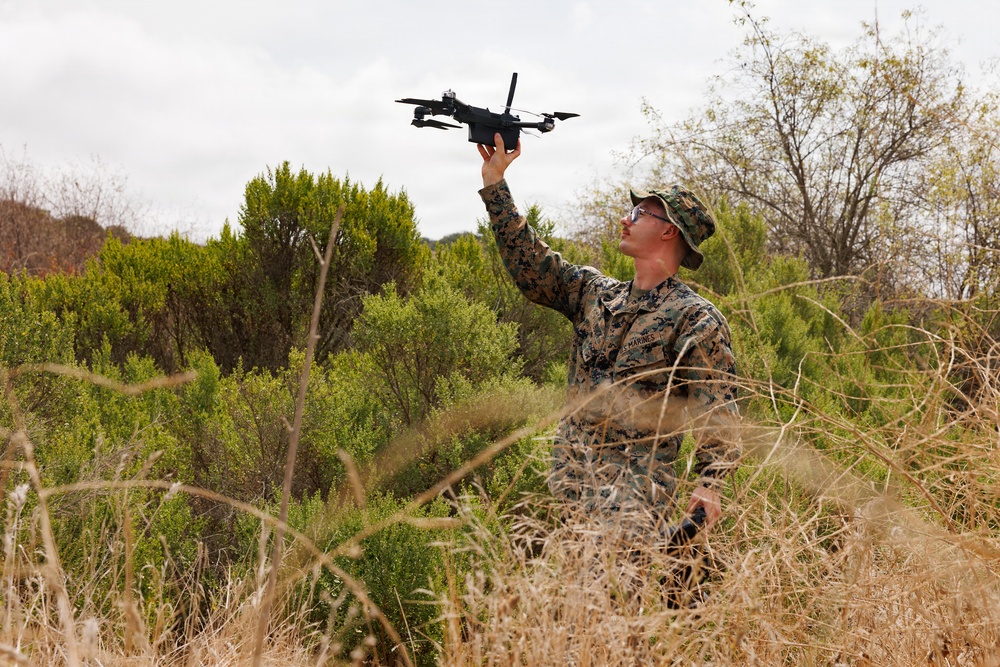
According to DroneXL's reporting, the Bellingham Police Department's DFR program runs on Skydio hardware. The dashboard footer reads "Powered by Skydio," but the city has not said which model it flies. The drones are based at three sites: the police station, the Pacific Street Operations Center and the Bellis Fair mall.
Here is what the dashboard showed as of DroneXL's Oct. 6 reading:
- 23 flights logged since Aug. 19.
- 22 labeled as training or not labeled at all.
- 1 incident response: a 12-minute flight on Sept. 30 to assist Public Works.
- Flight durations ranged from 2 to 23 minutes.
- The busiest day was Oct. 1, with six flights.
DroneXL says Police Chief Rebecca Mertzig told the Bellingham Herald the program starts with four operators, and that staffing it around the clock will take time to train more. Mertzig briefed a city council committee on the program on Monday, Oct. 5.
For a nearby comparison, DroneXL reports that Spokane's four Skydio X10s flew about 400 missions in the first three weeks of that city's pilot.
What the City Has Promised
According to DroneXL, the city's DFR page makes three public commitments:
- A drone on scene in two minutes or less.
- No license plate readers on the aircraft.
- No flight without a human pilot.
The program also has federal approval to fly beyond the operator's line of sight. DroneXL, citing FAA records released to the Electronic Frontier Foundation, reports that the FAA issued Bellingham a beyond-visual-line-of-sight (BVLOS) waiver on Feb. 18, 2026. The waiver covers the 200-foot "shielded" operating tier and runs through Feb. 28, 2030.
Following the Money
The program is paid for by a $475,417 state grant that DroneXL says covers costs through 2028. That amount is about 13% of a $3.7 million Criminal Justice Training Commission (CJTC) award the city announced in May. DroneXL traces the money to House Bill 2015, which it describes as a $100 million public safety grant program. The city's agenda bill says the grant "fully funds" the program. It does not say who pays once the grant runs out after 2028.
The enacted text of that law raises a separate question. HB 2015 became Engrossed Substitute House Bill 2015, Chapter 350, Laws of 2025, titled "Public Safety Funding." The session law passed the Senate 30-19 on April 16 and the House 55-42 on April 22. It was approved May 19, 2025, and took effect July 27, 2025.
A text search of the full session law for "drone" and "unmanned" finds no matches.
Section 101 creates a local law enforcement grant program at the CJTC. Its stated purpose is direct support for hiring, retaining and training law enforcement officers, peer counselors and behavioral health personnel. For new hires, the grant covers up to 75% of entry-level salaries and fringe benefits for no more than 36 months, with the state share capped at $125,000 per position.
The list of allowed uses also has a broader clause. Item (c) covers "broader law enforcement and public safety efforts including, but not limited to, emergency management planning, environmental hazard mitigations, security personnel, community outreach and assistance programs, alternative response programs, and mental health crisis response."
Drones are not on that list. Because the list is non-exhaustive ("including, but not limited to"), it leaves room for uses the legislature never named. The statute itself does not say which provision covers Bellingham's drone line, and the sources do not either.
The 2028 Deadline
Two parts of the law end on the same date. Section 101 states plainly: "This section expires June 30, 2028." That is when the grant program itself ends.
Part II (Section 201) gives qualifying cities and counties a funding option of their own. By June 30, 2028, a council can authorize a local sales and use tax by resolution or ordinance. If it has not done so by then, the city or county may submit the tax to voters instead. DroneXL, citing the Association of Washington Cities, describes it as a 0.1 percent public safety sales tax.
For Bellingham, that means the grant ends at the same time as the window for a council-only tax vote. DroneXL's reporting does not say whether the city plans to use that tax for the drone program.
Why It Matters
Bellingham is one small program in a fast-growing national trend. The Electronic Frontier Foundation reported in July that, as of February 2026, more than 1,000 public safety agencies held FAA waivers to automate drone operations or launch DFR programs. EFF based that count on a FOIA release listing agencies granted Part 91 waivers since the FAA streamlined the process in April 2025.
For comparison, an FAA representative told EFF that only 976 DFR waivers were granted from the first DFR program in 2018 through April 2025. The agency issued more waivers between April 2025 and February 2026 than it had in the previous seven years combined.
EFF notes that not every department with a waiver has launched a DFR program. It also cites a Government Technology analysis of Chula Vista finding that many DFR flights go to low-risk calls involving unhoused people, mental health concerns or loud music. EFF identifies DFR as an important source of revenue for Flock Safety and Axon.
Bellingham shows three questions that many of these programs will face:
- Funding: A general-purpose public safety grant can pay for drones even when the statute never mentions them.
- Accountability: A public flight dashboard lets anyone check how often the aircraft are actually used.
- Continuity: The agenda bill says the grant fully funds the program but does not say who pays after 2028.
Seven weeks in, Bellingham's dashboard shows one real response. The open question for the city is what that number looks like by mid-2028, when both the grant program and the council's option to adopt the sales tax without a public vote expire.
Sources
- Engrossed Substitute House Bill 2015, Chapter 350, Laws of 2025 (Washington State Legislature session law)
- Bellingham Police Pick Skydio for DFR, 1 Response in 23 Logged Flights (DroneXL, Oct. 6, 2026)
- Hundreds of Drone-as-First-Responder Programs Could Soon Be Launched Across the Country (EFF, July 23, 2026)