
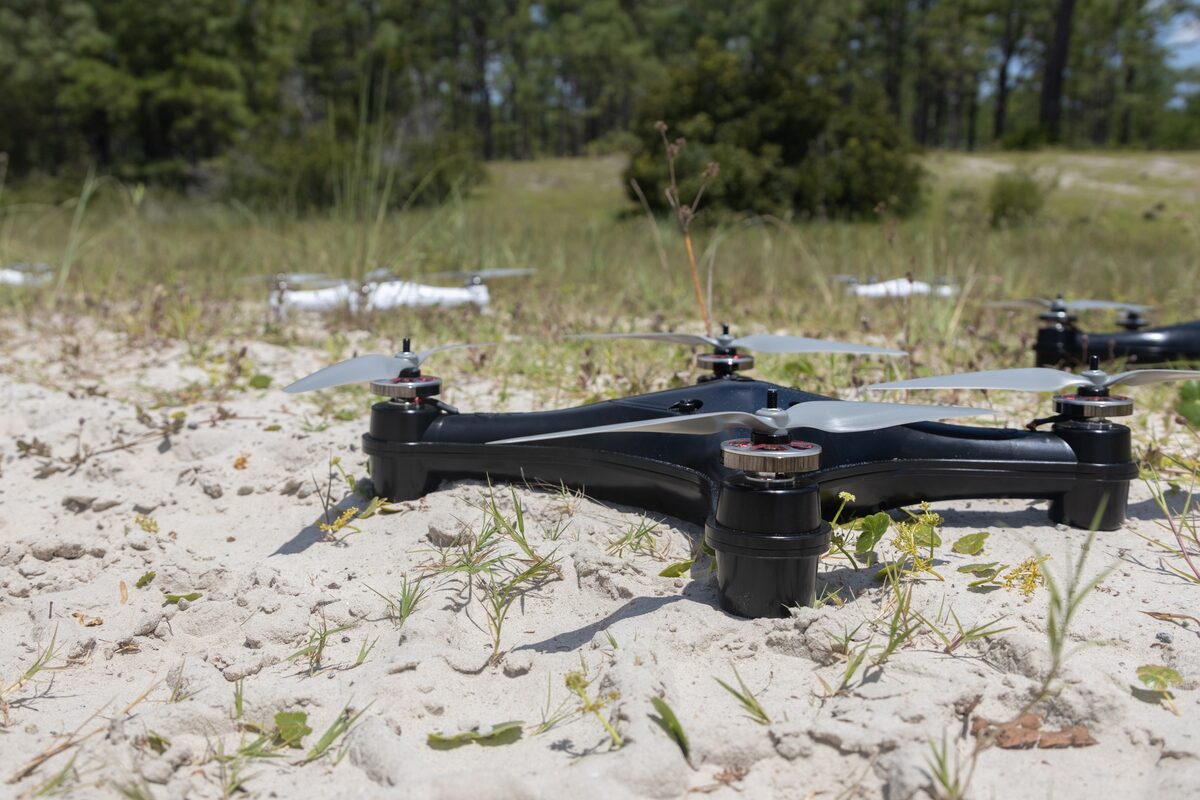
Amazon says Prime Air drone delivery is headed for nearly 500 U.S. cities and towns by the end of 2026 — a roughly sixfold jump from where the service stands today. The expansion list spans Texas, Michigan, Louisiana, Nebraska, Kansas, Florida and Arizona, with new delivery centers planned in places like Tolleson, Arizona; Ruskin, Florida; Kansas City, Kansas; Baton Rouge, Louisiana; and Hazel Park and Pontiac, Michigan, alongside a cluster of Texas cities. The pitch to customers is unchanged from earlier Prime Air rollouts: 30-minute delivery windows on packages up to 5 pounds, for a $2.99 fee on qualifying Prime orders under $50 or $4.99 for everyone else.
But the headline number obscures a slower, less glamorous reality underneath it. Every one of those nearly 500 sites has to individually clear a federal environmental review before a single drone can leave the building. That review process, not manufacturing capacity or software readiness, is now the pacing item for how fast Prime Air can actually scale — and the timeline in Chicago shows exactly how that bottleneck works in practice.
The Sixfold Number, and What It's Built On
Prime Air has already delivered hundreds of thousands of packages in 2026 across its 11 current sites, according to Tech Times' reporting on the rollout. The expansion plan would take the service from those 11 locations to nearly 500 cities and towns — the scale Amazon is framing as the moment drone delivery stops being a pilot program and starts being a mainstream shipping option alongside standard and same-day ground delivery.
The new markets named so far skew toward mid-sized metro areas and their surrounding suburbs rather than dense urban cores — a pattern consistent with how Amazon has sited Prime Air facilities previously, favoring locations with more airspace clearance and fewer obstructions near the delivery center itself.
Why Every Site Needs Its Own Federal Sign-Off
Unlike a retail warehouse or a new delivery van route, a Prime Air center can't simply open once construction is finished. Because Prime Air operates under FAA Part 135 air carrier authority, each new delivery site triggers its own review under the National Environmental Policy Act (NEPA). The FAA's process, laid out on the agency's own site, runs in a fixed sequence: Amazon or its consultants prepare a draft environmental assessment covering the specific proposed facility or facilities, the FAA opens a 30-day public comment period on that draft, and only after comments are addressed does the agency issue a Finding of No Significant Impact (FONSI) — the document that actually clears the site for commercial drone operations. There's no statewide shortcut. A company proposing dozens of sites in Texas doesn't get one review that covers the whole state; each proposed delivery center — sometimes reviewed individually, sometimes grouped with nearby centers into a single draft assessment, as the FAA did for the three Chicago-area facilities — still has to clear its own comment period and its own FONSI tied to the specific noise, wildlife, and land-use profile of that location before it can operate.
Where the Reviews Actually Stand
According to Tech Times, the FAA has completed environmental reviews covering 22 proposed Prime Air centers in Texas, 6 in Florida, 4 in the Detroit area, and 2 in the Kansas City area — a meaningful chunk of the pipeline, but still a fraction of the roughly 500-site target.
Chicago illustrates the lag most clearly. The FAA's own environmental-review site confirms the draft assessment for the Chicago market covers three proposed Prime Air delivery centers there, and its 30-day public comment period closed on August 14, 2026. As of Tech Times' August 20 report — six days later — the FAA still had not issued a Finding of No Significant Impact for the Chicago sites, and none is listed on the FAA's own review page as of this writing either. There's no published FAA timeline for how much longer that review will take. For a market the size of Chicago, that open-ended wait is a preview of what other major metro areas can expect to encounter as Amazon works through the rest of its list.
Q&A: The Regulatory Mechanics
Does the environmental review look at the whole city, or just the delivery center site?
The FAA's NEPA process is site-specific — it evaluates the environmental impact of drone operations tied to a particular proposed facility (or, as in Chicago, a small cluster of co-located facilities), not a blanket clearance for an entire metro area. That's why a metro area like Detroit can have four separately reviewed sites rather than one citywide sign-off.
What happens during the 30-day comment period?
The FAA publishes the draft environmental assessment and opens a window for the public to submit comments on the proposed operations at that site. Those comments can raise issues the agency then has to address before finalizing its decision, which is part of why the process doesn't resolve immediately once the comment window closes — as Chicago's still-pending review demonstrates.
Can a site operate before it has a FONSI?
No. Per the FAA's description of the process, a Finding of No Significant Impact is the document that clears a proposed drone operation environmentally; commercial operations at a given site aren't authorized to begin until that finding is issued.
Is this the same review that applies to other drone delivery operators, or is it Amazon-specific?
The FAA's NEPA and drone-operations review process is described by the agency as applying broadly to new drone operations, not as an Amazon-specific requirement. Other Part 135 delivery operators, including Wing and Drone Express, have also gone through FAA environmental review — sometimes an individual site-specific assessment, sometimes a checklist tied to an existing regional programmatic review — before opening new operating areas.
Why It Matters
Amazon's sixfold expansion target is a corporate roadmap; the FAA's site-by-site NEPA process is the actual rate-limiter on whether that roadmap holds. The completed reviews in Texas, Florida, and the Detroit and Kansas City areas show the pipeline moving, but Chicago's still-pending review — sitting past its comment-period close date with no FONSI yet published — is a reminder that federal environmental clearance, not fleet production or app rollout, is what determines when a market actually goes live. For any city on Amazon's list, the practical question isn't when Amazon wants to launch service — it's when its site's specific environmental assessment clears the FAA's desk. That distinction matters for competitors watching Amazon's regulatory cadence, for municipalities fielding public comment on proposed centers, and for customers in the roughly 500 target cities who may see an announcement land well before a drone ever does.
Sources
- Public Involvement and Environmental Review for Drone Operations — FAA
- Amazon Plans 500-City Drone Expansion; Every Site Still Needs Its Own FAA Clearance — Tech Times
- Drone delivery could be coming to a town near you — Idaho Business Review
- Amazon will expand drone delivery to 500 US cities and towns by end of 2026, company says — ABC News
