
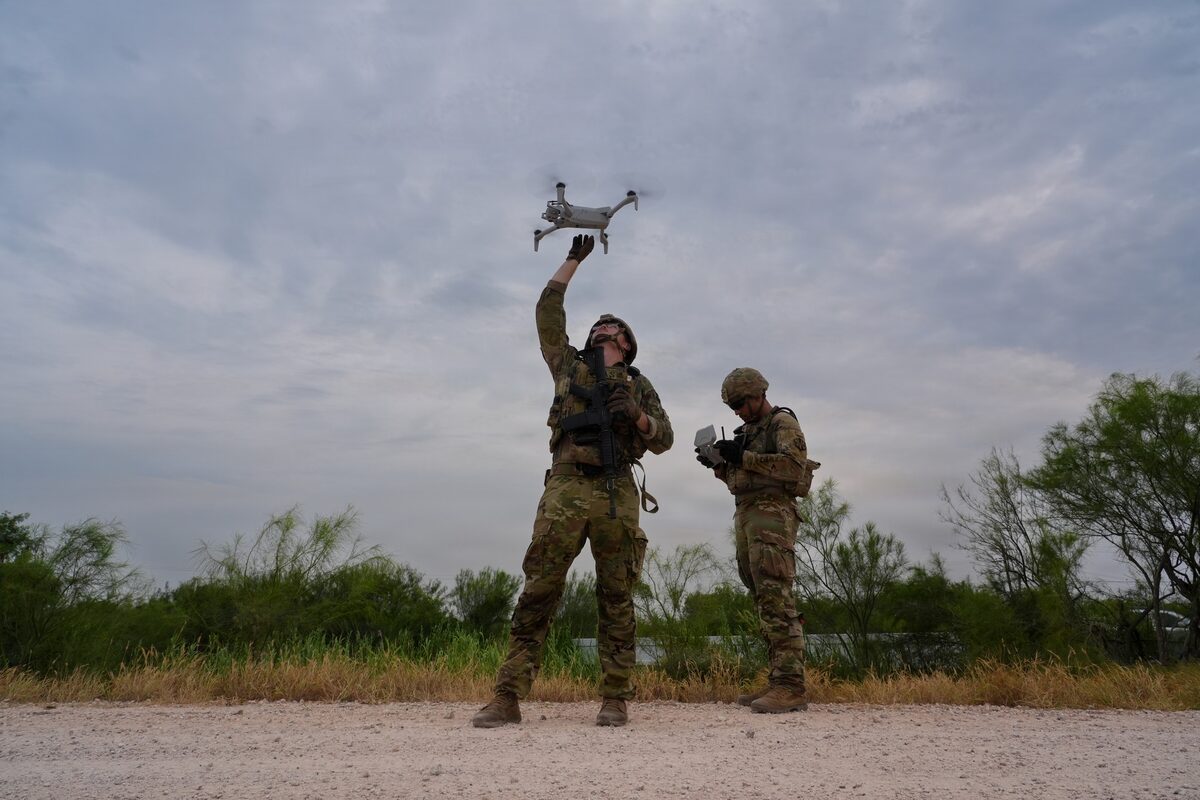
At an October 7 workshop, the North Myrtle Beach Planning Commission spent the evening on a drone launch pad proposed for Amazon's warehouse on Water Tower Road. By the end, the commissioners had a single number from Amazon, about 68 decibels. They also had no clear answer on who governs the drones once they leave the pad. Amazon's representative said overflights belong to the FAA. The FAA told a local TV station that operators and local leaders hold primary responsibility for community concerns. No FAA representative attended the workshop.
The commission took no vote. According to DroneXL, an approval motion was withdrawn on September 22. The application returns on October 20, when commissioners can approve, deny or postpone it.
The 68-decibel claim
Amazon's Tareq Wafaie told the workshop that overflights are "a matter of the FAA, not me." DroneXL, citing the Island Packet, reports he also said the drones never exceed 68 dB. Amazon's representative told WPDE that the drones produce approximately 68 dB, "comparable to a household dishwasher." The rep described them as 5.5 feet tall, flying as high as 400 feet and carrying packages up to 5 pounds. The service is opt-in.
The slide Amazon showed the commission had more figures, as DroneXL describes it:
- 65 dBA on departure and 68 dBA on arrival at the pad
- 55 dBA on departure and 53 dBA on arrival at 500 feet
- 68 dBA in the backyard and 61 dBA from the front yard during a delivery
DroneXL reports the slide gave no distance for the pad or backyard figures and no metric. That matters, because a decibel figure means little without a distance and a metric.
What the FAA's file shows
The FAA has published its own measurements of the MK30. They sit in the environmental file for Amazon's Baton Rouge operation, in Appendix E, a technical noise report prepared by ESA. Prime Air measured the drone in October 2024 at the Pendleton UAS Range at Eastern Oregon Regional Airport, and ESA processed the data in coordination with the FAA. The report says there is no standardized process for drone noise assessments.
UASFeed checked the figures DroneXL cited against the PDF:
- Takeoff, maximum level. A microphone 20 feet from the pad, directly under the flight path, averaged 81.8 dBA Lmax on takeoff. That is DroneXL's "about 82 dB." At 75 feet, a microphone on the same line averaged 70.6 dBA Lmax.
- Takeoff, sound exposure. The report's averaged A-weighted sound exposure level (SEL) for a max-weight takeoff is 90.5 dB at 20 feet, 81.6 dB at 75 feet and 72.4 dB at 372 feet.
- Delivery. The empty-weight delivery SEL is 92.1 dB at 25 feet to the side and 91.7 dB at 20 feet under the track. It falls to 69.5 dB at 772 feet.
- Cruise. En route at maximum weight, about 200 feet up and 58.3 knots, the normalized SEL is 63.7 dB. An empty drone at 345 feet comes in at 60.9 dB.
The report also gives formulas that compute takeoff SEL from distance to the pad. The bands run from 20 to 76 feet and from 76 to 195 feet, with more beyond that. Past 1,205 feet, SEL levels off at the en-route value of 63.7 dB. The report describes takeoff pads of 4 by 4 meters and landing pads of 8 by 8 meters.
Apples, oranges and Lmax
Amazon's numbers are not proven false by any of this. SEL counts the total sound energy of a pass and compresses it into one second. For any event that lasts longer than a second, SEL comes out higher than the loudest instant. So a 92.1 dB SEL and a 68 dBA reading can both be accurate, measured differently. Lmax, the peak level, is closer to what a single figure like "68 dB" suggests.
On Lmax, though, the FAA's data shows a drone that reaches about 82 dBA within 20 feet of the pad and about 70 dBA at 75 feet. DroneXL notes that Amazon's 68 dBA at arrival sits close to the FAA's roughly 70 dBA at 75 feet, so the slide may describe a greater distance than the pad itself. Amazon's slide gave 65 to 68 dBA "at the pad" without a distance. Measured the same way the FAA's report does, the drone is louder near the pad than "never above 68" implies. How much that matters depends on how close homes are to the Water Tower Road pad. Neither Amazon nor the commission put that distance on the record in the coverage reviewed here.
DroneXL also reports that the FAA's drone environmental review index listed Amazon documents for Baton Rouge, Chicago, Detroit, Florida and other existing hubs when it checked on October 9, and none for South Carolina. The FAA noise report examined here was written for Louisiana.
What residents asked about
WMBF reported that residents raised cameras, noise and delivery volume. Some operating details came out at the workshop:
- Amazon is limited to 1,000 deliveries a day.
- The plan calls for 12 drones carrying packages up to 5 pounds, which are released from about 13 feet up.
- Flights can reach 7.5 miles from the pad at a minimum altitude of 100 feet.
- Each delivery site needs a clear area 18 feet across.
- Wind limits when the drones can fly; Wafaie said anything other than very light wind grounds them.
- Amazon says camera video is not saved or shown to anyone.
Across 7.5 miles of coastal neighborhood at up to 1,000 deliveries a day, the 63.7 dB en-route figure describes the cruise leg that covers most of each trip, though the report's figures are for specific distances and altitudes. The 82 dBA peak applies only near the pad. A one-time reading does not capture how often a home gets overflown, and the coverage reviewed here does not include an estimate of how many flights would cross any given street.
The jurisdiction gap
Commission Chairman Silvio Cutuli told WPDE that the city did not have existing ordinances addressing drones. He said the proposed pad is a minor amendment, so under the rules as written the decision stays with the Planning Commission. Wafaie's position, by contrast, was that the FAA controls the airspace.
The FAA told WPDE that Prime Air operates under an FAA exemption with specific conditions and limitations. It added that "operators and local community leaders have primary responsibility" for addressing community concerns. That puts residents' questions back with Amazon and the city. Amazon, for its part, sent overflight questions to the FAA.
Why It Matters
Planning commissions are becoming where drone delivery gets argued locally. The FAA regulates the flights, and the local body controls the one piece of ground the operation needs. North Myrtle Beach shows how much is missing when that happens. The city has no drone ordinance, and DroneXL found no South Carolina entry in the FAA's environmental index. The noise figure from the operator comes without a distance or metric, and the company and the regulator each point to the other on community concerns.
The commission's own options are narrow. It can approve, deny or postpone, or it can ask for something the record lacks: Amazon's noise figures stated in the same metrics and distances as the FAA's report, and the distance from the pad to the nearest homes. The October 20 meeting will show whether a coastal zoning board is willing to ask.
Sources
- Amazon Tells North Myrtle Beach: Ask the FAA. FAA: Ask Amazon and City (DroneXL, Oct 8, 2026)
- Estimated Noise Levels for Amazon Prime Air MK30 Drone, Technical Noise Report (FAA NEPA file, Baton Rouge, ESA)
- Amazon drone delivery proposal raises safety, noise concerns in North Myrtle Beach (WPDE)
- North Myrtle Beach drone delivery program draws concerns (WMBF, Oct 7, 2026)