
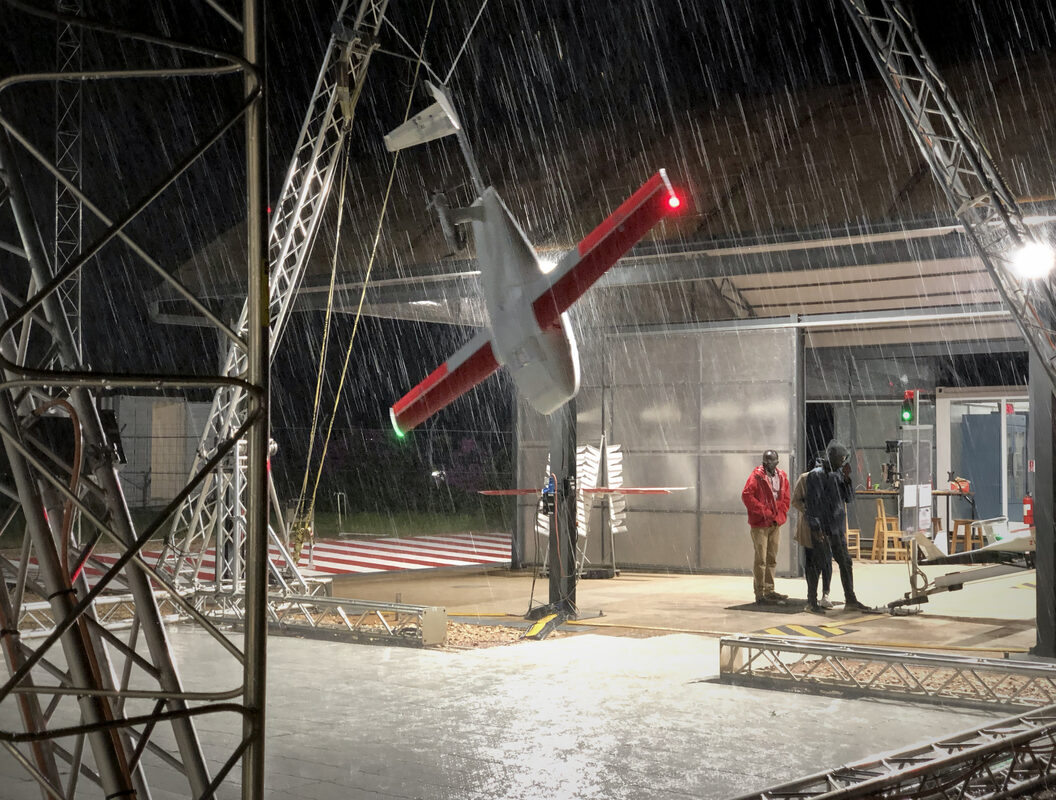
Zipline has rolled out what it calls sound-optimized dynamic flying across its whole delivery fleet. The company says the change, together with other hardware and software updates, cut per-flight sound exposure by 68% and peak volume by 24% compared with its 2025 fleet. Those numbers come from Zipline's internal modeling, not from independent acoustic measurement. The company has also, so far, avoided stating how loud its aircraft actually are.
That gap matters. DroneDJ's report on the rollout, headlined "Drone delivery noise is becoming a problem. Zipline has a new answer," notes that noise has become a growing source of frustration for some communities as drone delivery expands across the US. A relative improvement against an undisclosed baseline is a meaningful engineering claim, but it does not give residents or regulators a number they can check.
What the software actually does
Rather than following a rigid, pre-planned flight path, each Zipline aircraft now works out the quietest way to climb, cruise and descend in real time, as Aerospace Testing International describes it. It bases that choice on readings from onboard wind sensors fed into a custom acoustic model. Put simply, the aircraft reads the wind and works out, on each flight, how to use gravity and wind to speed up and slow down instead of leaning on its motors. That can mean dipping the nose to gain speed or pitching up to slow gently at the end of a flight, which moves the aircraft onto its wing sooner and more smoothly.
The sound reduction has not cost efficiency. Zipline says dynamic flying alone cut the median flight time by 53 seconds and energy use per flight by 21%, with drones spending about 50% longer on the wing rather than relying on rotors. Both outlets note that because the aircraft has a fixed wing and glides like a plane, it can shut off all but one motor once it reaches cruising speed and altitude. That fits the broader goal of spending less time in the loud, power-hungry hover-and-transition phases.
Co-founder and chief technology officer Keenan Wyrobek framed the goal in terms of public acceptance rather than compliance: "We want people to love having Zipline available, not just tolerate it, and that starts with making it the quietest way to get a delivery."
The altitude argument
Zipline's other main noise argument is structural. Its two-part design keeps the main aircraft high, around 330 feet (about 100 meters), and lowers packages on a tether. By Zipline's account, other delivery-drone services average about 32 feet (about 10 meters). That is roughly ten times the height, so the loudest part of the vehicle stays much farther from the people receiving the delivery. DroneDJ adds that operating heights vary by system and flight phase.
This builds on work the company described in March. In a March 25, 2026 newsroom post, Zipline said it had raised its typical flying altitude to at least 300 feet, with plans to go as high as 400 feet. It said it was working to spend more of each flight in fixed-wing forward flight and had improved its acceleration profiles. In that post, the company said its delivery sequence takes about 90 seconds and claimed to be six times quieter during delivery than others in the industry. It also cited more than 2 million commercial deliveries. DroneDJ now reports that Zipline says it completes a delivery somewhere in the world every 15 seconds.
What the numbers do and don't tell you
Every headline figure in this announcement is relative and self-reported. The 68% cut in sound exposure and the 24% cut in peak volume are measured against Zipline's own 2025 fleet. Both outlets describe them as products of internal modeling. The "six times quieter" claim from March compares Zipline with unnamed others in the industry, again by Zipline's own account.
The only absolute decibel figure in Zipline's March post refers to someone else's aircraft: it says recreational or hobbyist drones typically carry a noise level of 70 to 90 dB(A). The post did not give a matching figure for Zipline's own aircraft.
The company had a clear chance to do so in September and did not. DroneXL asked Zipline for sound levels at 50, 100 and 250 feet. According to DroneXL, the answer was a description, not a number: Zipline said its custom propellers produce a softer, steadier sound and that its 300-foot delivery altitude keeps the aircraft quieter than a lower hover would. No decibel figures came, and Zipline said a separate safety document would follow. To Zipline's credit, DroneXL also reported that Zipline answered on the record while Amazon Prime Air and Wing sent no answers. Still, a description of character is not a measurement.
None of this means the improvement isn't real. Keeping the aircraft high, relying more on wing-borne flight and shutting down motors in cruise are all physically plausible ways to reduce noise on the ground. Planning around the wind in real time is a reasonable extension. But "68% less exposure" depends on how exposure is defined, where the modeled listeners are placed and what the 2025 baseline actually was, and none of the sources describe those details.
Why It Matters
Noise is a growing constraint on how far delivery drones can spread into ordinary neighborhoods. Operators that can show they are quiet will likely have an easier time with local governments and neighborhood groups. Operators that can only say so will not. Zipline has been more forthcoming than Amazon and Wing in answering DroneXL's questions, and its approach of improving noise in software and in how it flies, rather than only by redesigning the aircraft, suggests existing fleets can be made quieter with updates over time.
The weak spot is verification. Without published decibel levels at set distances, ideally measured by a third party, communities have nothing objective to compare Zipline with the operators they already hear overhead. They also have no way to confirm the modeled 68% once aircraft are flying over real rooftops in real wind. The safety document Zipline promised in September is the obvious place to publish those numbers. If it does, the industry gets a benchmark. If it doesn't, the 68% figure is still a claim based on Zipline's own modeling.
Sources
- Drone delivery noise is becoming a problem. Zipline has a new answer (DroneDJ, Oct. 28, 2026)
- Zipline cuts delivery drone noise with sound-optimized flight paths (Aerospace Testing International, Oct. 28, 2026)
- Zipline's Never-Ending Quest to Make Quiet Deliveries Even Quieter (Zipline, March 25, 2026)
- Zipline Answers Safety Questions on the Record. Amazon and Wing Don't (DroneXL, Sept. 16, 2026)
