
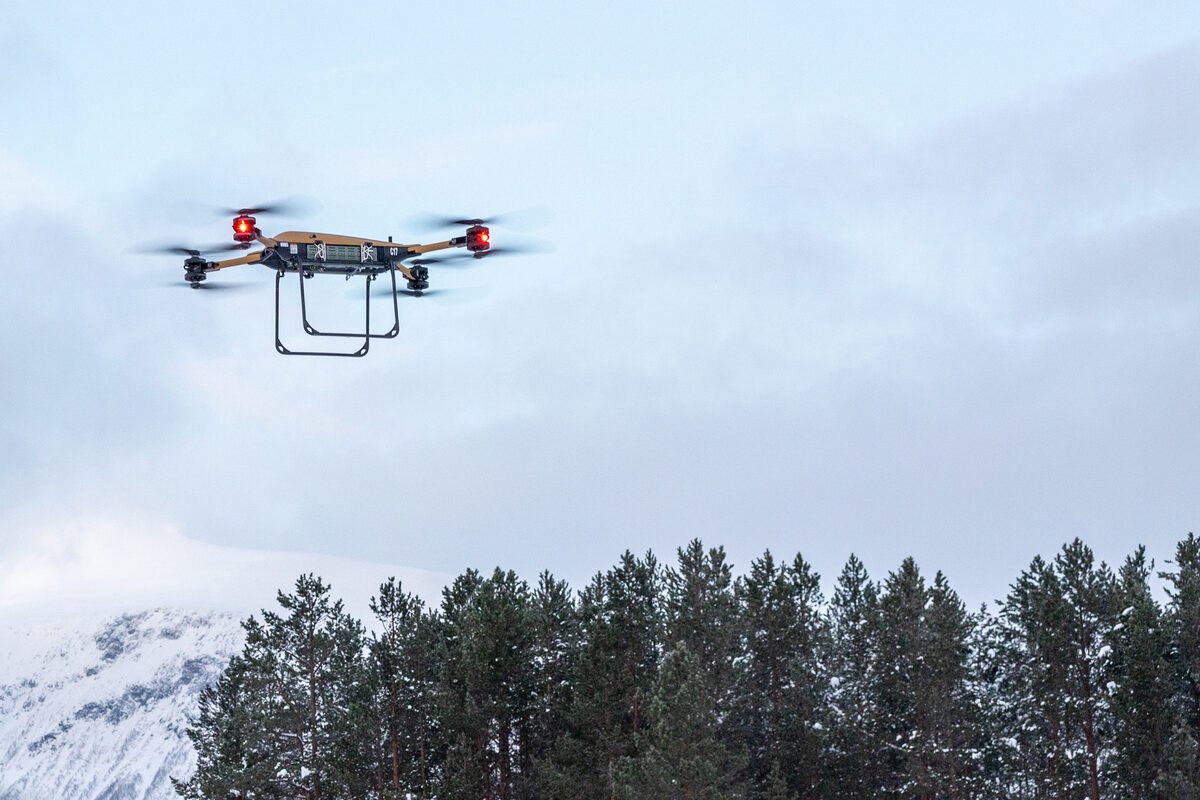
Ten years ago, Zipline's drone recovery system was a bouncy castle. "We had a bouncy castle. That's how we were recovering the aircraft," CEO Keller Rinaudo Cliffton says in Origin Story, a four-minute film the company released to mark a decade of flying in Rwanda, as reported by DroneXL.
The film is the first in a series on Zipline's "Stories from the Sky" page, with further episodes listed as "Coming" on Oct. 26, Oct. 29, Nov. 2 and Nov. 5. The anniversary material also carries a headline statistic that deserves a closer look: Zipline says its Rwanda partnership "led to a 51% reduction in maternal mortality in Rwanda." The research that number appears to come from measured something narrower.
From fishing poles to a national network
The early hardware was improvised. DroneXL, drawing on an account Rinaudo Cliffton gave on the First Round podcast, reports that the team used deep-sea fishing poles bought at Walmart and inflatable pads made by a bouncy castle company, and that the launcher destroyed itself about every third launch.
Zipline dates its first flight in Rwanda to Oct. 16, 2016. The formal launch came slightly earlier on paper: a Gavi release datelined Kigali, Oct. 14, 2016 says President Paul Kagame launched the service at a ceremony in Muhanga District. The two dates may describe different milestones, ceremony versus first operational flight, but the sources do not reconcile them.
The scope at launch was modest by today's standards. Gavi described up to 150 on-demand emergency blood deliveries per day to 21 transfusing facilities in western Rwanda, with drones built and operated by Zipline, which maintained a fleet of 15 Zips. Gavi also announced a partnership among UPS, Gavi and Zipline to expand the service to medicines and vaccines, and it framed the blood mission around a specific clinical problem: postpartum hemorrhage, which the release called the leading cause of death for pregnant women in Rwanda.
The film puts human faces on the operational change. DroneXL reports that shift lead Emmanuel Nsengimana says getting blood used to take more than two hours and Zipline now brings it within 40 minutes. Zipline Africa CEO Caitlin Burton also appears.
Zipline's own page says Rwanda now has "the world's first national drone delivery system" and points to growth across four African countries and the United States. DroneXL reports the company's cumulative figures as more than 3 million deliveries and 140 million autonomous miles worldwide. These are company-reported numbers. None of the sources listed here audits them independently.
What the '51%' actually measures
The anniversary page's central health claim reads: "This partnership led to a 51% reduction in maternal mortality in Rwanda, a 22% reduction in childhood deaths due to severe acute malnutrition." Taken literally, that describes a national outcome: Rwanda's maternal mortality rate cut roughly in half because of drones.
The study behind the 51% figure, a Wharton analysis summarized by Knowledge at Wharton on May 19, 2026, says something narrower. It found that facilities served by drones reduced in-hospital deaths of mothers with postpartum hemorrhage by 51%, and in-hospital deaths among trauma patients by 30%. Wharton professor Hummy Song is the featured faculty member on the piece, and the paper appeared in the journal Manufacturing & Service Operations Management.
Several differences separate those two claims:
- Population. The study looked at mothers who had a postpartum hemorrhage and were in a hospital, not all maternal deaths in Rwanda. Maternal mortality also covers deaths from other causes and deaths outside facilities.
- Setting. The effect was measured at drone-served facilities. A national figure would also have to account for hospitals and regions the network did not serve.
- Metric. A drop in deaths among patients with one specific complication is a clinical outcome measure. A national maternal mortality rate is a population-level statistic with a different numerator and denominator.
None of this makes the result small. A 51% drop in in-hospital deaths from postpartum hemorrhage, which Gavi called the leading cause of death for pregnant women in Rwanda at launch, is a strong finding at hospitals the network serves, and it bears out the clinical case Gavi made in 2016. But it is not the same claim as "a 51% reduction in maternal mortality in Rwanda," and DroneXL's anniversary coverage flags the same gap.
The study also points to a logistics benefit that matters to hospitals. Wharton reports that drone-served hospitals decreased the red blood cells they keep in stock by 63%, and that drone delivery helped them cut wastage of expired blood by 40%. That fits the core idea of on-demand delivery: if blood can arrive within the hour, a rural hospital does not need to keep as much of a perishable product on its shelves, and less of it expires unused. Wharton also notes the gains were uneven: facilities closest to the drone ports saw the greatest reduction in mortality.
The 22% figure on Zipline's page, a reduction in childhood deaths due to severe acute malnutrition, is harder to assess. DroneXL notes that the anniversary page cites no study for it, and none of the sources reviewed for this article supports it. Until Zipline names a source, readers should treat it as an unverified company claim.
Why It Matters
Zipline's Rwanda network is widely presented as the reference case for medical drone logistics, and the company itself uses it to support expansion in Africa and the United States. That puts more weight on getting the evidence right.
The peer-reviewed numbers are strong enough without inflation: 51% fewer in-hospital postpartum hemorrhage deaths and 30% fewer trauma deaths at drone-served facilities, along with a 63% cut in red blood cell inventory. Restating those numbers as a nationwide maternal mortality cut makes it harder for health ministries and investors to model realistic outcomes, and it gives critics an easy target. For an industry that still has to prove its value to regulators and health budgets, the specific claim is the more persuasive one.
The bouncy castle story shows how quickly the hardware matured, from improvised recovery and a launcher that destroyed itself every third launch to a company reporting millions of deliveries. The next step is for the impact claims to be stated as carefully as the engineering is now done.
Sources
- Stories from the Sky: Origin Story (Zipline)
- Zipline Turns 10: The Bouncy Castle Years Behind 3 Million Deliveries (DroneXL, Oct. 16, 2026)
- Rwanda launches world's first national drone delivery service powered by Zipline (Gavi, Oct. 14, 2016)
- How Rwanda Is Using Drones to Improve Health Care (Knowledge at Wharton, May 19, 2026)
