
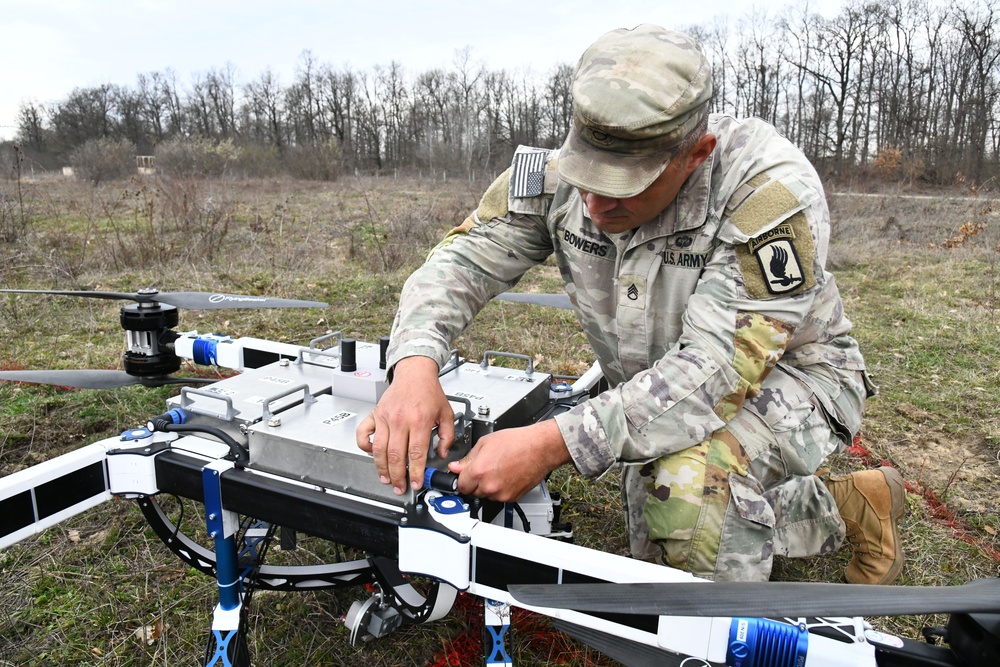
Mike Yoder, the Ohio agricultural drone operator behind nuWay Ag, says he has settled with the Federal Aviation Administration and accepted a 180-day suspension of his remote pilot certificate. The case centers on three YouTube videos in which a heavy-lift drone hauls a deer carcass, lifts a log and tows a sled. Yoder announced the settlement in an Oct. 13 video that drew more than 300,000 views in two days, according to DroneXL. He expects to get his certificate back around April 2027.
Nearly everything known about the case comes from Yoder himself. The figures below are his account as reported by DroneXL, the only outlet reviewed for this story. The FAA's own enforcement documents were not available for review, and the agency's side is not reflected here.
What Yoder says happened
By Yoder's account, the FAA proposed civil penalties of roughly $70,000. It also proposed suspending his private pilot certificate, a proposal he says was cut from 275 days to 180. He says he accepted the 180-day remote pilot suspension to keep a reckless-operation finding off that private certificate. His attorney costs, he said, ran to tens of thousands of dollars.
The dispute goes back to at least September 2024. That is when, according to Yoder, an FAA inspector contacted him about the work and admitted uncertainty about how to classify it: "I just don't know what it would land under."
That line explains why the case has drawn so much attention from commercial operators. Moving a carcass out of the woods, dragging a log or pulling a sled are practical jobs that heavy-lift drones can clearly do. They just don't match any category the regulations were written around.
The aircraft class matters here. DroneXL notes that the DJI FlyCart 30, a common heavy-lift cargo platform, is rated at 209 pounds maximum takeoff weight. That is far above the 55-pound line that separates small unmanned aircraft from everything heavier.
What Part 137 actually covers
Drones over 55 pounds can't fly under Part 107, so ag operators like nuWay fly them under an FAA exemption plus a Part 137 certificate, the agricultural aircraft operator rules, DroneXL reports. Yoder's company is part of that business: nuWay sells a "Part 137 Fast Pass" service for $800 a month to help operators through the process, according to DroneXL.
The question is how far Part 137 reaches. The regulation's definitions section, 14 CFR 137.3, is specific. An "agricultural aircraft operation" means operating an aircraft for one of three purposes:
- dispensing any economic poison;
- dispensing any other substance meant for plant nourishment, soil treatment, propagation of plant life or pest control; or
- engaging in dispensing activities directly affecting agriculture, horticulture or forest preservation, not including dispensing live insects.
Every branch of that definition is about dispensing. Spraying fungicide, spreading seed and broadcasting fertilizer all fit. Hauling a deer carcass, lifting a log or towing a sled does not obviously fit any of the three, whatever the aircraft or the operator's certificate. An exemption or certificate built on Part 137 authorizes agricultural dispensing operations. It does not make a heavy-lift drone a general-purpose farm utility vehicle.
Q&A: where the lines fall
Can a heavy-lift ag drone legally do non-dispensing work like cargo hauling?
Not under the agricultural definition quoted above. Civilian heavy-lift work over 55 pounds has no clean path. Part 137 covers dispensing, and Part 107 stops at the 55-pound line. A cargo job with an aircraft that size sits in the gap between them. The inspector's reported comment, that he did not know "what it would land under," describes that gap exactly.
What about letting someone else fly under supervision?
Part 107 has a narrow provision for this, and DroneXL notes Yoder can still fly smaller drones this way. Under 14 CFR 107.12(a)(2), a person may manipulate the controls of a small UAS without a remote pilot certificate if they are under the direct supervision of a remote pilot in command who can immediately take direct control. Section 107.12(b) is blunter: no person may act as remote pilot in command without a remote pilot certificate. That matters for anyone serving a suspension. Someone without a valid certificate cannot be the remote pilot in command, and therefore cannot be the supervising pilot that 107.12(a)(2) requires.
Is there an emergency route for urgent jobs?
For some operators. The FAA's Special Governmental Interest (SGI) process covers missions such as firefighting, search and rescue, and law enforcement. If a request is approved, the FAA adds an amendment to the operator's existing certificate of authorization (COA) or Remote Pilot Certificate. Approvals for visual-line-of-sight flights may come within minutes. Beyond-visual-line-of-sight approvals issued through the FAA's System Operations Support Center (SOSC) typically require a temporary flight restriction. The agency lists the SOSC at 202-267-8276 for time-sensitive operations, and the page was last updated June 16, 2026. SGI exists for emergency and public-interest missions. It is not a way to authorize routine commercial hauling.
Is drone use around game regulated elsewhere too?
Michigan's drone hunting law is one example. DroneXL notes that Drone Deer Recovery, which Yoder also founded, lost a 2025 First Amendment challenge to it.
Why It Matters
Heavy-lift drones have grown faster than the categories meant to regulate them. Aircraft with ratings like the FlyCart 30's 209-pound maximum takeoff weight can do much more than spraying. But the most accessible regulatory path for civilian operators at that weight, an exemption plus Part 137, is written around dispensing. Once an operator moves from spraying a field to carrying something heavy across it, the authorization may no longer cover the flight.
Yoder's case shows what it costs to test that boundary publicly. By his account, the price was a 180-day suspension of his remote pilot certificate, a proposed penalty of about $70,000, a proposed suspension of his private pilot certificate that he says he settled to protect, and tens of thousands of dollars in legal fees. The flights were posted on YouTube, so the evidence was public from the start.
For the ag-drone industry, including companies that sell Part 137 compliance services, the lesson is that "agricultural" is a narrow word in 14 CFR 137.3. Farm-adjacent work is not automatically agricultural aircraft operation. Until the FAA creates a clear route for civilian heavy-lift utility work, operators who want to haul, tow or lift should assume the authorization they hold covers only what its regulation defines, and nothing more.
Yoder's certificate is expected back around April 2027. The question his videos raised, where a non-dispensing heavy-lift flight belongs, has not been answered.
