
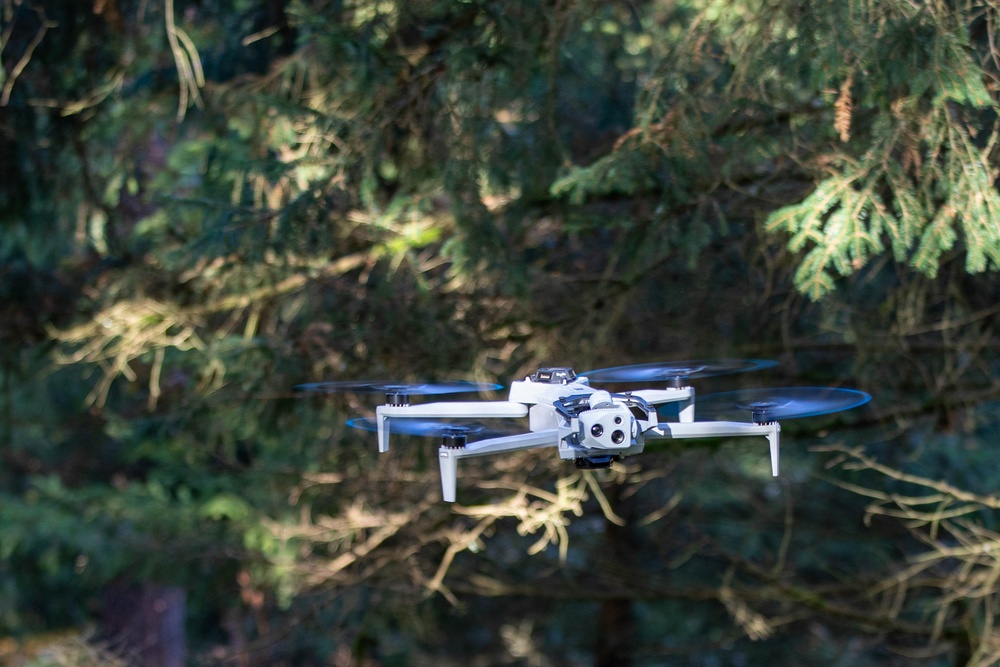
When Ottawa announced in September which companies would supply the first batch of low-cost tactical drones under its new Defence Drone Initiative Marketplace, the message was about building a Canadian drone industry. Two months later, one of the four winning drone suppliers has confirmed that its first deliveries will not be built in Canada.
Volatus Aerospace CEO Glen Lynch told the Financial Post on Nov. 16 that the company is not making the first 100 drones itself. In the paper's words, it is "outsourcing the job to a United Kingdom-based company." Volatus would invest in manufacturing at its facility in Mirabel, Quebec, only if that first batch succeeds.
The government's own backgrounder was open about where the drone is made. The arrangement does, however, complicate the Buy Canadian story the program was launched with.
What Ottawa Actually Bought
The Prime Minister's Office backgrounder from Sept. 10 describes a program built at speed. Nearly 400 vendors have qualified for the marketplace, up to $50 million in initial contracts has been awarded, and the stated effect is a tenfold increase in the Canadian Armed Forces' drone inventory.
Four companies were picked for uncrewed aerial systems:
- AVSS, with the AVSS Drone D1
- Volatus Aerospace, with the Huntsman X6, which the backgrounder calls a "UK-manufactured platform with Canadian support and sustainment"
- Draganfly, with the Astiia UAS, produced in Saskatoon from proven Australian technology under licence
- Objexis AI, with the MAQ-C, from Oakville, Ontario
Two uncrewed ground vehicle suppliers were also named: Twenty20 Insight's XRC RHINO, which the backgrounder says is designed and manufactured in the UK, and Beonyx's VTSE-TC from Quebec.
So the backgrounder was candid. Volatus's drone is British-built, and one of the ground vehicles is too. The confusion comes from the government's companion news release. As DroneXL pointed out, that release described the Volatus system as Montreal-based. Among the four aerial picks, Volatus is the only one whose platform is described as manufactured abroad. Draganfly's licensed design is foreign in origin, but it is produced in Saskatoon.
The Contract and the Condition
According to the Financial Post, Volatus could deliver as many as 5,000 low-cost tactical intelligence drones for $25 million, as long as it first supplies 100 drones that meet expectations. DroneXL reports a price cap of C$5,000 per system, which lines up with the contract's headline value: 5,000 systems at C$5,000 each comes to C$25 million.
That condition shapes the whole arrangement. The first 100 aircraft work as a qualification batch. If they pass, Volatus has a reason to spend money on Canadian production. If they fail, the company hasn't tied up capital in tooling for a product the military doesn't want.
Neither Volatus nor the government has named the UK manufacturer. DroneXL notes that UAVTEK, a British firm, sells a multirotor under the Huntsman name that is marked UK-made, but it also reports that neither the government nor Volatus names the manufacturer, so the link to the Canadian order is unconfirmed.
The Mirabel Factory
Volatus does have a site in Canada. DroneXL describes it as a 53,000-square-foot facility at Mirabel that has operated since June and held its official opening on Sept. 29, and says docking stations are currently in production there. The Financial Post reports that the building used to be occupied by a catering company, and that the Business Development Bank of Canada is advising Volatus on automation. Lynch predicted the company would employ more than 100 people there by 2028.
The cost of turning Mirabel into a drone line looks small. Analysts at Stifel Canada estimate that about $750,000 or less of injection-mould equipment could produce hundreds of drones a month. For a company the Financial Post puts at a market capitalization of about $315 million, with $34 million in 2025 revenue, that is a modest bet. It still isn't one the company wants to make before the customer has signed off on the design.
Lynch's comments to the Post help explain that caution. "Hardware, software are temporary," he said. "The technology evolves every 30 days." If the airframe could be obsolete within a year, committing to moulds and a production line before the military has accepted it carries a real risk of buying tooling for the wrong drone.
Volatus does have relevant experience. Lynch estimated to the Post that the company has supplied about $10 million worth of drones to Ukraine over 18 months, and that conflict is now the main testing ground for cheap, expendable ISR systems.
Why It Matters
Ottawa is putting serious money behind domestic drone production. The Financial Post reports that the new federal budget proposes $2.3 billion over five years to move promising Canadian drone technology from concept to testing to production. The marketplace is supposed to be the first step: qualify vendors quickly, issue small contracts, and grow the ones that deliver.
The Volatus case shows the tension in that model. A fast acquisition program favors vendors who can ship working hardware now, and sometimes that hardware comes from somewhere else. A domestic industrial strategy favors building factories in Canada, which takes time and committed demand. Volatus is trying to do both. It imports the first batch to meet the schedule and holds back the Mirabel investment until it has an order it can rely on.
That can be defended as a business decision. It is not quite what the "Montreal-based" wording in the news release suggested. The program's credibility will depend on whether, once the first 100 Huntsman X6 drones are accepted, the remaining production of up to 5,000 actually moves to Quebec. If it doesn't, Canada will have bought a British drone with a Canadian service contract, which is the arrangement the backgrounder described from the start.
There is also a simple transparency gap. The government's own documents disagree on where the drone comes from, and neither Ottawa nor Volatus has named the company building it. For a program meant to strengthen sovereign defence-industrial capacity, the identity of the actual manufacturer is the kind of detail buyers and taxpayers would reasonably expect to be public.
