
For years, the conventional wisdom about scaling enterprise drone programs has been that the regulators are the problem. Get beyond visual line of sight (BVLOS) approvals sorted, the thinking went, and utility inspection fleets would finally fly the long, autonomous transmission-line missions that justify the investment. At InnovateEnergy Week in The Woodlands, Texas, in June 2026, the UAS leaders running two of the largest drone operations in the American electric sector complicated that story considerably — and in the process described a transition that is reshaping the commercial drone market from the inside.
The headline shift is one of hardware. Both Southern Company and Entergy are moving off Chinese-made DJI airframes — still widely regarded as offering superior optics for the price — and onto American platforms cleared for federal use. But the more interesting disclosure came from Entergy's UAS manager, who argued that the single regulatory change everyone has been waiting for does very little for the work his pilots actually do. The bottleneck, he said, is the imagery itself.
Two of the biggest fleets in the sector
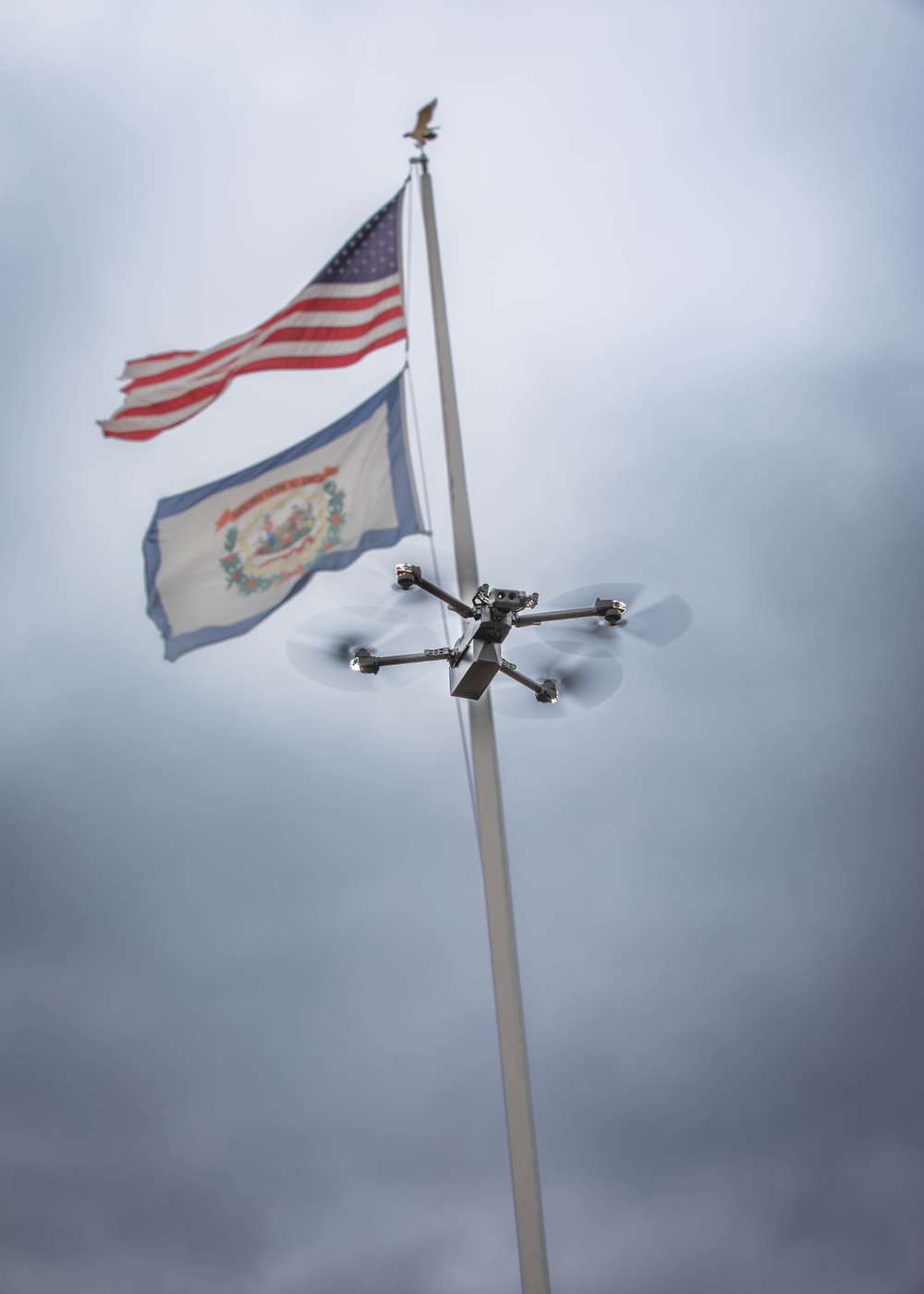
Tim Hadaway, UAS Operations Lead at Southern Company, laid out a fleet that reads less like a pilot program and more like an air force. The company fields roughly 190 UAV pilots and flies Skydio X10s in both manual and dock-based configurations, the Freefly Alta X, and two SwissDrones VTOL helicopters dedicated to LiDAR collection. Critically, Southern Company has secured a nationwide BVLOS waiver for the Skydio X10 — the kind of approval that, under the current regime, has to be earned aircraft-by-aircraft and case-by-case.
Entergy runs a comparably serious operation, with roughly 100 in-house pilots. Jason Goodick, the utility's UAS manager, described a program that air-gaps its drone data — keeping it off networked systems entirely — and is still in the middle of its own transition away from DJI hardware. That detail matters: it signals that the post-DJI migration is a process, not a switch, even for a utility with a hundred pilots on payroll.
Both operators stressed the same uncomfortable trade-off. They are walking away from DJI not because the American alternatives outperform it optically, but because federal regulatory and security pressure has made Chinese-made airframes untenable for critical-infrastructure work. The optics gap is a cost they have decided to absorb.
The counterintuitive part: BVLOS isn't the constraint
Here is where the InnovateEnergy panel diverged from the usual industry script. Asked about the value of expanded BVLOS authority for storm-response inspection — the rapid post-hurricane assessment work that drives so much of a Gulf Coast utility's drone usage — Goodick pushed back on the premise.
"BVLOS doesn't help us because of the problem with the data management," he said. "We're taking so much imagery."
The numbers behind that statement are the story. According to the operators, a single 20-mile line inspection flight generates roughly one terabyte of imagery. Scale that across a storm-damaged service territory with thousands of miles of distribution and transmission lines, and the constraint stops being how far a drone can legally fly from its pilot and starts being what happens to the data after it lands. Flying farther, faster, and more autonomously simply produces more terabytes that have to be ingested, stored, processed, and reviewed — often, in Entergy's case, on air-gapped systems that can't lean on the easy scale of public cloud.
In other words, the regulatory unlock that the entire BVLOS conversation has been organized around addresses a problem these utilities have already largely engineered around, while leaving untouched the problem that actually governs how fast they can turn drone flights into actionable inspection results.
The regulatory backdrop they're navigating
The rules in question are real and moving. In August 2025, the FAA released a Notice of Proposed Rulemaking for Part 108, the framework U.S. Transportation Secretary Sean P. Duffy unveiled under the banner of "American drone dominance." Part 108 would create a standardized path for routine low-altitude BVLOS operations at or below 400 feet above ground level, flown from pre-designated, access-controlled sites — replacing the current per-flight waiver process that forces operators like Southern Company to chase individual approvals.
The proposed rule is expansive. It would cover package delivery, agriculture, aerial surveying, and public safety, and it would allow drones weighing up to 1,320 pounds including payload to qualify through a streamlined "airworthiness acceptance" built on industry consensus standards rather than traditional aircraft certification. For a utility flying a SwissDrones VTOL helicopter on LiDAR runs, that weight envelope and the move away from bespoke waivers are genuinely meaningful.
But Goodick's point stands precisely because Part 108 is so squarely aimed at the range-and-autonomy axis. The rule is designed to let drones fly farther from their operators with less paperwork. It does nothing about the terabyte that comes back from every 20 miles of line.
Why the post-DJI shift is happening now
The migration off DJI isn't a matter of taste — it's policy machinery grinding into operational reality. The Defense Innovation Unit maintains the Blue UAS Cleared List, the U.S. government's roster of NDAA-compliant, cyber-vetted commercial drones approved for federal and Department of Defense use. The Skydio X10 that anchors Southern Company's fleet is among the vetted American platforms on that list.
That list exists because of statute. Section 848 of the National Defense Authorization Act and the American Security Drone Act have progressively restricted federal use of Chinese-made unmanned systems on cybersecurity grounds, and that pressure has cascaded outward to critical-infrastructure operators like electric utilities, even where they aren't strictly federal entities. The result is a market that, almost overnight, has a strong commercial reason to standardize on a short list of federally vetted airframes — Skydio and Freefly among them — regardless of how the price-to-optics math pencils out against DJI.
Why It Matters
The story coming out of The Woodlands is a useful corrective for an industry that has spent years treating BVLOS regulation as the master variable. Two of the largest utility drone programs in the country are telling anyone who will listen that they've already solved, or routed around, the range problem — and that the thing now governing how fast they can scale is data infrastructure: ingestion pipelines, storage, processing, and review, much of it constrained further by air-gapped security postures inherited from the same federal pressure that pushed them off DJI in the first place.
That has real implications for where value accrues in the commercial drone market. If the binding constraint on a 290-pilot combined operation is terabytes per inspection rather than nautical miles per flight, then the next wave of competitive advantage may belong less to airframe makers and BVLOS waiver shops and more to whoever can turn a terabyte of storm-damage imagery into a prioritized repair list quickly, securely, and without a data center full of analysts. The post-DJI transition has handed American drone vendors a captive enterprise market on a security mandate. The data bottleneck is the part of the problem that mandate doesn't touch — and, for storm response, it's the part that decides how fast the lights come back on.
