
At roughly 5:20 p.m. local on Friday, June 27, 2026, the crew of United Airlines Flight 1513 — a Boeing 737 inbound from Key West with 106 passengers and 5 crew aboard — was on final approach to Newark Liberty International Airport when they reported something that should not have been there: a circular drone, roughly three feet across, passing about 100 feet directly below the descending jet.
No one was hurt. The aircraft was not damaged. Flight 1513 landed safely, and from the cabin the event likely registered as nothing at all. But 100 feet of vertical separation between an airliner and an uncrewed aircraft on short final is not a near-miss in the colloquial sense. It is a near-collision — the kind of margin that, on a slightly different track or a slightly different second, ends very differently.
And it was not an isolated blip. A separate crew flying for GoJet Airlines under the United Express banner reported a drone at 2,000 feet in the same approach corridor. Two unrelated flight decks. One stretch of New Jersey sky. The Federal Aviation Administration has opened an investigation into both sightings.
What the crews actually reported
The details that have been confirmed are narrow and worth keeping straight from the broader speculation that tends to follow these events.
Flight 1513 was a Boeing 737 operating the Key West–to–Newark route with 111 souls on board. On descent, the pilots described a circular drone approximately three feet in diameter roughly 100 feet beneath the aircraft. Aviation-trade reporting placed the airframe as a 737 MAX variant and confirmed the approximately 100-foot vertical separation on final.
The second report came from the GoJet/United Express crew, who placed a drone at 2,000 feet in the same arrival path. When the 1513 crew flagged the hazard, air traffic control was alerted to the incursion. The drone — or drones — were operating in what is prohibited, controlled airspace: the protected volume around a major Class B airport where uncrewed aircraft are categorically not permitted to fly.
The FAA's position on that point is unambiguous. The agency states that flying drones near aircraft or airports is "both hazardous and illegal under federal law," and that operators who do so expose themselves to civil penalties, criminal charges, and imprisonment.
The problem is that nobody could do anything about it
Here is the uncomfortable core of the Newark incident, and the reason it matters far beyond one flight. At the moment the drone was below Flight 1513, the entire U.S. civil aviation system's response capability amounted to this: a pilot saw it, called it out, and ATC took note. That is the whole toolkit.
Newark has no deployed authority — and, critically, no deployed equipment — to detect an unauthorized drone before a pilot's eyeballs find it, to identify its operator, or to bring it down. Counter-UAS mitigation authority in the United States is held by a small set of federal departments and is not extended to civilian airport operators or to the FAA itself for routine use. So even if Newark's tower had known exactly where the drone was, no one on the ground had the legal standing or the gear to neutralize it.
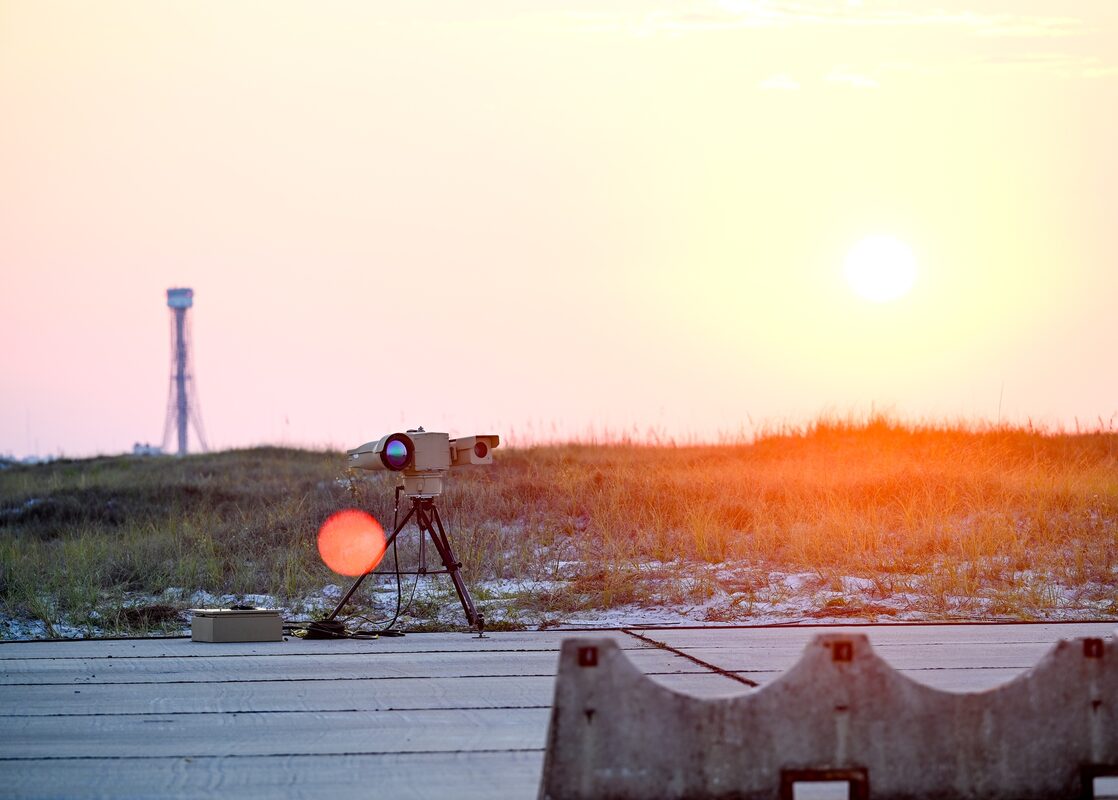
This is the counter-UAS detection-and-mitigation gap, and Friday rendered it in concrete terms. Detection at civil airports today is overwhelmingly human and reactive: it begins when a flight crew already sharing airspace with the threat happens to spot it. Mitigation is functionally nonexistent. The gap is not a technology problem in the narrow sense — radar, RF sensors, and optical systems capable of spotting small drones exist and are fielded at military installations. It is an authority-and-deployment problem at the places where 100-plus passengers ride a thin column of air down to a runway every ninety seconds.
How common is this, really?
Is a drone near an airliner a rare freak event? No. The FAA receives more than 100 reports of drones flying near aircraft or airports every single month. The Newark sighting is, statistically, an ordinary day — distinguished only by how close it got and by the fact that a second crew corroborated the pattern in the same corridor.
How many sightings translate into actual danger? According to FAA data cited in reporting on the incident, 319 drone sightings were logged nationally between January and March 2026. Of those, 8 required pilots to take evasive action. That is roughly one forced maneuver every eleven days, somewhere in the national airspace system, driven by an object that should not be there.
Is it illegal? Yes, unambiguously. Operating a drone in the controlled airspace around a major airport without authorization violates federal law and carries civil penalties, criminal exposure, and potential imprisonment. The legal clarity, however, is cold comfort when the deterrent depends on catching and identifying an operator who is, by definition, hidden somewhere on the ground beneath the approach path.
Why Newark, and why now
Newark sits inside one of the most congested and complicated airspace systems on the planet — the New York metropolitan corridor, where Newark, LaGuardia, and Kennedy stack arrivals and departures into a dense, overlapping lattice. That congestion is exactly what makes a drone incursion there so consequential: there is little room for error, approaches are tightly sequenced, and an evasive maneuver by one aircraft ripples through the flow behind it.
It also makes the area a recurring trouble spot for unauthorized drone activity. Friday's event, with its second corroborating sighting at 2,000 feet, fits what observers have described as a pattern of unauthorized activity in the approach corridor rather than a one-off. When two crews independently report drones in the same arrival path within the same window, the most plausible reading is not coincidence — it is that the protected airspace is being routinely penetrated, and the system only finds out when the penetration nearly intersects a jet.
Why It Matters
The Newark near-miss is a clean, concrete illustration of a gap that counter-UAS policy debates have circled for years without closing. The detection layer at civil airports is a human being looking out a cockpit window. The mitigation layer does not exist. And the threat volume — 100-plus sightings a month, 319 in a single quarter, 8 of them forcing evasive action — is not theoretical or rare. It is a steady, measurable drumbeat.
What makes this incident useful, rather than merely alarming, is that it strips away the abstraction. A 737 with 111 people aboard had a three-foot object pass 100 feet beneath it on final approach, and the entire national response capability consisted of the pilot saying so over the radio. Federal law makes the drone operator a criminal; it does not make Newark capable of finding the drone, identifying who flew it, or stopping it. Until counter-UAS detection becomes proactive and mitigation authority reaches the civil airfields where the risk actually concentrates, the system's safety margin on incidents like this one will keep coming down to luck and the geometry of a given second. Friday, the geometry held. The data suggests it will be tested again within days.
Sources
- Drone Sightings Near Airports — FAA UAS Sightings Report (FAA.gov)
- United Airlines Flight Dodges Drone Collision During Newark Airport Approach, FAA Launches Probe — Republic World
- United Boeing 737 With 106 Passengers Narrowly Avoids Collision With Drone in Prohibited Airspace Near Newark — Paddle Your Own Kanoo
- United Boeing 737 MAX Came Within 100 Feet of a Drone on Final Approach to Newark — Simple Flying